

AI CERTS
7 months ago
AI godfather departure sparks AMI venture beyond Meta
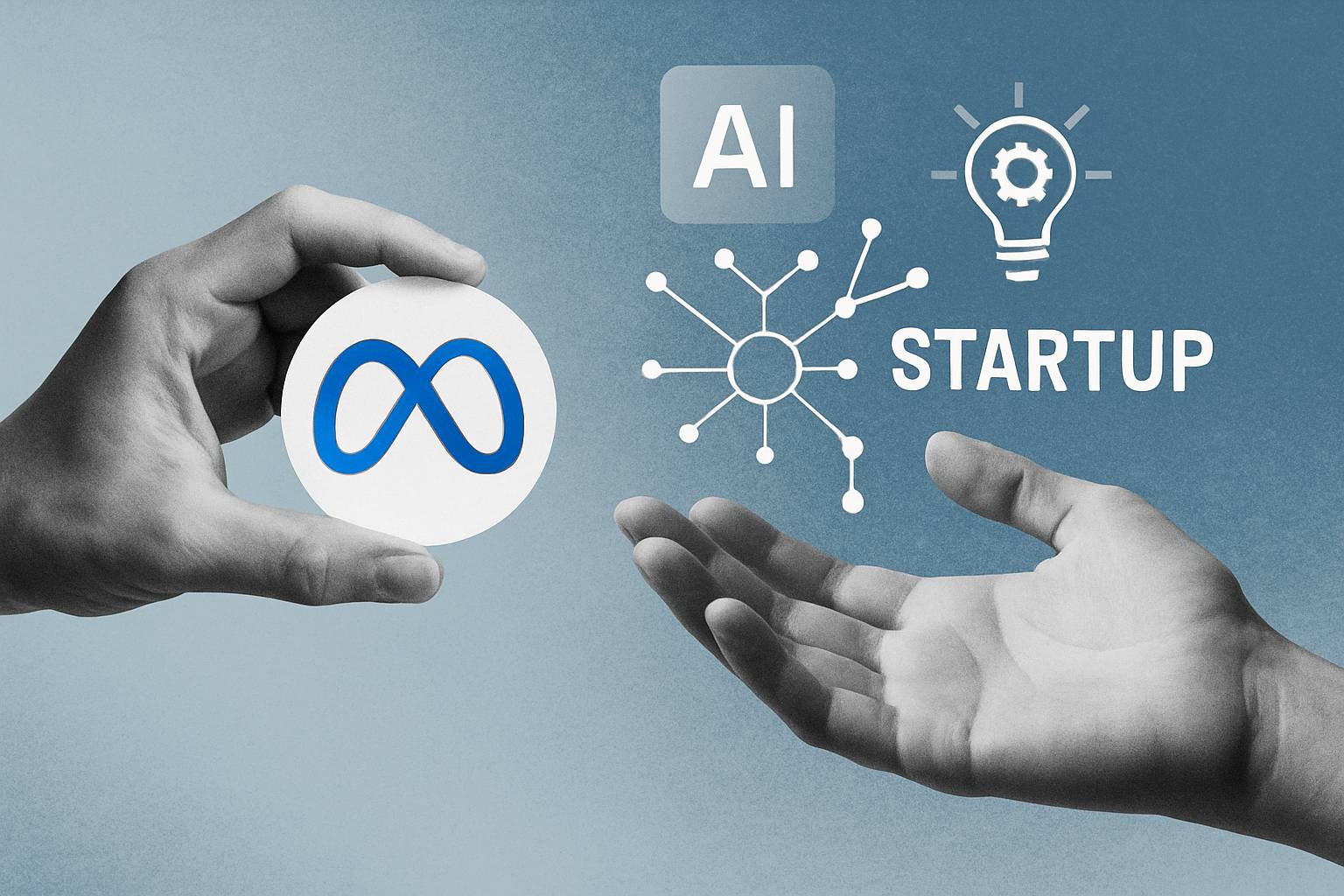
Moreover, he frames AMI as a pursuit of Advanced Machine Intelligence beyond language prediction.
Meta will remain a partner, yet financial terms stay undisclosed.
Meanwhile, the announcement coincides with Meta layoffs and the $14.5B Scale AI shift.
The timing therefore raises questions about research culture, investment focus, and competitive positioning.
Additionally, we examine whether world model's focus can outpace current large language models.
Readers will also find upskilling advice, including the linked Chief AI Officer certification.
Ultimately, understanding this move helps leaders plan a strategy in a turbulent AI landscape.
Few resignations have stirred comparable debate since Geoffrey Hinton left Google.
Therefore, market analysts immediately updated forecasts for Meta’s talent retention costs.
Context Around LeCun Departure
Observers have long associated LeCun with Meta’s foundational AI research culture.
However, the AI godfather's departure follows 12 years of service and near-continuous restructuring.
During 2025, Meta reorganized FAIR, cut roughly 600 roles, and folded several projects.
Furthermore, insiders link these cuts to leadership disagreements over research horizons.
Historically, FAIR operated with academic latitude unusual inside consumer technology firms.
Moreover, quarterly revenue pressures gradually narrowed that freedom, sources say.
LeCun’s exit therefore reflects deeper strategic tension inside Meta.
The next section examines how wider corporate shifts set the stage.
Meta Strategy Recent Shifts
In June 2025, Meta invested $14.3 billion for a 49% stake in Scale AI.
Consequently, analysts dubbed the investment the $14.5B Scale AI shift, signaling a commitment to data labeling infrastructure.
Moreover, Meta merged internal LLM teams into Superintelligence Labs, prioritizing rapid deployment.
These moves contrasted with LeCun’s longer research timelines.
Nevertheless, executives claim the Meta partnership with AMI will balance exploration and product readiness.
Analysts debate whether the AI godfather departure aligns with the $14.5B Scale AI shift.
Overall, the AI godfather departure amplifies scrutiny of Meta’s capital allocation.
Meta’s spending spree reshaped internal incentives and leadership power centres.
However, technical vision remains contested, as we now explore AMI’s foundations.
Separately, Meta ramped LLaMA model releases, touting open weights for external developers.
Additionally, hardware spending accelerated, including custom inference accelerators.
Such commitments pleased investors focused on near-term monetization.
In contrast, world-model proponents considered the pivot shortsighted.
Observers note that the $14.5B Scale AI shift also boosts Meta’s bargaining position with cloud vendors.
Defining Advanced Machine Intelligence
LeCun coined Advanced Machine Intelligence to describe agents that learn world physics, remember events, and plan actions.
In contrast, current LLMs predict tokens without grounded sensory representations.
Therefore, AMI research emphasises perception, persistent memory, and energy-based learning architectures like JEPA.
The initiative builds on FAIR papers demonstrating sample-efficient video prediction.
Supporters argue the AI godfather departure frees LeCun to pursue Advanced Machine Intelligence uncompromised.
Ultimately, the AI godfather departure spotlights alternative research philosophies.
Advanced Machine Intelligence thus aims for cognition beyond text autocomplete.
The technical path relies heavily on world models, our next focus.
AMI’s roadmap mentions hierarchical memory structures that mirror hippocampal processes.
Furthermore, teams will explore multi-modal learning across vision, audio, and proprioception.
LeCun has compared the target capability to animal-level intelligence.
Critics question if compute requirements could balloon beyond startup budgets.
World Models Focus Explained
World models focus on predicting future latent states instead of raw pixels.
Subsequently, agents can reason about causality, enabling long-horizon planning in robotics.
LeCun argues that the world models focus will unlock physical reasoning unavailable to language-only systems.
Additionally, JEPA variants train self-supervised encoders to generate these compact predictive embeddings.
Sceptics of the AI godfather departure question if world models focus can rival GPT scale.
Researchers like DeepMind’s Ha and Schmidhuber have explored related approaches, lending credibility.
Nevertheless, stable training remains challenging because predictive horizons compound error.
Academic benchmarks also lack consensus, complicating progress measurement.
Consequently, AMI may release simulation environments to standardize evaluation.
Empirical results remain early but promising.
The following section considers the Meta partnership implications.
Meta Partnership Emerging Details
LeCun stated that a Meta partnership would give AMI compute, data, and perhaps capital.
However, he declined to describe ownership percentages or IP sharing.
Such opacity leaves investors wondering how the AI godfather departure will affect competitive advantage.
Meanwhile, Meta insiders insist collaboration agreements protect commercial priorities.
- Equity split between Meta and AMI
- Data access scope and duration
- Compute credits and governance
- Talent transfer clauses
Outside investors might join the seed round once governance structures appear.
Furthermore, antitrust lawyers will scrutinize any exclusive Meta data provisions.
Regulators increasingly view large model partnerships as potential competition barriers.
Negotiation specifics will steer research velocity and market impact.
Nevertheless, risk factors extend beyond contracts, as the next section shows.
Industry Risks And Outlook
Industry observers see upside in focused exploration.
Consequently, the $14.5B Scale AI shift offers Meta capacity that AMI might leverage.
Nevertheless, critics warn that funding long-term Advanced Machine Intelligence requires patience similar to early FAIR years.
In contrast, commercial teams chasing quarterly goals may ignore world models focus, slowing Advanced Machine Intelligence traction.
Investors monitor whether the AI godfather departure weakens Meta’s recruiting brand.
Professionals can deepen strategic insight through the Chief AI Officer™ certification.
- Broader talent pipeline for AMI
- Potential robotics breakthroughs
- Diversified research bets for Meta
Safety advocates ask whether independent oversight will accompany AMI experiments.
Meanwhile, open-source communities hope for permissive licenses similar to LeCun’s past releases.
Such transparency could accelerate downstream innovation in robotics and logistics.
Therefore, the broader ecosystem stands to gain from clear communication.
Risks and rewards will unfold over years.
Consequently, leaders must monitor milestones while upgrading their expertise.
The concluding section distills actionable guidance.
Strategic Takeaways For Leaders
The AI godfather departure encapsulates the clash between incremental scaling and bold paradigm shifts.
Therefore, staying informed about Advanced Machine Intelligence helps executives anticipate disruptive capability jumps.
Meanwhile, the $14.5B Scale AI shift shows that Meta will fund whichever path yields product leverage.
Leaders should track Meta partnership disclosures, AMI hiring, and early world models focus benchmarks.
Finally, equip your organization by pursuing the linked Chief AI Officer credential and follow updates as this story evolves.
Regular briefings will ensure stakeholders stay ahead of rapid research turns.
Disclaimer: Some content may be AI-generated or assisted and is provided ‘as is’ for informational purposes only, without warranties of accuracy or completeness, and does not imply endorsement or affiliation.


