

AI CERTS
2 hours ago
$329 Million Bet on South Africa! Microsoft’s Cloud Expansion Signals a Bigger Truth—AI Skills Will Define the Future
This is not just an infrastructure story. It’s a wake-up call for professionals, businesses, and governments worldwide to prioritize AI training now.
A Strategic Investment Beyond Infrastructure
Microsoft’s $329 million commitment is aimed at expanding its cloud and data center capabilities across South Africa. The investment focuses on securing land for future data centers, improving power and water readiness, and boosting existing cloud capacity.
This move builds on Microsoft’s already substantial investments in the region, reinforcing its long-term vision of making South Africa a digital and AI hub. The company has consistently emphasized that cloud infrastructure is the backbone of modern economies, enabling businesses, governments, and communities to operate efficiently and innovate at scale.
What’s particularly noteworthy is Microsoft’s clear articulation of AI’s foundational structure. According to its leadership, AI operates across three layers: infrastructure, models, and applications. Without strong infrastructure, the entire ecosystem collapses. As Brad Smith put it, you simply cannot have AI without data centers.
This investment, therefore, is not just about expanding capacity—it’s about enabling an entire AI-driven economy.
Why South Africa and Why Now?
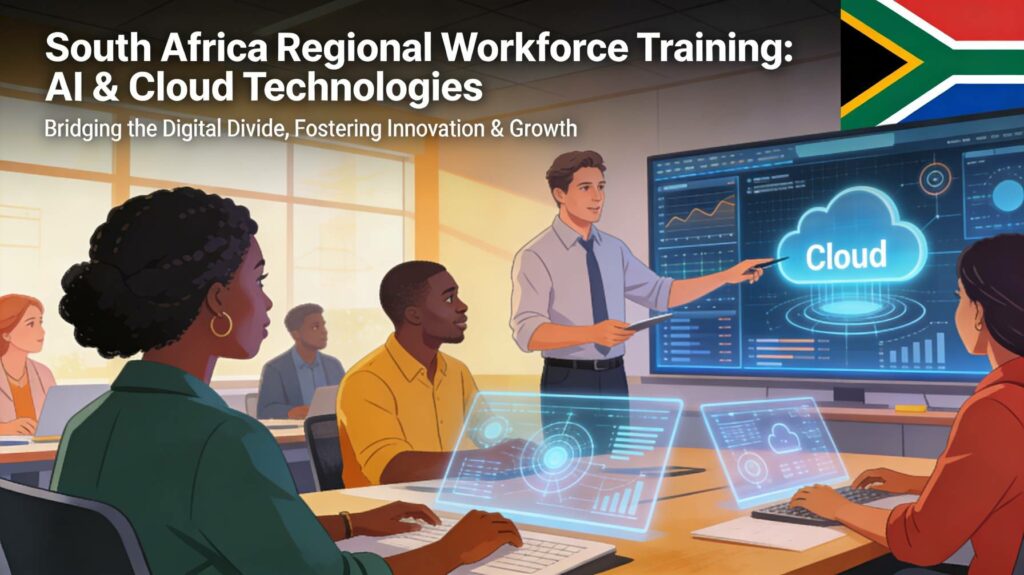
South Africa is emerging as a strategic gateway for AI development across the African continent. With increasing demand for cloud services, a growing startup ecosystem, and rising digital adoption, the country presents a fertile ground for innovation.
Microsoft’s investment is expected to strengthen business resilience, ensure continuity of public services, and unlock new economic opportunities for local communities.
Additionally, the company is already collaborating with local AI firms to develop multilingual models tailored to African languages, signaling a shift toward more inclusive and localized AI solutions.
But infrastructure alone cannot drive this transformation.
The Real Bottleneck: AI Skills Gap
While billions are being poured into AI infrastructure globally, a significant challenge remains—lack of skilled talent.
Microsoft itself acknowledges this gap and has taken steps to address it. Through its AI Skills Initiative, millions of learners have already been engaged globally, with over a million trained and hundreds of thousands certified.
In South Africa, the company is going a step further by integrating AI education into mainstream platforms through partnerships like the South African Broadcasting Corporation. This initiative aims to democratize access to AI knowledge, making it available to a broader audience.
The message is clear: infrastructure creates opportunity, but skills unlock it.
This is not just an African challenge—it’s a global one. Organizations worldwide are struggling to find professionals who can effectively leverage AI tools, build intelligent systems, and drive innovation.
From Consumers to Creators of AI
One of the most compelling aspects of Microsoft’s strategy is its focus on transforming regions like Africa from mere consumers of technology into creators of AI solutions.
By combining infrastructure investment with large-scale skilling initiatives, Microsoft is laying the foundation for a self-sustaining AI ecosystem—one where local talent can build solutions tailored to local challenges.
This approach has broader implications. Countries and organizations that invest in both infrastructure and talent development will lead the next wave of innovation. Those that don’t risk falling behind.
The Urgent Need for Structured AI Training
The developments in South Africa highlight a critical insight: AI is no longer optional—it’s foundational.
However, learning AI through fragmented online resources or outdated courses is no longer sufficient. The pace of innovation demands structured, industry-aligned training programs that are continuously updated.
This is where initiatives like the AI CERTs Authorized Training Partner (ATP) program become highly relevant.
The ATP program is designed to bridge the gap between theoretical knowledge and real-world application. It empowers training providers, institutions, and organizations to deliver globally recognized, role-based AI certifications that align with current industry demands.
In a world where companies like Microsoft are investing billions into AI infrastructure, the demand for certified professionals is set to skyrocket. Programs like ATP ensure that learners are not just aware of AI—but are equipped to work with it effectively.
A Global Signal for Businesses and Professionals
Microsoft’s investment is not an isolated event. It is part of a broader global trend where tech giants are doubling down on AI infrastructure and capabilities.
For businesses, this means one thing: adapt or risk obsolescence.
Organizations must invest in upskilling their workforce, integrating AI into their operations, and building internal capabilities to remain competitive.
For professionals, the message is equally clear. The future of work will be defined by AI literacy. Those who understand and can apply AI will have a significant advantage in the job market.
The Road Ahead
The $329 million investment in South Africa is more than a financial commitment—it is a blueprint for the future.
It shows that the next phase of the AI revolution will not be driven by technology alone, but by the people who know how to use it.
As data centers rise and cloud capacity expands, the real question is: will we have the talent to match this growth?
The answer depends on how quickly individuals, organizations, and governments prioritize AI training.
Because in the age of AI, infrastructure builds the stage—but skills steal the show.
FAQs
What is the significance of Microsoft’s $329 million investment in South Africa?
The investment is aimed at expanding cloud infrastructure and data center capacity, which are essential for supporting AI development, digital transformation, and economic growth in the region.
Why is AI infrastructure important for economic growth?
AI infrastructure enables businesses and governments to process data, build intelligent systems, and deliver innovative services, driving efficiency, productivity, and new opportunities.
What is the AI skills gap, and why does it matter?
The AI skills gap refers to the shortage of professionals with the expertise to develop and use AI technologies. Without skilled talent, organizations cannot fully leverage AI investments.
How does the AI CERTs ATP program help address this gap?
The ATP program provides structured, role-based AI training and certifications that align with industry needs, helping individuals and organizations build practical AI capabilities.
What should professionals do to stay relevant in the AI era?
Professionals should invest in continuous learning, pursue recognized AI certifications, and develop hands-on skills in areas like generative AI, data analysis, and automation to remain competitive.


