

AI CERTS
2 hours ago
UC Berkeley & UCSF’s Breakthrough Signals a New Era in Medicine and a Growing Urgency for AI Training
A New Chapter in Medical Intelligence
Researchers from UC Berkeley and UCSF launched a groundbreaking initiative that could transform the role of radiologists forever. At the center of this innovation is an AI-driven startup called Voio, designed to assist doctors in interpreting medical images faster and with greater accuracy.
The technology goes far beyond simple automation. It is capable of generating draft radiology reports, identifying subtle patterns in scans, and even predicting a patient’s risk of developing serious diseases such as cancer, heart failure, and osteoporosis years in advance.
This isn’t just about speed—it’s about foresight. AI is enabling healthcare professionals to move from reactive care to predictive medicine, where diseases can be identified before symptoms even appear.
Meet Pillar-0: The Brain Behind the Breakthrough
Driving this transformation is an advanced AI model known as Pillar-0. Unlike traditional systems that analyze 2D slices of medical images, Pillar-0 processes full 3D scans, enabling it to detect hundreds of conditions from a single CT or MRI exam.
The scale of this innovation is staggering. With over 500 million imaging procedures conducted globally each year, radiologists face overwhelming workloads. Pillar-0 is designed to bridge this gap, delivering faster and more accurate diagnoses while significantly reducing the burden on healthcare professionals.
In benchmark tests, the model outperformed leading AI systems from global tech giants, achieving higher diagnostic accuracy across hundreds of medical tasks.
More importantly, it doesn’t aim to replace doctors—it enhances their capabilities. By handling repetitive and data-intensive tasks, AI allows clinicians to focus on what matters most: patient care.
From Diagnosis to Prediction: A Paradigm Shift
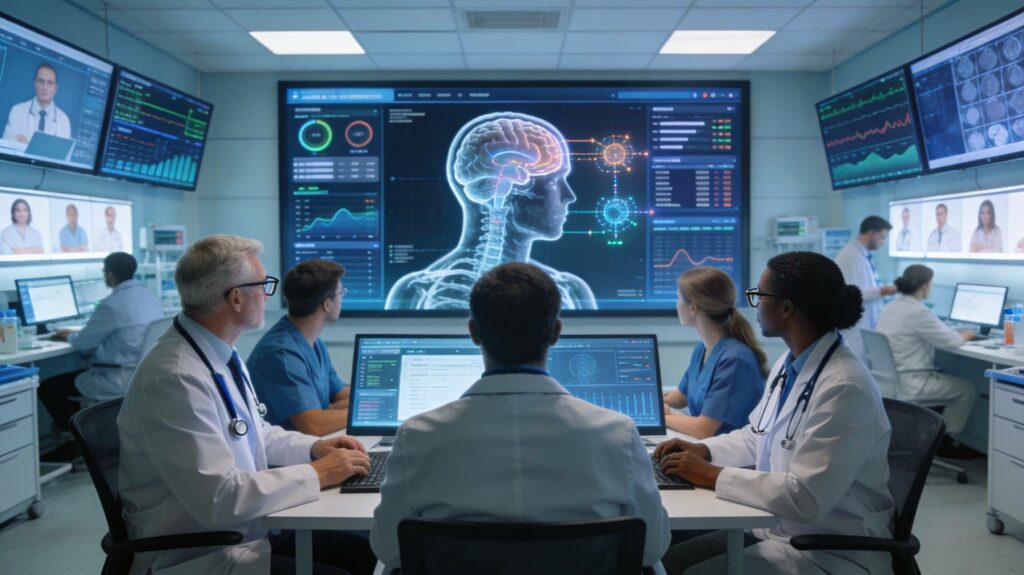
Perhaps the most revolutionary aspect of this development is AI’s ability to predict diseases long before they manifest. The system can analyze patterns invisible to the human eye, uncovering early warning signs hidden within medical images.
This shift from diagnosis to prediction marks a turning point in healthcare. Instead of treating diseases after they occur, medical professionals can intervene early, improving outcomes and potentially saving millions of lives.
It also addresses a pressing global challenge: access to quality healthcare. AI-powered tools can help standardize diagnostics, ensuring consistent and accurate results even in resource-constrained settings.
The Bigger Picture: AI is Augmenting, Not Replacing Humans
For years, there has been speculation that AI would replace radiologists. The reality is far more nuanced. AI is not eliminating jobs—it is redefining them.
Healthcare professionals are now expected to collaborate with AI systems, interpret AI-generated insights, and make informed decisions based on advanced data analysis. This requires a new skill set—one that blends domain expertise with technological fluency.
As experts at UCSF have highlighted, AI is enabling clinicians to uncover patterns, enhance image quality, and detect conditions that might otherwise go unnoticed.
The message is clear: the future of medicine is human + AI, not human vs AI.
The Urgent Need for AI Training
While the technology is advancing rapidly, the workforce is struggling to keep up. The integration of AI into healthcare—and other industries—has created an urgent demand for professionals who understand how to work with these systems.
This is where structured AI training becomes critical.
Organizations and individuals must invest in upskilling to stay relevant in an AI-driven world. Without proper training, even the most advanced tools risk being underutilized.
Programs like the Authorized Training Partner (ATP) initiative by AI CERTs are playing a pivotal role in addressing this gap. The ATP program enables training providers, institutions, and organizations to deliver globally recognized AI certifications, equipping professionals with practical, industry-relevant skills.
By becoming an ATP, organizations can not only empower their workforce but also position themselves at the forefront of the AI revolution—much like how leading universities are driving innovation in healthcare today.
AI in Healthcare: A Glimpse of What’s Next
The collaboration between UC Berkeley and UCSF is just the beginning. The researchers behind Pillar-0 and Voio are already working on expanding AI capabilities across multiple medical fields.
Future advancements could include fully automated report generation, personalized treatment recommendations, and even AI systems that continuously learn from global medical data.
As these technologies evolve, the line between technology and healthcare will continue to blur. Hospitals will become data-driven ecosystems, and clinicians will rely heavily on AI-powered insights to deliver precision medicine.
Why This Matters Now
This breakthrough is not just a milestone for healthcare—it’s a wake-up call for every industry.
AI is no longer a futuristic concept; it is a present-day reality reshaping how we work, think, and solve problems. From healthcare to finance, from manufacturing to marketing, AI is becoming a core competency.
The question is no longer whether AI will impact your field—it already has. The real question is whether you are prepared.
The Bottom Line
The work being done by UC Berkeley and UCSF demonstrates the transformative power of AI when combined with human expertise. It shows what’s possible when innovation meets real-world challenges.
But it also highlights a critical gap: the need for skilled professionals who can harness this technology effectively.
As AI continues to redefine industries, those who invest in learning and adaptation will lead the future. Those who don’t risk being left behind.
In this new era, AI training isn’t optional—it’s essential.
FAQs
What is Pillar-0 and why is it important?
Pillar-0 is an advanced AI model developed by UC Berkeley and UCSF that can analyze 3D medical images and detect hundreds of conditions. It is important because it improves diagnostic accuracy and efficiency, helping doctors make better decisions faster.
How does AI help radiologists?
AI assists radiologists by analyzing medical images, generating reports, and identifying patterns that may be difficult for humans to detect. This reduces workload and allows doctors to focus more on patient care.
Can AI predict diseases before they occur?
Yes, modern AI systems can analyze medical data to identify early risk factors and predict diseases like cancer and heart conditions years in advance, enabling preventive care.
Will AI replace healthcare professionals?
No, AI is designed to augment human expertise, not replace it. It supports doctors by providing insights and automating repetitive tasks, allowing them to make more informed decisions.
Why is AI training important today?
AI is transforming every industry, creating a demand for skilled professionals who can work with these technologies. Training programs like AI CERTs’ ATP help individuals and organizations gain the knowledge needed to stay competitive.


