

AI CERTS
3 hours ago
Wired Power Narratives In AI Society
Furthermore, it highlights certification pathways that help professionals navigate emerging responsibilities. Readers will gain historical context, strategic insight, and actionable steps. In contrast, mere trend summaries miss deeper structural shifts already underway. Therefore, detailed understanding remains essential for sustainable innovation. By mapping key narratives, we reveal what the next decade might demand. Subsequently, you can align talent strategy, compliance, and investment with evolving expectations. Let us examine how Wired’s narratives inform leadership within an increasingly algorithmic world.
Wired Influence On Power
Wired started spotlighting Silicon Valley titans during the dot-com ascent. Moreover, early stories framed technological capability as cultural power. The publication’s iconic Wired Cover visuals reinforced that framing for mainstream audiences. Consequently, boardrooms referenced those covers when justifying bold digital initiatives.
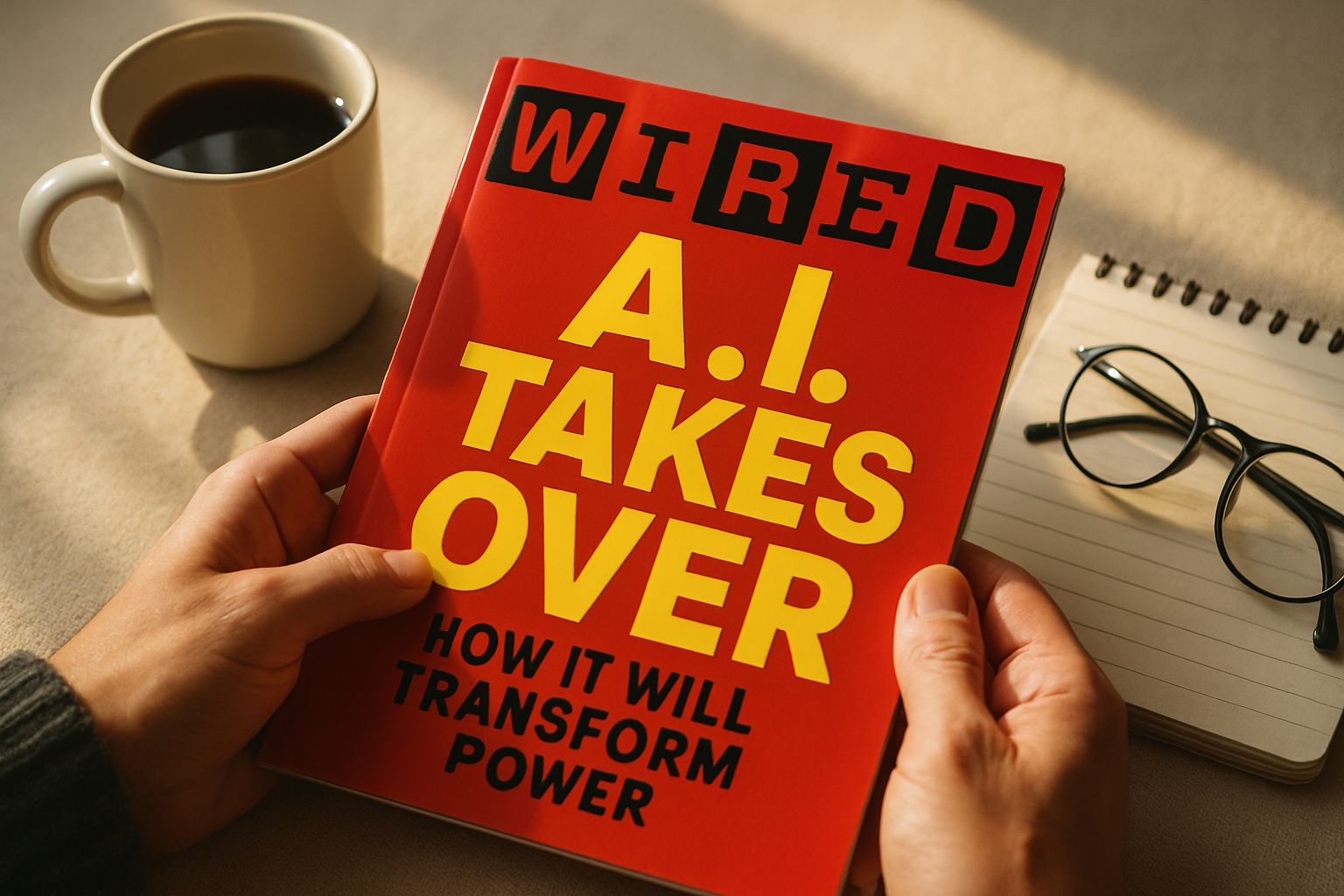
Recent features examine algorithmic opacity, monopolistic trends, and political lobbying. In contrast, earlier pieces celebrated pure disruption without ethical critique. Therefore, the magazine’s tone mirrors the maturing AI Society conversation.
These shifts illustrate media’s evolving watchdog role. However, deeper forces continue shaping perception, as the next section explains.
Silicon Valley Dynamics Today
Silicon Valley remains the epicenter of venture capital, research labs, and hyper-scaling startups. Nevertheless, financial flows now spread globally, diluting regional supremacy. Yet, every major Wired Cover still features breakthroughs originating there.
Influencers increasingly question whether that concentration of influence benefits global stakeholders. Meanwhile, European regulators draft data legislation that challenges Californian hegemony. Consequently, founders balance compliance, speed, and localization.
- 35% of worldwide AI patents cite Bay Area inventors.
- 28% of global venture capital still targets California companies.
- 12 federal investigations now probe big-tech acquisitions.
- Seven European nations coordinate joint AI export controls.
These numbers confirm ongoing clout. However, diffusion trends foreshadow broader participation detailed below.
AI Reshaping Global Society
Algorithms already select medical treatments, allocate credit, and recommend prison sentences. Consequently, the stakes for AI Society governance escalate daily.
Media narratives evolve accordingly. Moreover, Wired Cover headlines now pair celebration with cautionary tales about unintended harm.
Professionals can enhance their expertise with the AI for Everyone™ certification. Therefore, leaders gain frameworks for ethical deployment and stakeholder communication.
Responsible education underpins sustainable growth. Subsequently, media scrutiny becomes collaborative instead of combative.
Media Narratives Rapidly Shift
Journalistic framing influences public funding, regulation timelines, and venture valuations. In contrast, investor blogs often amplify hype without balanced perspective. Therefore, recent features act as a moderating signal for decision makers.
Additionally, social platforms accelerate headline cycles, forcing editors to deliver deeper context quickly. Nevertheless, concise storytelling remains vital for busy executives tracking AI Society developments.
Effective narratives drive informed choices. Next, we explore competing definitions of power within this discourse.
Power Balance Ongoing Debates
Scholars debate whether computational power equates to political influence. Moreover, some argue that data access matters more than silicon speed.
Silicon Valley lobbyists invest heavily in shaping federal guidelines. Consequently, watchdog groups push for transparent lobbying disclosures.
AI Society advocates request participatory design councils representing vulnerable communities. In contrast, corporate leaders warn that excessive regulation could stifle growth.
Both arguments reveal legitimate concerns. However, alignment mechanisms exist, as the final section outlines.
Preparing Future AI Professionals
Boards increasingly demand multidisciplinary talent combining code, law, and design. Therefore, academic programs integrate ethics, security, and product management.
Additionally, independent micro-credentials fill immediate skills gaps more flexibly. Professionals can validate foundational knowledge through the AI for Everyone™ credential.
Consequently, employers trust objective benchmarks rather than inflated résumés. This trust supports responsible scaling across wider AI Society applications.
Structured learning nurtures resilient workforces. Subsequently, organizations remain adaptive amid shifting regulations.
Conclusion And Forward Outlook
Wired’s nuanced reporting illustrates how innovative ecosystems negotiate responsibility and growth. Moreover, every prominent Wired Cover cements collective memory about technology’s societal turning points. Silicon Valley still commands attention, yet emerging hubs influence AI Society expectations. Consequently, collaborative governance should replace zero-sum rhetoric within AI Society conversations. Leaders who prioritise human impact harness power responsibly and secure stakeholder trust. Additionally, structured learning such as the AI for Everyone™ program equips teams for compliant innovation. Therefore, proactive education anchors equitable AI Society outcomes while boosting competitive advantage. Explore certification pathways today and help shape an inclusive AI Society tomorrow.


