

AI CERTS
1 hour ago
How Alibaba Group Is Turning AI Into Revenue and Why the World Needs AI Training Now
The Shift: From AI Infrastructure to AI Monetization
For years, tech giants invested heavily in AI infrastructure, cloud computing, chips, and large language models, hoping that adoption would eventually translate into revenue. Alibaba Group is now accelerating that transition.
The company is restructuring its AI operations, moving away from a bundled “full-stack” model that combined cloud, platforms, and applications. Instead, it is building a more focused AI business model designed explicitly for monetization. This includes the creation of dedicated AI units and a stronger emphasis on token-based usage models, where customers pay based on how much AI they consume.
This shift reflects a broader realization across the industry: AI cannot remain a cost center. It must evolve into a revenue engine.
The Rise of Token Economics and AI Agents
At the heart of Alibaba’s strategy is a growing focus on AI agents—advanced systems capable of executing tasks, making decisions, and interacting autonomously. These agents are significantly more resource-intensive than traditional chatbots, driving higher compute usage and, consequently, higher monetization potential.
Instead of relying on flat subscription models which have struggled to gain traction in some markets, Alibaba is embracing token-based pricing. In this model, users pay for actual usage, whether it’s generating content, running queries, or automating workflows.
This approach aligns AI with consumption-based economics, similar to utilities like electricity or cloud storage. The more you use, the more you pay—turning AI into a measurable, scalable business asset.
Strategic Investments Fueling the AI Economy
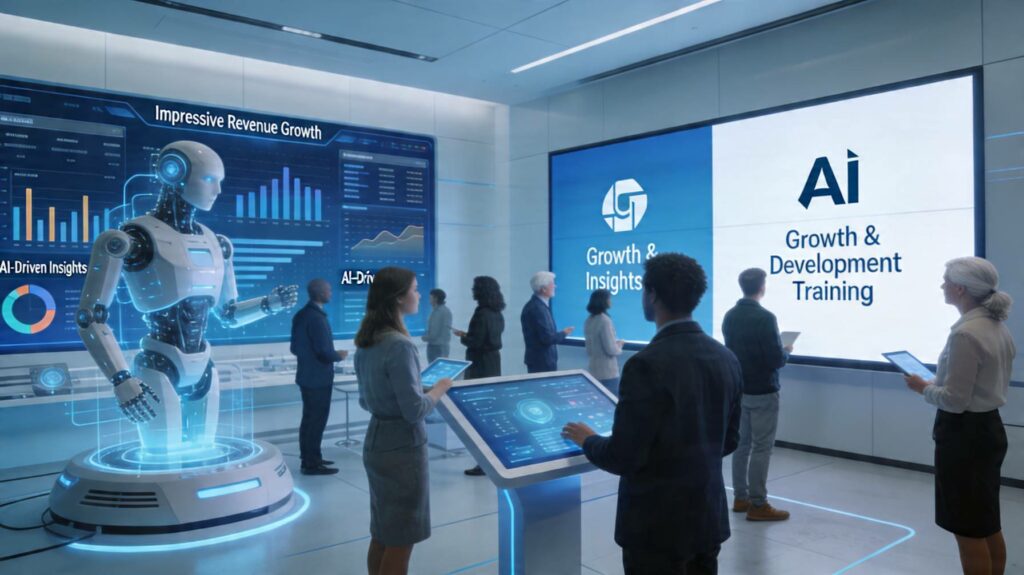
Alibaba’s monetization push is backed by aggressive investment. The company has committed tens of billions of dollars to AI and cloud infrastructure, aiming to dominate the next wave of digital transformation.
Its ambitions go even further. Alibaba is targeting over $100 billion in revenue from AI and cloud services within five years, driven by exponential demand for AI-powered solutions across industries.
These investments are not just about scale, they are about control. By owning the entire AI ecosystem, from foundational models like Qwen to enterprise applications, Alibaba is positioning itself as a central player in the global AI economy.
Open-Source Power Meets Commercial Strategy
Another critical pillar of Alibaba’s approach is its open-source model ecosystem. By releasing powerful AI models to the public, the company accelerates adoption, builds developer ecosystems, and lowers entry barriers.
But this openness is strategic. While the models may be accessible, the infrastructure, optimization tools, and enterprise-grade deployments remain monetized. This creates a funnel where innovation at the edges feeds revenue at the core.
In essence, Alibaba is blending openness with ownership, a balance that many global AI leaders are still trying to achieve.
Why This Changes the Global AI Playbook
Alibaba’s transformation highlights a crucial shift in how AI success is measured. It’s no longer about model accuracy or benchmark performance alone. The real differentiator is the ability to translate AI capabilities into sustainable business models.
This has three major implications.
First, companies must rethink their AI strategies. Building or adopting AI tools is not enough. Organizations need clear pathways to monetize AI, whether through cost savings, new revenue streams, or enhanced customer experiences.
Second, pricing models will evolve. Subscription-based AI may give way to more dynamic, usage-based systems that better reflect value creation.
Third, competition will intensify, not just among tech giants, but across industries. Every company is now, in some way, an AI company.
The Talent Gap: The Missing Link in AI Monetization
While technology and strategy are evolving rapidly, one critical piece remains underdeveloped: talent.
The success of Alibaba’s AI monetization strategy depends not just on infrastructure, but on people who understand how to use, deploy, and scale AI effectively. Without skilled professionals, even the most advanced AI systems fail to deliver value.
This is where the global AI ecosystem faces its biggest challenge. Organizations are investing heavily in AI tools, but many lack the trained workforce needed to leverage them fully.
AI is no longer a niche skill, it is becoming a core business competency.
Bridging the Gap with AI Training and Partnerships
To truly capitalize on the AI revolution, businesses must invest in structured training and education. This is where initiatives like the AI CERTs Authorized Training Partner (ATP) program become essential.
The ATP program empowers training providers, institutions, and organizations to deliver industry-relevant AI certifications that align with real-world business needs. Instead of generic learning, these programs focus on practical skills—AI implementation, strategy, and monetization.
For companies inspired by Alibaba’s model, this is a critical step. You cannot monetize what you do not understand. And you cannot scale what your teams are not trained to execute.
By becoming an ATP, organizations can not only upskill their workforce but also position themselves as leaders in the AI-driven economy—creating new revenue streams while enabling others to do the same.
AI as the New Economic Engine
Alibaba’s strategy signals the beginning of a new era—one where AI is not just a tool, but a tradable, measurable, and monetizable asset.
As AI demand continues to grow, companies that can effectively integrate technology, business models, and talent will lead the next wave of innovation. Those that cannot risk falling behind, regardless of how advanced their infrastructure may be.
The lesson is clear. The future of AI is not just about building intelligence, it’s about building value.
And in this new economy, training may be the most important investment of all.
FAQs
What does it mean that AI is becoming a “currency”?
It means AI is now directly tied to economic value. Instead of being a backend tool, it is priced, consumed, and monetized like a resource, similar to cloud computing or electricity.
How is Alibaba monetizing AI differently from before?
Alibaba is shifting from bundled AI services to usage-based pricing models, focusing on AI agents and token consumption to generate revenue based on actual usage.
Why are AI agents important in this strategy?
AI agents perform complex tasks autonomously and consume more computing resources, making them ideal for monetization through usage-based pricing models.
What role does AI training play in this transformation?
AI training ensures that professionals can effectively use and implement AI tools. Without skilled talent, companies cannot fully leverage AI for business growth or monetization.
How can organizations benefit from becoming an AI CERTs ATP?
Organizations can deliver certified AI training, build new revenue streams, enhance workforce capabilities, and position themselves as leaders in the AI-driven economy.


