

AI CERTs
4 months ago
Voice Beta Arrives For Claude Code Developers
Developers have waited months for Anthropic to bring voice controls into the coding flow. Consequently, the company has begun a beta that lets teams speak directly with Claude Code. The move follows last year’s mobile rollout, finally unifying Anthropic’s multimodal strategy. Moreover, the upgrade signals a broader shift toward hands-free Programming across enterprise toolchains.
In March 2026 the firm started shipping voice mode to roughly five percent of desktop users. However, official documentation promises a full release over the coming weeks. Early testers can invoke the feature using a simple /voice toggle or by holding the spacebar. Meanwhile, transcripts, key points, and synthesized speech appear inside the same Interface that already hosts text chats.
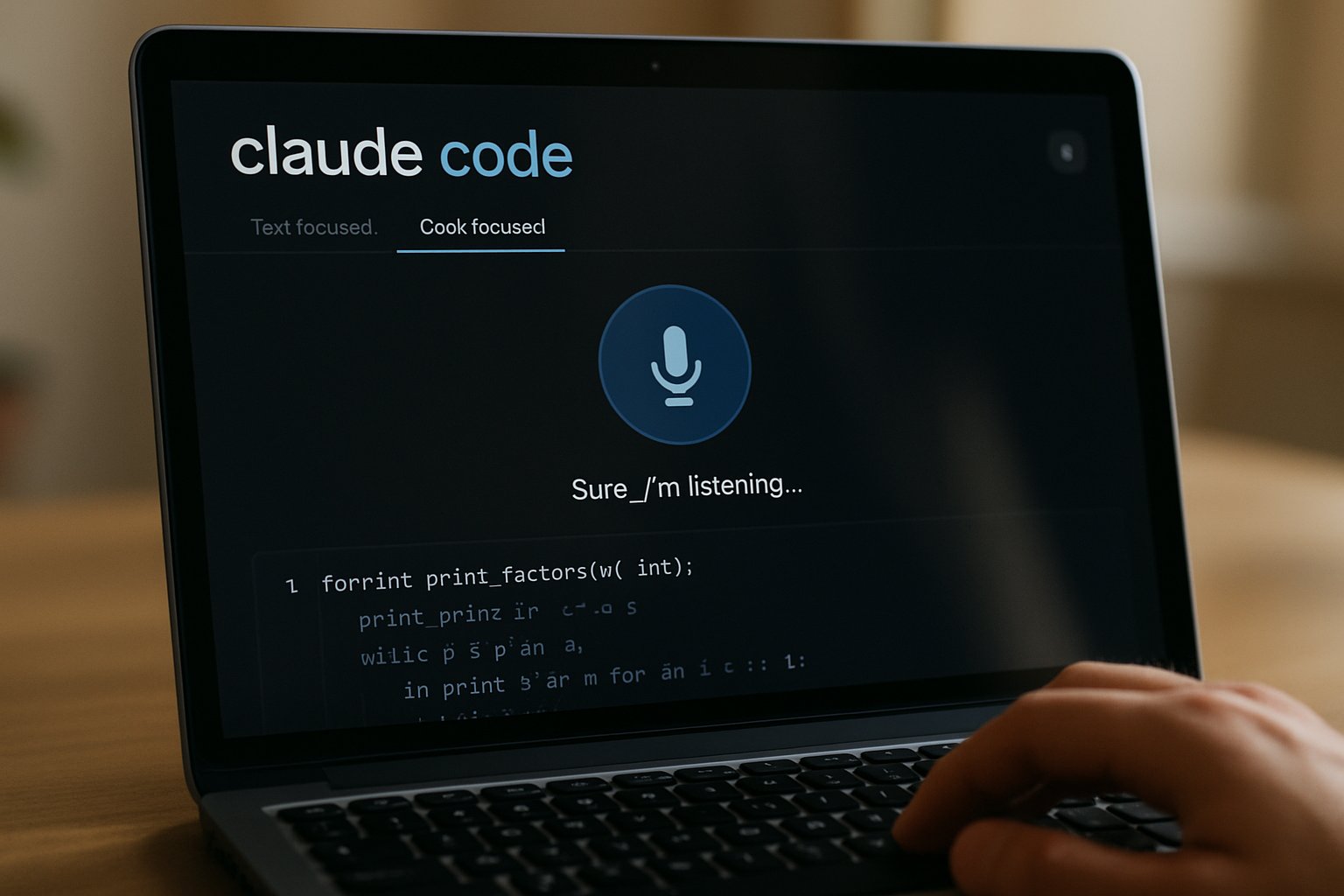
Anthropic positions the capability as natural, accessible, and secure. Therefore, the company restricts voice options to five carefully tuned tones, reducing impersonation risks. Usage still counts toward standard quotas, and free members receive roughly thirty conversations each month. Nevertheless, paid subscribers gain higher ceilings as well as enterprise controls for data retention.
Evolution Of Voice Mode
Voice mode first appeared on Claude mobile apps in May 2025. Subsequently, English users on every plan gained access during a staged rollout. The feature delivered complete spoken Interaction with transcripts and on-screen highlights.
Anthropic executives framed the launch as a prelude to deeper desktop integration. In contrast, rivals like OpenAI and Google were already touting a real-time voice Interface. Yet, many developers waited for a coding-centric experience.
By focusing on two-way speech, Anthropic pursued a natural Interface that reduces typing fatigue. Moreover, the product team emphasized accessibility for visually impaired users. Those priorities shaped the subsequent move toward code editors.
Voice mode matured quickly across mobile clients. Consequently, the groundwork was ready for a specialized desktop release. That foundation set the stage for the Claude Code beta rollout.
Claude Code Beta Rollout
March 3, 2026 marked the desktop debut of voice mode inside Claude Code. Initially, only five percent of accounts could test the feature, according to an Anthropic engineer. However, documentation indicates a rapid expansion over subsequent weeks. Many Programming leads view the beta as a natural extension of voice mobile tests.
Activation feels lightweight for developers. Teams embedded in Claude Code editors report smoother focus. Users either issue the /voice command or hold the spacebar, after which speech converts to text, creating an immediate Interaction at the cursor. Meanwhile, the assistant speaks responses while showing bullet key points, preserving flow inside the coding Interface.
Anthropic claims that speech tokens consume the same allocation as regular prompts. Therefore, free tiers may reach limits after roughly thirty spoken sessions. Enterprise customers can monitor usage centrally and disable microphones if policy demands.
- 5% desktop availability on launch day
- /voice toggle or spacebar hold activates listening
- Approximately 20-30 voice sessions for free users
- Five curated voices available at present
Early metrics suggest rapid adoption despite limited seats. Moreover, straightforward controls lower the barrier to trial. The next section explores how these controls accelerate developer productivity.
Voice Gains For Developers
Hands-free coding reduces context switching during tight sprints. Consequently, developers dictate refactor commands without moving away from the keyboard. Claude Code then returns formatted diffs while reading explanations aloud.
Productivity analysts cite several micro-efficiencies from the workflow. For example, verbal cursor jumps replace manual scrolling, saving seconds that accumulate across long sessions. Additionally, the spoken Interaction supports pair-Programming scenarios where two colleagues share a screen.
Another advantage involves cognitive load. Developers can listen to design rationales while their eyes scan adjacent files, keeping mental Agents aligned on multiple tracks. Moreover, transcript capture provides an auditable trail for later code reviews.
Voice mode delivers measurable speed and focus improvements. Therefore, organizations expect faster feature cycles and fewer context losses. However, new efficiencies arrive alongside privacy and safety questions.
Privacy And Safety Concerns
Audio streams introduce fresh vectors for data leakage. Nevertheless, Anthropic stores transcripts within the same encrypted repository as regular chats. Enterprise admins may remove recordings or disable voice to satisfy governance policies.
Impersonation also remains a persistent issue across the voice Interface. Therefore, Anthropic offers only five synthetic voices that avoid celebrity likeness. In contrast, some competitors allow full cloning, drawing regulatory scrutiny.
Billing transparency forms another open question. Claude Code users face the same quota model, yet some reports hint at waived transcription charges. Stakeholders await definitive guidance before committing critical Programming workloads.
Anthropic's policies mitigate risk but leave several gaps. Consequently, security teams continue active monitoring and vendor outreach. The competitive landscape further shapes enterprise decisions.
Competitive Voice Market Context
OpenAI, Google, and xAI have already embedded voice across flagship assistants. However, each vendor targets distinct user experiences and pricing tiers. Anthropic must therefore differentiate through reliability, privacy, and the deep IDE alignment of Claude Code.
Market analysts note Anthropic’s reported $2.5 billion Claude Code run-rate revenue. Meanwhile, weekly active users doubled between January and February 2026. Moreover, rival Agents focus on consumer chat, whereas Anthropic courts professional Programming teams.
Consequently, decision makers weigh ecosystem fit over raw model quality. Integration depth, audit controls, and security certifications increasingly influence contracts. Professionals can validate their safeguards with the AI Security Level 3™ certification.
The market race hinges on trust and specialization. Nevertheless, Anthropic’s focused roadmap strengthens its competitive hand. Finally, leaders must translate these trends into strategic action.
Strategic Takeaways And Outlook
Voice computing is rapidly shifting from novelty to baseline. Therefore, enterprises should pilot the feature within sandbox projects before scaling. Early Claude Code adopters can measure sprint velocity, defect rates, and developer satisfaction.
Leaders must also staff human Agents to oversee responsible deployment and compliance. Additionally, automated Agents monitor logs for anomalous speech requests. Furthermore, training sessions should focus on Interaction design, microphone hygiene, and data etiquette. Anthropic continues to refine latency, multilingual support, and SDK hooks for custom endpoints.
Subsequently, broader accessibility initiatives will benefit from the same speech pipelines. Organizations that align talent, process, and tooling today will gain durable momentum tomorrow. Claude Code remains a pivotal platform for that journey.
Voice mode promises measurable productivity and broader inclusion. Consequently, adopting firms can sharpen competitive edges while mitigating fatigue. The conclusion distills these insights and outlines immediate next steps.
Voice mode has moved from experiment to enterprise reality in less than twelve months. Consequently, Anthropic now offers a hands-free path that matches evolving developer expectations. Early adopters report faster sprints, clearer collaboration, and measurable accessibility wins. Nevertheless, privacy governance and billing transparency still demand careful oversight. Leaders should pilot the feature, gather quantitative feedback, and update security playbooks promptly. Finally, professionals seeking deeper assurance can pursue the AI Security Level 3™ credential to reinforce organizational readiness.
Disclaimer: Some content may be AI-generated or assisted and is provided ‘as is’ for informational purposes only, without warranties of accuracy or completeness, and does not imply endorsement or affiliation.


