

AI CERTS
2 hours ago
Vigilis AI Advances AI Physical Security Via Voice Ops
This article examines the market forces, technology architecture, and governance debates shaping the movement. Moreover, it explains how security teams can assess value while managing risk.
Industry analysts project double-digit growth for video analytics and related physical security services this decade. Meanwhile, vendors race to inject generative AI into every workflow, from SOC dashboards to patrol notebooks. In contrast, VAL shifts focus to the field, acting as an operating system for uniformed professionals.
Evolving Protection Market Landscape
Global physical security spending already sits in the tens of billions, according to Grand View Research. Furthermore, forecasts suggest high-teens CAGR for video analytics through 2030. Drivers include cheaper edge compute, ubiquitous networks, and corporate duty-of-care mandates.
Nevertheless, most deployments still prioritize post-incident review instead of proactive decision support. Therefore, organizations struggle to translate camera investments into measurable risk reduction. AI Physical Security platforms aim to close that gap by moving analytics and workflow logic to action.
The market now rewards solutions that cut response times and document compliance simultaneously. Consequently, attention is shifting toward voice-driven real-time ops assistants. Against this backdrop, understanding VAL’s differentiators becomes essential.
Inside Vigilis Voice Assistant
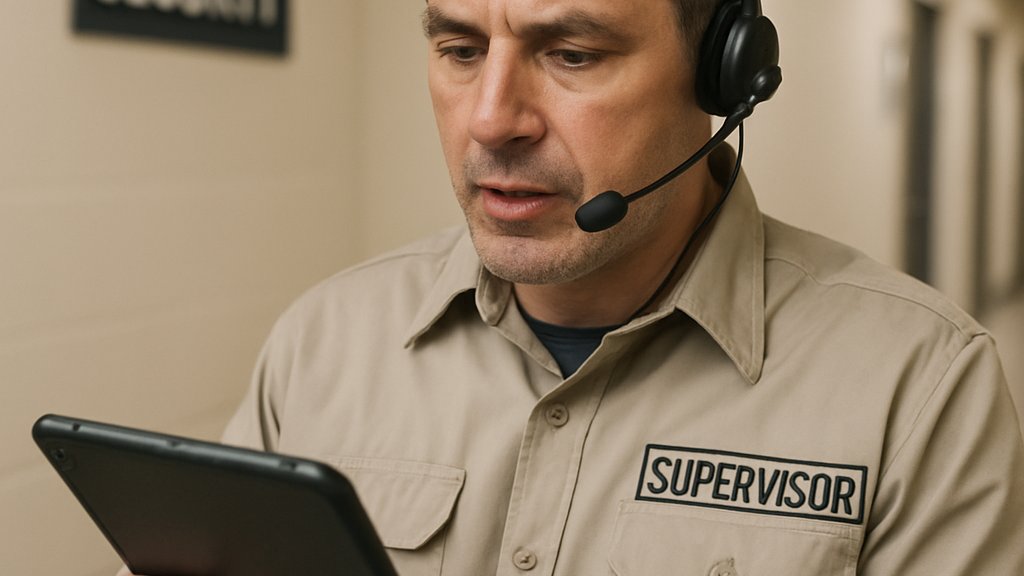
Vigilis AI positions VAL as Vigilance, Assistance, and Leadership for the guard force. The assistant listens through a secure mobile app, executes standard operating procedures, and captures audio notes. Additionally, it routes sensor alerts to nearest officers, keeping security teams synchronized.
In real tests, users reported faster escalations compared with legacy radio systems, according to company data. Moreover, VAL logs every instruction into an immutable evidence ledger for later audit. That alignment embodies true AI Physical Security in the field.
These capabilities promise lower incident miss rates and richer documentation. However, runtime governance underpins the real innovation, as the next section explains.
Governance At Runtime Layer
Traditional camera analytics rely on policy files and after-the-fact logs. In contrast, Vigilis AI implements multi-plane runtime enforcement that can block risky operations instantly. Consequently, human supervisors must approve high-impact actions through a signed workflow.
The enforcement stack spans cloud, Kubernetes, endpoint, and kernel layers. Furthermore, each decision enters the tamper-evident ledger, supporting regulated industries.
Runtime controls therefore build technical and legal confidence. Subsequently, buyers look at metrics to justify adoption.
Operational Impact And Metrics
Security leaders consistently ask for measurable outcomes before funding pilots. Grand View summaries cite three headline gains from frontline analytics.
- Average response time reduced by 30-40% in distributed campuses.
- Report completeness improved, cutting physical security audit prep hours by half.
- Incident escalation accuracy boosted, lowering false alarms in the SOC.
Moreover, early adopters claim faster officer onboarding due to guided prompts. Meanwhile, officers appreciate lower paperwork friction, according to anecdotal feedback.
Professionals may deepen expertise through the AI Security Level 1 certification. Consequently, organisations gain both skilled staff and tool maturity.
Quantified ROI strengthens the business case for AI Physical Security rollouts. Yet, competitive intensity shapes buyer options, as the comparison below shows.
Comparing Competing Vendor Approaches
Motorola Solutions, Verkada, and Eagle Eye highlight camera analytics feeding central SOC consoles. These incumbents bundle hardware, VMS, and AI models for turnkey sales. However, few deliver voice guidance or runtime governance on par with Vigilis AI.
Moreover, startups chase niche scenarios like vehicle detection or PPE compliance. Vigilis focuses on applied real-time ops orchestration across mixed sensor fleets. Buyers evaluate whether each contender delivers holistic AI Physical Security rather than point analytics. In contrast, pure analytics suppliers depend on integrators to stitch workflows.
Choice therefore hinges on whether buyers prioritise frontline usability over backend breadth for security teams. The privacy debate further complicates selection, as discussed next.
Privacy Risks And Debate
Civil-liberties groups warn that continuous, automated monitoring reshapes power balances. Furthermore, bias in training data may magnify unequal scrutiny across demographics. Therefore, transparent policies, retention limits, and third-party audits remain essential.
Vigilis counters by stressing human approvals, evidence ledgering, and configurable retention windows. Nevertheless, privacy experts demand independent validation rather than vendor promises.
Balanced governance can unlock AI Physical Security benefits without eroding trust. Subsequently, deployment realities decide whether promise meets practice.
Deployment Barriers And Outlook
Large enterprises often wrestle with legacy radios, union agreements, and budget cycles. Additionally, cross-department coordination between SOC architects and field supervisors slows procurement. Real-world pilots therefore start in a single property or mobile patrol team. Scaled AI Physical Security rollouts still demand careful change management.
Security teams must align training, data governance, and success metrics before scaling. Moreover, integration with existing access, video, and HR systems avoids vendor fatigue. The company offers API gateways to accelerate that process.
Execution discipline often separates lighthouse wins from stalled proofs. Consequently, stakeholders look to emerging standards and certifications for guidance.
Key Takeaways Moving Forward
The AI Physical Security field is expanding fast, driven by market demand and technological leaps. Vigilis AI differentiates through voice-first workflows, runtime containment, and audit-ready evidence. Furthermore, measured ROI, skilled personnel, and careful privacy design remain critical for success. Nevertheless, competition and regulation will test every roadmap.
Organizations should begin with clear objectives, limited pilots, and cross-functional buy-in. Professionals considering leadership roles can validate skills via the linked certification above. Take action today and evaluate how real-time ops platforms can elevate security teams at scale.
Disclaimer: Some content may be AI-generated or assisted and is provided ‘as is’ for informational purposes only, without warranties of accuracy or completeness, and does not imply endorsement or affiliation.


