

AI CERTS
1 hour ago
Philips Future Health Index 2026 Highlights Why AI Training Is Essential for the Future of Healthcare
However, the report also highlights a critical challenge: while AI adoption is accelerating, many healthcare professionals feel that AI training and education remain insufficient, inconsistent, or unavailable. This growing gap between AI implementation and workforce readiness presents an important lesson for healthcare organizations, technology leaders, and professionals worldwide.
AI Is Delivering Real Results Across Healthcare
Healthcare systems around the world continue to face increasing pressure from rising patient volumes, workforce shortages, administrative burdens, and growing amounts of clinical data. AI is emerging as a practical solution to many of these challenges. Healthcare professionals report that AI helps streamline administrative processes, improve access to information, support clinical decision-making, and reduce time spent on repetitive tasks. These efficiencies allow clinicians to focus more attention on patient care, which remains the most valuable aspect of healthcare delivery.
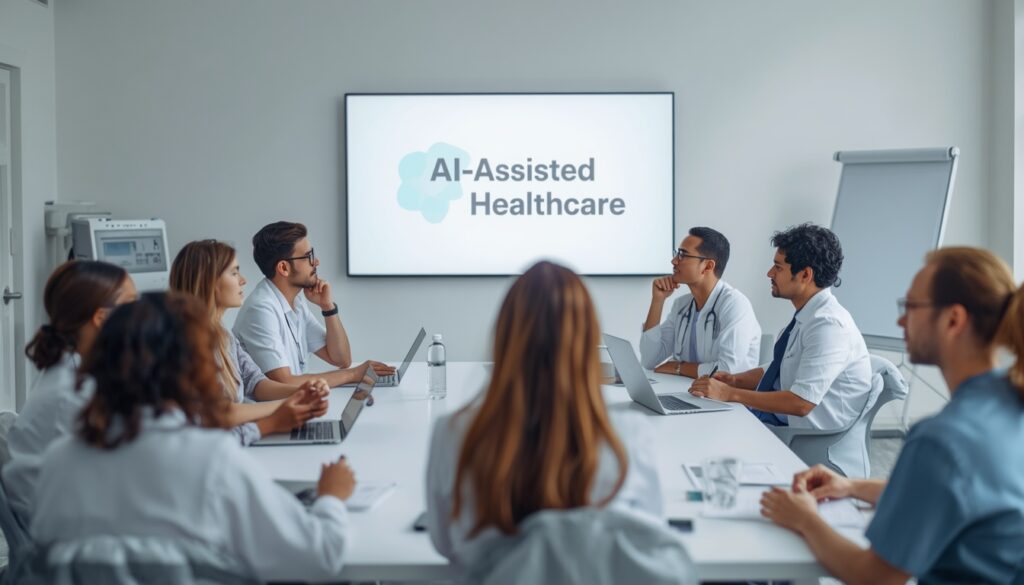
The significance of this development extends beyond productivity gains. When healthcare professionals spend less time managing paperwork and navigating fragmented systems, healthcare organizations can improve patient experiences, reduce burnout, and enhance operational performance. The Philips findings demonstrate that AI is not simply a future possibility; it is already creating measurable value in real-world healthcare settings.
The Real Challenge Is Not Technology but Readiness
While AI tools are becoming increasingly sophisticated, successful adoption depends on the people using them. The Philips Future Health Index 2026 reveals that many healthcare professionals believe AI training is inadequate or inconsistent. This insight highlights an issue that extends far beyond healthcare. Organizations often invest heavily in technology while underinvesting in the skills required to maximize its value.
The lesson is clear: AI implementation without workforce education creates a knowledge gap that limits results. Professionals who lack an understanding of AI capabilities, limitations, ethical considerations, and practical applications may struggle to use these tools effectively. As a result, organizations risk missing opportunities to improve outcomes and achieve their strategic objectives.
Research on trustworthy healthcare AI further emphasizes that successful deployment depends on education, transparency, usability, and continuous professional development. Building trust in AI requires more than introducing new technologies; it requires equipping people with the knowledge and confidence to work alongside them.
What Healthcare Leaders Can Learn from This Development
The Philips report sends a strong message to healthcare leaders and decision-makers. AI should be viewed as a workforce transformation initiative rather than a technology project alone. Organizations that prioritize training alongside implementation are more likely to achieve meaningful and sustainable results.
Healthcare professionals increasingly recognize that AI is not designed to replace clinical expertise. Instead, it acts as a support system that enhances efficiency, strengthens decision-making, and helps clinicians focus on patient-centered care. However, realizing these benefits requires professionals who understand how to evaluate AI-generated insights, manage risks, ensure ethical use, and maintain accountability.
This principle applies across industries. Whether in healthcare, finance, cybersecurity, education, or business operations, AI creates value when people know how to use it effectively. The organizations that invest in AI literacy today will be better positioned to lead tomorrow.
Why AI Training Has Become a Strategic Necessity
The rapid growth of AI adoption is transforming job roles and skill requirements. Professionals are increasingly expected to understand AI fundamentals, data-driven decision-making, automation strategies, and responsible AI practices. As AI becomes integrated into everyday workflows, organizations need employees who can collaborate with intelligent systems rather than simply operate traditional processes.
Training programs help bridge the gap between technology and human expertise. They provide professionals with practical skills, improve confidence in AI-enabled environments, and support responsible implementation. More importantly, structured training ensures that AI investments translate into measurable business and operational outcomes.
The Philips findings reinforce an important reality: technology alone cannot drive transformation. Human capability remains the foundation of successful AI adoption. Organizations that develop AI-ready workforces will gain a significant advantage in efficiency, innovation, and long-term competitiveness.
Conclusion
As healthcare organizations continue to embrace AI, the need for skilled professionals becomes increasingly important. The findings from the Philips Future Health Index 2026 demonstrate that while AI is already delivering measurable benefits, its full potential can only be achieved when professionals have the knowledge and training to use it effectively. Through the AI CERTs Authorized Training Partner (ATP) network, organizations and professionals can access industry-relevant AI education, practical learning pathways, and certification programs that help build the skills needed to thrive in an AI-driven future.
FAQs
1. What is the Philips Future Health Index 2026?
The Philips Future Health Index 2026 is a global survey that examines healthcare professionals' and patients' perspectives on healthcare innovation, digital transformation, and AI adoption.
2. How is AI helping healthcare professionals today?
AI is helping clinicians reduce administrative workloads, improve workflow efficiency, support decision-making, and spend more time focusing on patient care.
3. Why is AI training important in healthcare?
AI training helps healthcare professionals understand how to use AI tools responsibly, interpret AI-generated insights, manage risks, and maximize the value of AI technologies.
4. Can AI replace doctors and healthcare professionals?
No. AI is designed to support healthcare professionals by automating repetitive tasks and providing insights, while human expertise remains essential for clinical judgment and patient care.
5. How can organizations prepare their workforce for AI adoption?
Organizations can prepare by investing in structured AI training programs, promoting AI literacy, encouraging continuous learning, and providing certification opportunities through recognized training partners.
Disclaimer: Some content may be AI-generated or assisted and is provided ‘as is’ for informational purposes only, without warranties of accuracy or completeness, and does not imply endorsement or affiliation.


