

AI CERTS
2 hours ago
Siteimprove.ai Drives AI Search Optimization with Agentic Stack
Moreover, the vendor recently added agents focused on conversational analytics, keyword intelligence, and PDF remediation. These additions target emerging Answer Engine Optimization, or AEO, metrics tied to AI assistants.
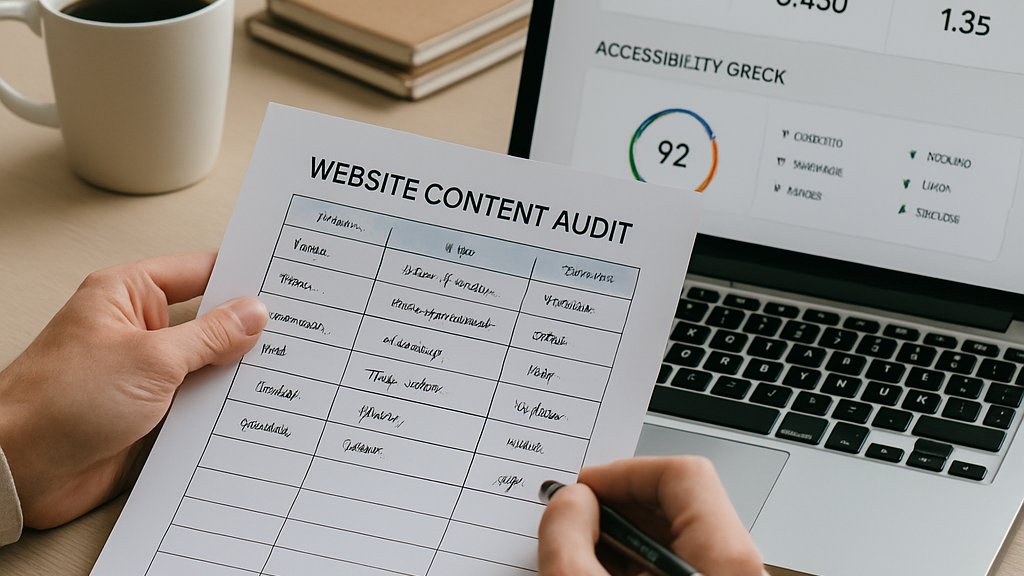
Therefore, professionals evaluating AI Search Optimization need clarity on the platform’s roadmap, benefits, and limitations. This article dissects Siteimprove.ai’s evolution, examines its technical underpinnings, and offers actionable implementation advice. Read on to understand how agentic marketing can future-proof enterprise content strategies in an AI-driven world.
Market Shift Accelerates Fast
In contrast, buyer behavior is tilting toward AI-assisted research channels. IDC predicts 79% of purchasing decisions will involve AI helpers by 2028. Consequently, classic SEO traffic models may erode as answer engines surface summarized responses. Gartner likewise foresees declining traditional queries alongside rising conversation-based discovery. Therefore, brands must pivot from legacy keyword lists toward holistic AI Search Optimization strategies. AEO emerges as an essential complement, measuring share of answers, sentiment, and attributed revenue.
- 79% of buyers will use AI tools for complex purchases by 2028 (IDC).
- Gartner projects double-digit drops in classic search volume by 2026.
- Answer engines reward structured, accessible enterprise content optimized for context.
These figures underscore urgency for proactive optimization. However, enterprises still lack unified tooling to manage emerging requirements. Against this backdrop, we explore the Siteimprove.ai agentic stack.
Inside Siteimprove.ai Agentic Stack
Siteimprove.ai groups specialized agents into a cohesive content intelligence layer. Furthermore, Amazon Bedrock and Nova models supply secure, scalable language infrastructure. Agents analyze, remediate, and enrich enterprise content across web pages, PDFs, and images. Search, accessibility, analytics, and writing agents cooperate through AgentCore orchestration. Moreover, an Optimizely integration enables experimentation loops without switching dashboards. Consequently, teams monitor performance, fix compliance gaps, and push improvements from one pane.
CEO Nayaki Nayyar positions the suite as a single system for compliance plus AI Search Optimization. AWS executive Carol Potts emphasizes Bedrock safeguards that reduce hallucination risk. Nevertheless, Siteimprove acknowledges human oversight remains crucial for legal accessibility reviews. The stack blends automation and governance within one vendor relationship. Therefore, understanding the upcoming agent roadmap becomes imperative for planning. The next section maps key release milestones.
New Agents Rollout Timeline
Siteimprove announced its agentic marketing journey through four major milestones. Initially, August 2025 introduced Siteimprove.ai with core accessibility and SEO scanners. Subsequently, February 2026 added conversational analytics, keyword intelligence, and contextual image analysis agents. April 2026 delivered advanced AEO insights that track citations and revenue impact. June 2026 brought a Content Writing & Optimization Agent alongside a PDF Remediation Agent. Consequently, the roadmap shows quarterly cadence aligned to market signals.
- Aug 2025: Platform launch
- Feb 2026: Analytics, keyword, accessibility agents
- Apr 2026: Advanced AEO metrics
- Jun 2026: Writing and remediation agents
These releases highlight continuous investment in AI Search Optimization capabilities. However, customers must correlate each drop with internal upgrade cycles. Next, we unpack how AEO metrics differ from familiar SEO dashboards.
Decoding Advanced AEO Metrics
Traditional SEO reports focus on rankings, impressions, and click-through rates. In contrast, AEO shifts evaluation toward citation frequency within answer snippets. Siteimprove.ai surfaces share of voice, sentiment trends, and AI-attributed revenue figures. Moreover, dashboards flag which content intelligence attributes influenced large language model answers. Keyword Intelligence Agent links conversational intents to structured data gaps. Consequently, practitioners see how schema, accessibility, and freshness contribute to AI Search Optimization outcomes.
Yet measurement standards remain fluid, prompting calls for industry benchmarks. Gartner warns organizations to validate AEO metrics before allocating budget. AEO KPIs broaden visibility beyond blue links. Nevertheless, teams need contextual baselines before pivoting strategies. We now weigh platform benefits against documented caveats.
Enterprise Benefits And Caveats
The biggest advantage lies in unified content intelligence for compliance and performance. Moreover, automated PDF and image accessibility reduce manual overhead and legal exposure. Keyword and writing agents accelerate editorial cycles, shortening time to publish enterprise content updates. Consequently, marketers gain bandwidth for strategic planning rather than reactive fixes. However, model hallucinations and false positives still demand expert review.
Reliance on third-party LLMs introduces governance, privacy, and cost variables. In contrast, a multi-vendor toolchain may fragment insights but offers substitution flexibility. Siteimprove offers hybrid human services to bridge automation gaps. Still, early adopters should pilot agents on limited sections before scaling. Professionals can deepen skills with the AI Marketing™ certification to maximize returns.
Benefits revolve around speed, visibility, and compliance. Yet responsible deployment frameworks remain essential. Next, we outline step-by-step implementation guidance.
Implementation Best Practice Steps
Begin with an accessibility and SEO baseline audit using existing analytics stacks. Subsequently, map critical enterprise content journey stages to agent coverage. Create phased rollouts starting with low-risk informational pages. Furthermore, configure guardrails that require human approval before publishing agent-generated edits. Align KPIs to both SEO conversions and emerging AEO citations for balanced measurement.
Meanwhile, schedule quarterly model evaluations to detect drift or policy changes. Integrate agent insights into sprint retrospectives to institutionalize learnings. Siteimprove recommends pairing conversational analytics with writing agents for rapid hypothesis testing. Consequently, data flows feed continuous AI Search Optimization loops across channels.
Structured adoption mitigates risk while unlocking compound gains. Therefore, governance discipline must mature alongside technical capabilities. Finally, we examine long-term market implications.
Future Outlook And Recommendations
Analysts expect answer engines to overtake classic search in several verticals within three years. Consequently, platforms delivering scalable agentic marketing will shape competitive moats. Siteimprove appears well-positioned through rapid iteration and ecosystem partnerships. However, rivals like BrightEdge, Conductor, and Writer are investing heavily in similar AEO dashboards.
Enterprises should monitor vendor roadmaps, benchmark metrics, and demand transparent model disclosures. Moreover, contract clauses should address hallucination liability and accessibility accuracy. Therefore, organizations pursuing AI Search Optimization must invest in skills, certifications, and flexible governance. Continuous experimentation will distinguish leaders from laggards.
The market remains young yet fast moving. Nevertheless, disciplined adopters can capture early advantage. The concluding section synthesizes key insights and actions.
Conclusion
Siteimprove.ai demonstrates how agentic marketing can merge compliance, analytics, and performance under one roof. Its evolving agents signal where AI Search Optimization and AEO practices are heading. However, sustainable gains depend on robust governance, continuous benchmarking, and skilled talent.
Consequently, leaders should pair platform rollouts with structured training and external validation. Professionals augmenting their toolkit with the AI Marketing™ certification can close knowledge gaps swiftly. Moreover, deeper content intelligence insights will emerge as measurement frameworks mature. Adopt these practices today and position your organization for tomorrow’s AI Search Optimization landscape.
Disclaimer: Some content may be AI-generated or assisted and is provided ‘as is’ for informational purposes only, without warranties of accuracy or completeness, and does not imply endorsement or affiliation.


