

AI CERTS
2 hours ago
Consensus-Saleo Deal Elevates AI Product Experience
This article unpacks the deal, the market math, and the road ahead. We examine how data-injected live demos, autonomous agents, and engagement analytics will reshape product experience workflows. Additionally, we weigh benefits against emerging risks such as security and over-automation.
Market Forces Converge Now
Gartner research shows B2B buyers complete 83% of their decision process before contacting vendors. Consequently, sellers get only 17% of total purchase time to influence outcomes. Those shrinking windows intensify demand for scalable, self-serve demos that match real customer data.
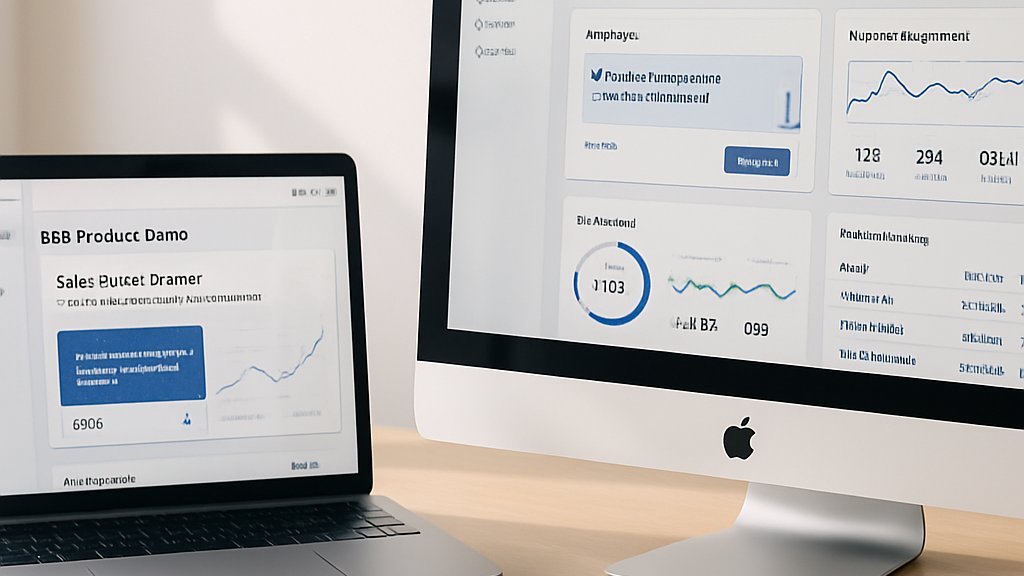
Aragon Research projects demo automation revenue will hit $2.1 billion by 2026. Furthermore, the vendor says 60% of the largest software firms already use its platform. Saleo leads G2 charts for AI Product Experience and demo automation ten consecutive quarters. Analysts already regard the Consensus-Saleo acquisition as inevitable vertical consolidation.
These trends reveal a huge addressable market and urgent buyer expectations. Therefore, the stage was set for a bold consolidation move. Next, we unpack the deal specifics.
Deal Details Fully Unpacked
Consensus revealed the Saleo acquisition in a June 9, 2026 press release. Financial terms were not disclosed publicly. Nevertheless, the strategic intent was clear: expand the AI Product Experience footprint.
CEO Doug Johnson argued revenue teams lose deals because of hidden buyer friction. In contrast, co-founder Justin McDonald stressed that live demos still decide outcomes. Combining both philosophies created a unified workflow spanning recorded tours and live, data-injected sessions.
- Announcement date: June 9, 2026
- Demo automation revenue forecast: $2.1B by 2026
- Buyer time with suppliers: 17%
- Consensus enterprise penetration: 60% of top software vendors
- Saleo G2 leadership: 10 quarters
Key metrics underscore the scale and timing behind the acquisition. Consequently, understanding the merged technology stack becomes critical. The next section explores that architecture.
Technology Stack Synergy Explained
Consensus already offers on-demand video walkthroughs, guided tours, and its Peel conversational demo automation agent. Saleo adds real-time data injection, letting reps mirror a prospect's environment without complex sandbox builds. Moreover, the combined platform feeds every click into Demolytics for intent scoring.
Together, the components deliver a continuous AI Product Experience across awareness, evaluation, and expansion stages. The agent autonomously answers questions, navigates screens, and recommends next steps. Meanwhile, presales teams regain time to tackle complex discovery and stakeholder alignment.
Independent analysts describe the merged stack as presales' answer to marketing automation in 2010. In contrast, traditional demo workflows still rely on manual environment builds and surprise troubleshooting. Consequently, resource-starved sales engineering teams welcome tooling that removes repetitive tasks. Moreover, finance leaders like predictable prep costs when forecasting expansion budgets.
For buyers, personalized content appears immediately, reflecting current metrics, users, and workflows. Therefore, stakeholders gain contextual clarity earlier in lengthy B2B buying journeys. Vendors benefit from deeper engagement analytics that flag high-intent accounts sooner.
Unified capabilities promise efficiency and relevance for both sides of the deal. Nevertheless, technology alone cannot erase every hurdle. We now review potential risks.
Risks And Challenges Ahead
Skeptical sales engineers warn that automated demos can miss subtle discovery cues. Additionally, AI agents may struggle with edge-case objections requiring AI Product Experience oversight from humans. Over-reliance might flood pipelines with unqualified leads that still demand human follow-up.
Data injection raises governance questions about sensitive information displayed during demonstrations. Consequently, enterprise buyers will seek robust audit trails, masking, and permission controls. Integration complexity could slow adoption timelines if internal sandbox tools conflict with new modules. Nevertheless, early adopters report that strict GDPR and SOC 2 controls can mitigate many doubts.
These concerns highlight that people, process, and policy shape outcomes as much as software. Therefore, execution will define whether promises translate into measurable gains. Let us examine the roadmap.
Roadmap And Outlook Ahead
Consensus plans to integrate Saleo capabilities into its AI Product Experience interface over the next two quarters. Subsequently, Demolytics will aggregate data from tours, agents, and live sessions into unified dashboards. The company also expects to expand its partner marketplace for niche vertical templates.
For customers, early access programs will test combined workflows and capture ROI benchmarks. Moreover, product teams are exploring agent handoffs that summon human sellers when risk scores spike. Meanwhile, customers urge clearer migration guides to avoid disruption during transition. Experts predict that rival vendors like Reprise and Walnut may respond with targeted acquisitions.
Timely integration and clear success metrics will influence competitive positioning. Consequently, professional upskilling becomes essential as AI transforms presales roles. Certification options address that need.
Skills For Practitioners Now
Modern presales professionals must understand data governance, prompt design, and demo storytelling. Furthermore, teams need to measure engagement analytics and adjust content loops rapidly. Practitioners can deepen expertise through the AI Product Manager certification. Moreover, such credentials signal readiness for emerging AI Product Experience roles.
Upskilled teams can navigate risks while unlocking automation scale. Therefore, talent development complements platform investments. We conclude with final insights.
Consensus and Saleo join forces at a pivotal market moment. The partnership targets friction that delays modern B2B buying decisions. Through an agentic, data-rich framework, the companies promise an unmatched AI Product Experience. However, execution risks remain around security, qualification, and human nuance. Continuous measurement, clear governance, and skilled practitioners will separate hype from durable impact. Consequently, enterprises should pilot combined demos, capture baselines, and iterate systematically. Stakeholders seeking strategic advantage should also pursue relevant certifications and stay abreast of platform updates. Act now to refine demo strategies and secure advantage in the next intelligent selling wave.
Disclaimer: Some content may be AI-generated or assisted and is provided ‘as is’ for informational purposes only, without warranties of accuracy or completeness, and does not imply endorsement or affiliation.


