

AI CERTS
2 months ago
Inside Caterpillar’s AI Robotics Acquisition of Monarch Tractor
Monarch spent eight years and roughly $240 million building a camera-first, driver-optional Electric tractor. Meanwhile, lawsuits and service complaints revealed the cost of launching unproven autonomy into demanding vineyards. Today’s article unpacks the timeline, motives, asset scope, and outstanding questions surrounding the high-profile AI Robotics Acquisition. Moreover, it highlights what the shift means for customers and competitors chasing sustainable field equipment.
Professionals seeking deeper expertise can validate skills through the AI Robotics certification, ensuring readiness for the next wave. Read on for a concise, data-driven examination of this consequential Purchase. In contrast to speculative commentary, the facts below rely on primary filings and verified press coverage.
Deal Signals Equipment Industry
Bloomberg first tipped the industry on 14 April 2026, naming Caterpillar as the mysterious buyer. Subsequently, agriculture publications confirmed the story, though neither party released a formal statement. Therefore, observers still debate whether the transaction was an asset carve-out or full corporate Purchase. The AI Robotics Acquisition nevertheless aligns with Caterpillar’s public shift toward subscription software and electrified machinery.
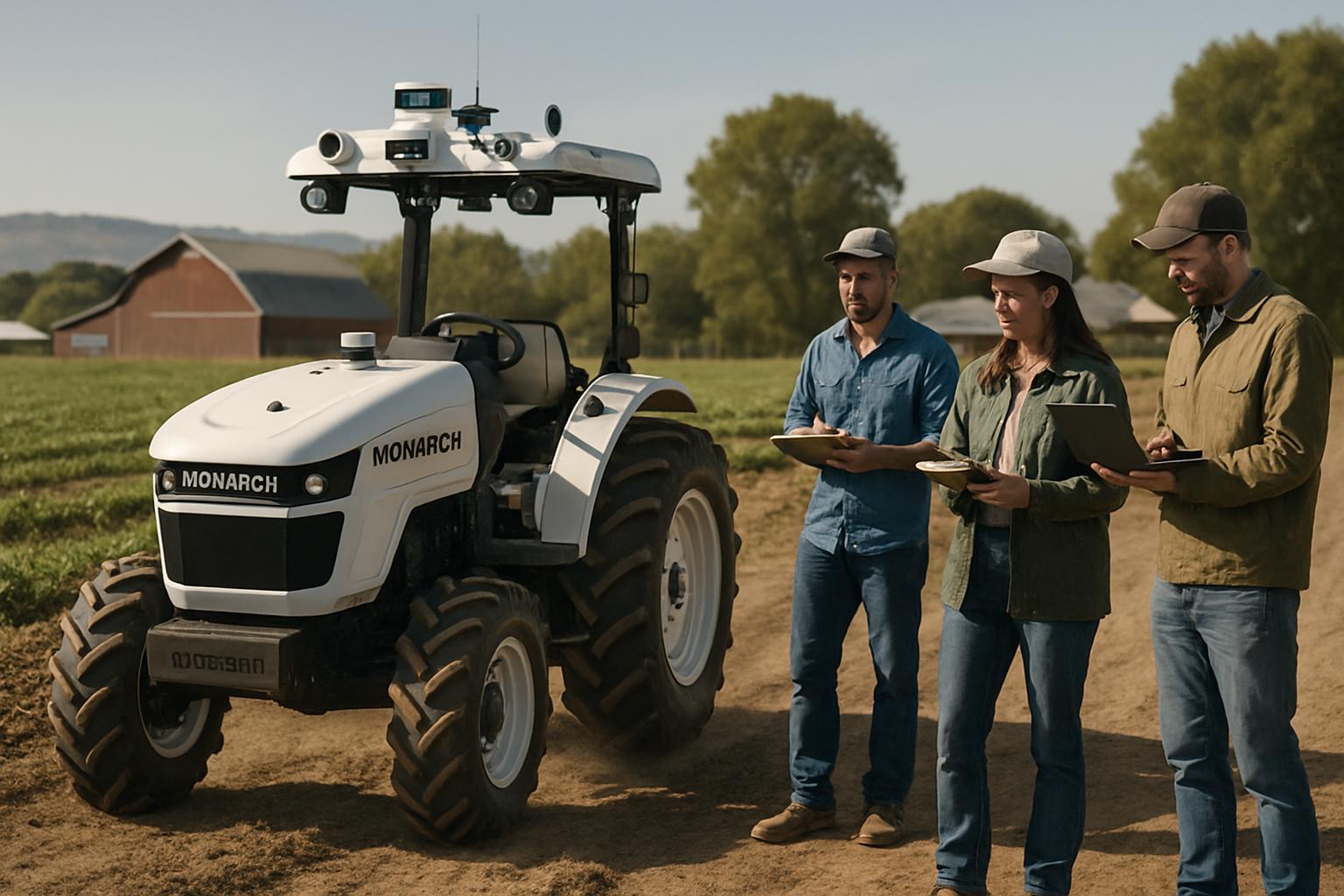
Additionally, the deal landed just weeks after Monarch shuttered its Livermore headquarters and auctioned machine tools. Such timing suggests Caterpillar cherry-picked code, patents, and data while avoiding inventory liabilities. Moreover, suppliers hint that negotiations covered exclusive rights to crucial drive-by-wire controllers. Such controllers are mandatory for remote and autonomous field operations that tractors perform daily. Consequently, many analysts compare the move to previous tuck-in buys that seeded Caterpillar’s MineStar autonomy suite.
In short, the Purchase resets competitive expectations across agricultural robotics. However, understanding Monarch’s collapse provides essential context before evaluating strategic upside.
Monarch Rise And Fall
Founded in 2018, Monarch promised a clean, intelligent Tractor priced near $100,000. Moreover, the startup marketed the MK-V as a “data platform on wheels” with exportable battery power. July 2024 saw a $133 million Series C, lifting reported valuation above $500 million. In contrast, scaling pains surfaced quickly. Dealers filed suits alleging autonomy failures, while warranty costs ballooned.
Furthermore, TechCrunch exposed Monarch layoffs of up to 102 staff in November 2025 as revenue tilted toward licensing. By January 2026, an online auction liquidated CNCs, chargers, and R&D gear. Subsequently, a LinkedIn post on 11 April hinted that a “large global equipment manufacturer” had secured the intellectual property. That AI Robotics Acquisition now reframes investor expectations set in 2024.
These events illustrate how venture-backed momentum can evaporate without reliable field performance. Next, we examine why Caterpillar still valued the remaining assets.
Caterpillar Strategic Motive Revealed
Caterpillar faces investor pressure to electrify and automate its construction and farm lines. However, building a perception stack from scratch risks delay. The AI Robotics Acquisition offers proven code plus labeled agricultural data captured over thousands of operating hours. Moreover, the firm’s cash reserves let it absorb R&D teams without inheriting manufacturing overhead.
Analysts at Benzinga argue that software subscriptions could boost Caterpillar’s margin profile by several points. Consequently, integrating Monarch telematics into the existing VisionLink platform appears a logical first step. Electric drivetrain designs also complement the giant’s compact loader and skid steer electrification roadmap. Past integrations of third-party control systems show how large OEMs can compress development timelines. Nevertheless, cultural alignment between startup engineers and corporate processes frequently determines real success.
Overall, the motive centers on speeding feature velocity while controlling risk. The next section dissects exactly which components likely transferred.
Technology Assets Acquired Scope
Neither company has published a full schedule of assets. Nevertheless, auction records and product documentation outline the following probable inclusions.
- Software-defined vehicle OS
- Camera-based perception modules
- High-voltage drivetrain schematics
- Fleet telematics cloud code
- Historical field operation data
- Safety compliance documentation
Additionally, unconfirmed reports suggest the buyer hired select Monarch engineers to maintain continuity. However, most physical infrastructure, including gantry cranes and 3D printers, already changed hands during the January auction. For the buyer, the AI Robotics Acquisition focuses squarely on code, not factories. Taken together, the package favors intellectual property over bricks and mortar. Still, unresolved support questions loom for early Tractor customers, as the following section explains.
Customer Impact Still Unknown
Roughly 400-500 MK-V units operate in North America and Europe today. Moreover, dealerships like Burks Tractor continue litigation over alleged performance shortfalls. Owners of these Electric machines wonder whether the AI Robotics Acquisition will safeguard residual values. Caterpillar has not indicated whether its warranty program will cover those units. Consequently, growers fear parts shortages because Monarch liquidated spare inventory at auction.
In contrast, some farmers welcome the prospect of a global dealer network stepping in. Furthermore, integration could unlock over-the-air updates that finally stabilize autonomy. Additional clarity may arrive once the buyer files customary SEC disclosures later this quarter. Nevertheless, growers remain uneasy until service bulletins address immediate maintenance needs. Future statements from the buyer will clarify liabilities and upgrade timelines. Meanwhile, investors are already scanning broader market implications.
Market Outlook Moves Ahead
The acquisition signals consolidation among agricultural robotics ventures after an exuberant funding cycle. Therefore, startups must now prove durability before commanding lofty valuations. Monarch’s fate also highlights the capital intensity of hardware compared with pure-play SaaS.
Additionally, legacy OEMs may repeat the template, buying distressed innovators for discounted IP. However, integration success will hinge on field validation and dealer training. Meanwhile, policy incentives for low-carbon machinery could intensify acquisition activity across mining and forestry segments. Consequently, every stakeholder should monitor post-merger product launches slated for 2027. Each new AI Robotics Acquisition will face stricter due diligence from investors. Professionals can hedge career risk by gaining advanced robotics credentials, discussed next.
Certifications Strengthen Robotics Skills
Rapid consolidation heightens demand for engineers fluent in autonomy, perception, and power electronics. Moreover, hiring managers increasingly shortlist candidates holding respected credentials. Professionals can validate those competencies through the AI Robotics certification aligned with this AI Robotics Acquisition. The program covers data pipelines, sensor fusion, and safety standards relevant to Electric agricultural platforms.
Consequently, graduates position themselves to guide integration projects within the buyer or rival OEMs. Skill investment today prepares teams for the next autonomy wave. Finally, let us recap the story’s critical lessons.
Caterpillar’s quiet move for Monarch’s IP marks a pivotal AI Robotics Acquisition in heavy equipment. However, unanswered cost, warranty, and integration details still cloud the narrative. Monarch’s swift ascent and collapse underscore hardware startup fragility despite generous funding. Consequently, established OEMs appear poised to cherry-pick viable tech as the sector matures. Moreover, customers should track the buyer’s forthcoming roadmap for electrified, autonomous Tractor lines. Professionals can future-proof careers by securing the linked certification and following subsequent deal disclosures. Act now to deepen expertise and stay competitive as agriculture robotics enters its consolidation phase.
Disclaimer: Some content may be AI-generated or assisted and is provided ‘as is’ for informational purposes only, without warranties of accuracy or completeness, and does not imply endorsement or affiliation.


