

AI CERTS
2 months ago
Doctors Are Already Using AI but the Training Gap Could Define the Future of Healthcare
A recent survey highlighted a striking shift. Nearly six in ten doctors have already used AI in clinical practice, marking a turning point in how medicine is delivered and experienced. This isn’t experimentation anymore. It’s adoption at scale.
AI Is Becoming a Daily Clinical Companion
Across hospitals and clinics, AI tools are now assisting doctors in ways that were once considered futuristic. From drafting patient notes to suggesting diagnoses and summarizing complex histories, AI is streamlining workflows and reducing administrative burdens that have long contributed to burnout.
What’s more compelling is the frequency of use. Over 20% of physicians are already using AI daily, embedding it into routine clinical decisions and patient interactions. This level of integration signals that AI is no longer an optional add-on—it’s becoming part of the medical toolkit.
Beyond efficiency, AI is also enhancing clinical reasoning. Doctors report improved decision-making support, particularly when analyzing large datasets or identifying patterns that may not be immediately visible. In specialties like diagnostics and chronic disease management, AI is already demonstrating its ability to augment human expertise.
The Promise Comes with a Critical Warning
Despite the enthusiasm, the survey reveals an uncomfortable truth. There is a widening gap between AI usage and AI readiness.
Doctors may be using AI, but many are not formally trained to understand its limitations, biases, or risks. Concerns around data privacy, patient safety, and over-reliance are growing alongside adoption.
This gap is not theoretical. Studies show that while AI can assist in diagnosis and documentation, errors, lack of transparency, and limited understanding of the technology remain significant barriers. Without proper training, even powerful tools can lead to flawed decisions.
There is also a deeper risk, overtrust. Research indicates that both patients and professionals can sometimes place excessive confidence in AI-generated outputs, even when accuracy is uncertain. In a field where precision can mean life or death, this is a challenge that cannot be ignored.
Why AI Training Is No Longer Optional
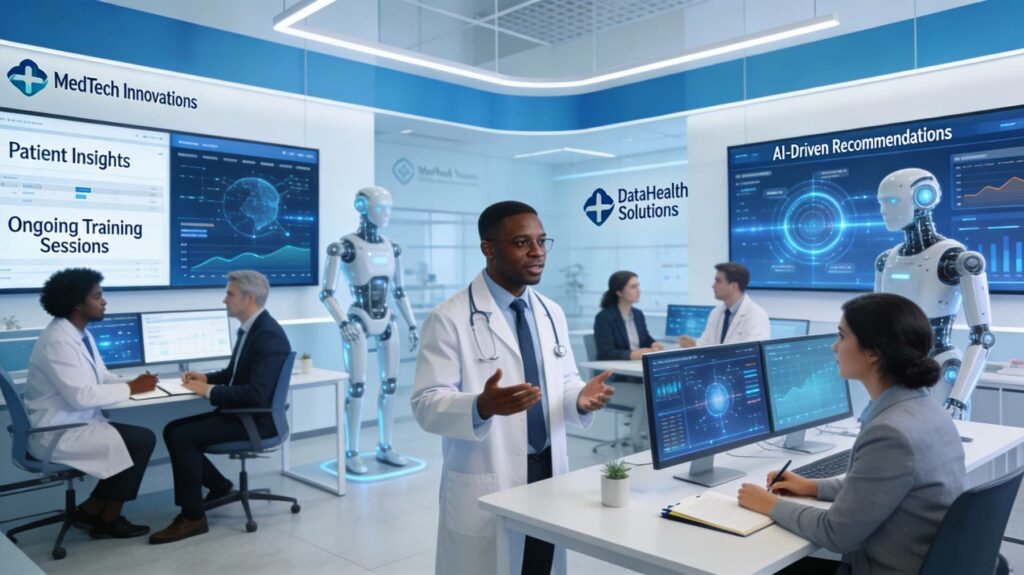
Healthcare is entering a phase where AI literacy is as essential as medical knowledge. Understanding how AI works, when to trust it, and when to question it is becoming a core competency for modern clinicians.
This is where structured AI training becomes critical. Doctors need more than tools—they need frameworks, governance, and practical knowledge to use AI safely and effectively.
Organizations that recognize this shift are already investing in upskilling their workforce. Programs like the AI CERTs Authorized Training Partner (ATP) Program are designed to bridge this exact gap. Instead of isolated learning, ATP enables institutions to deliver standardized, industry-aligned AI training at scale, ensuring professionals are not just users of AI, but informed decision-makers.
In healthcare, this could mean the difference between reactive adoption and strategic implementation.
The Future of Medicine Will Be Human Plus AI
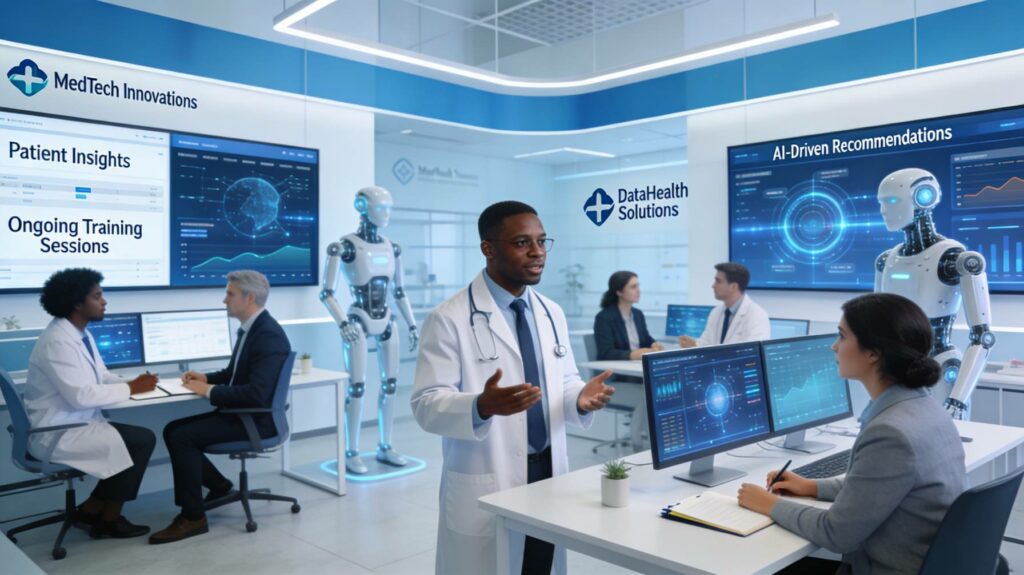
AI is not replacing doctors, it is redefining their role. As seen across global healthcare systems, AI is acting as a collaborator rather than a competitor, enhancing productivity while leaving critical judgment in human hands.
But this collaboration only works when both sides are strong. While AI continues to evolve rapidly, human expertise must evolve alongside it.
The survey makes one thing clear. Adoption is already here. The next phase is education.
Hospitals, medical institutions, and healthcare leaders now face a defining choice. They can either allow AI to grow organically, with all its risks and inconsistencies, or they can invest in structured training that ensures safe, ethical, and effective use.
The future of healthcare won’t just be powered by AI. It will be powered by professionals who know how to use it.
FAQs
What does the survey reveal about AI usage among doctors
The survey shows that around 58% to 60% of doctors have already used AI in clinical practice, with a significant portion using it regularly for tasks like documentation, diagnosis support, and administrative work.
How are doctors currently using AI in healthcare
Doctors are using AI for summarizing patient records, generating clinical notes, suggesting diagnoses, and improving workflow efficiency. It is also being used to support clinical decision-making and reduce administrative burden.
What are the main concerns about AI in clinical practice
Key concerns include data privacy, patient safety, lack of regulation, over-reliance on AI outputs, and limited understanding of how AI systems work, which can lead to errors or misjudgments.
Why is AI training important for healthcare professionals
AI training helps doctors understand the strengths and limitations of AI tools, ensuring they use them safely, ethically, and effectively. It reduces risks and improves confidence in decision-making.
What is the role of ATP programs in AI adoption
ATP programs, like the AI CERTs Authorized Training Partner Program, help organizations deliver structured AI education, enabling professionals to gain practical skills and apply AI responsibly in real-world scenarios.
Disclaimer: Some content may be AI-generated or assisted and is provided ‘as is’ for informational purposes only, without warranties of accuracy or completeness, and does not imply endorsement or affiliation.


