

AI CERTS
2 months ago
India–South Korea AI Pact Signals a Talent Race- Why Businesses Must Invest in AI Training Now
A Strategic Alliance Built on AI and Semiconductors
The recent meeting between India and South Korea marks a pivotal step toward strengthening technological collaboration. With both nations aiming to become global leaders in Artificial Intelligence and semiconductor manufacturing, the discussions focused on joint investments, knowledge exchange, and supply chain resilience.
Semiconductors are the backbone of modern AI systems. From powering machine learning models to enabling smart devices, they form the critical infrastructure of digital economies. South Korea, home to giants like Samsung, brings manufacturing expertise, while India offers a rapidly growing tech talent pool and expanding digital ecosystem. Together, they are positioning themselves as a formidable force in the global AI supply chain.
However, partnerships at the national level often reveal a gap at the organizational level, while governments collaborate on AI, many businesses still struggle to implement it effectively.
The Hidden Challenge: Talent Readiness
Despite the excitement around AI adoption, one major challenge continues to hinder progress: the lack of skilled professionals. Companies are investing heavily in AI tools, yet they often lack the trained workforce needed to use them strategically.
This is where the conversation shifts from policy to practicality. AI is no longer a “future investment,” it is a present necessity. Businesses that fail to upskill their teams risk falling behind, not just in innovation but in overall competitiveness.
The India–South Korea dialogue highlights an important truth: technological advancement is only as strong as the people driving it. Without proper training, even the most advanced AI infrastructure can lead to inefficiencies, poor decision-making, and what experts call “model collapse,” a situation where AI systems degrade due to poor data handling and lack of expertise.
Why AI Training Is Now a Business Imperative
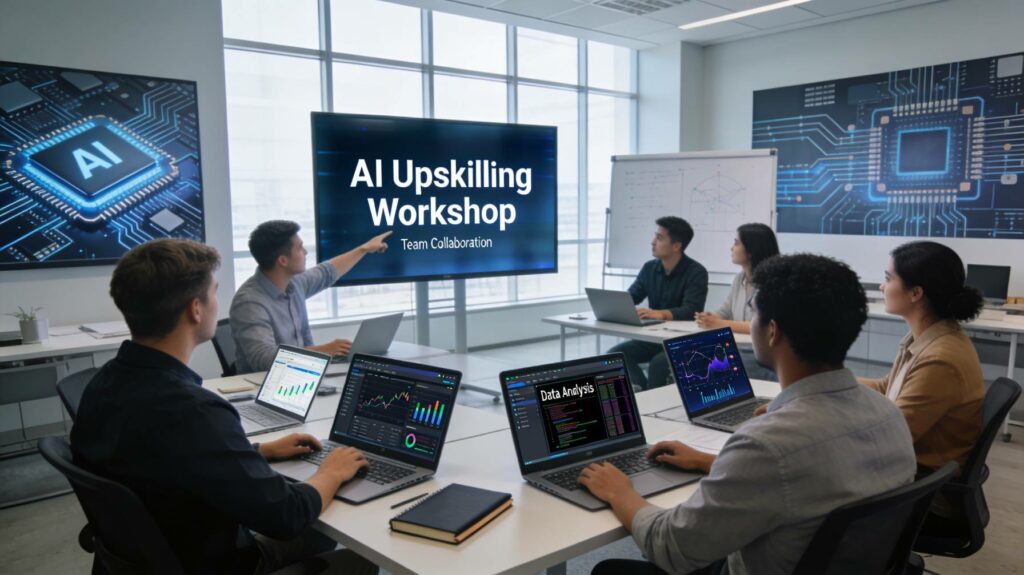
As global collaborations accelerate AI development, organizations must focus on building internal capabilities. AI training is no longer limited to data scientists or engineers. Leaders, managers, marketers, and even operational teams need a foundational understanding of AI to make informed decisions.
The demand is shifting from “AI awareness” to “AI mastery.” Companies need professionals who can not only use AI tools but also understand data lineage, ethical implications, and real-world applications. This is especially critical in sectors like manufacturing, trade, and logistics, areas directly impacted by India–South Korea cooperation.
Moreover, AI adoption is no longer a siloed effort. It requires cross-functional collaboration, strategic alignment, and continuous learning. Organizations that invest in structured training programs are more likely to achieve scalable and sustainable AI integration.
Bridging the Gap with Authorized Training Programs
To address this growing skills gap, structured initiatives like the AI CERTs Authorized Training Partner (ATP) program are becoming increasingly relevant. These programs are designed to equip professionals with industry-standard AI skills in a short time frame, enabling businesses to move from experimentation to execution.
The ATP model focuses on delivering high-quality, practical training through certified instructors. Unlike traditional courses, it emphasizes real-world applications, faster learning cycles, and global recognition. This aligns perfectly with the needs of modern organizations that cannot afford long learning curves in a fast-paced AI-driven economy.
By partnering with authorized training providers, companies can ensure their teams are not just learning AI but learning it the right way. This includes understanding complex concepts like data governance, model optimization, and ethical AI deployment, which are crucial for long-term success.
A Global Signal for Businesses
The India–South Korea AI partnership is more than a bilateral agreement—it is a signal to the global business community. Nations are preparing for an AI-driven future through collaboration and investment. The question is, are businesses doing the same?
Organizations must recognize that AI is not just a technology upgrade; it is a transformation strategy. And like any transformation, it requires skilled people at its core. Companies that invest in AI training today will be the ones leading tomorrow’s innovation.
The real takeaway from this diplomatic development is clear: while governments build alliances, businesses must build capabilities.
The Road Ahead
As AI continues to reshape industries, the importance of workforce readiness cannot be overstated. The collaboration between India and South Korea will likely accelerate advancements in AI and semiconductor technologies, creating new opportunities—and new challenges.
For businesses, this is the time to act. Investing in AI training is no longer optional; it is essential for survival and growth. The future belongs to organizations that not only adopt AI but understand it deeply.
And as global leaders come together to shape the AI landscape, the responsibility now lies with businesses to ensure their teams are ready to thrive in it.
FAQs
What is the significance of the India–South Korea AI collaboration?
The collaboration focuses on strengthening technological ties in AI, semiconductors, and trade, positioning both countries as key players in the global tech ecosystem while enhancing innovation and supply chain resilience.
Why are semiconductors important for AI development?
Semiconductors power AI systems by enabling data processing and machine learning operations, making them a critical component of modern digital infrastructure.
What is the biggest challenge in AI adoption for businesses?
The primary challenge is the lack of skilled professionals who can effectively implement and manage AI systems, leading to inefficiencies and missed opportunities.
How can businesses overcome the AI skills gap?
Businesses can invest in structured training programs, such as authorized AI certifications, to upskill their workforce and ensure effective AI integration.
What is the AI CERTs Authorized Training Partner (ATP) program?
The ATP program provides industry-recognized AI training through certified instructors, focusing on practical skills, faster learning, and real-world applications to help professionals and organizations succeed in the AI-driven economy.
Disclaimer: Some content may be AI-generated or assisted and is provided ‘as is’ for informational purposes only, without warranties of accuracy or completeness, and does not imply endorsement or affiliation.


