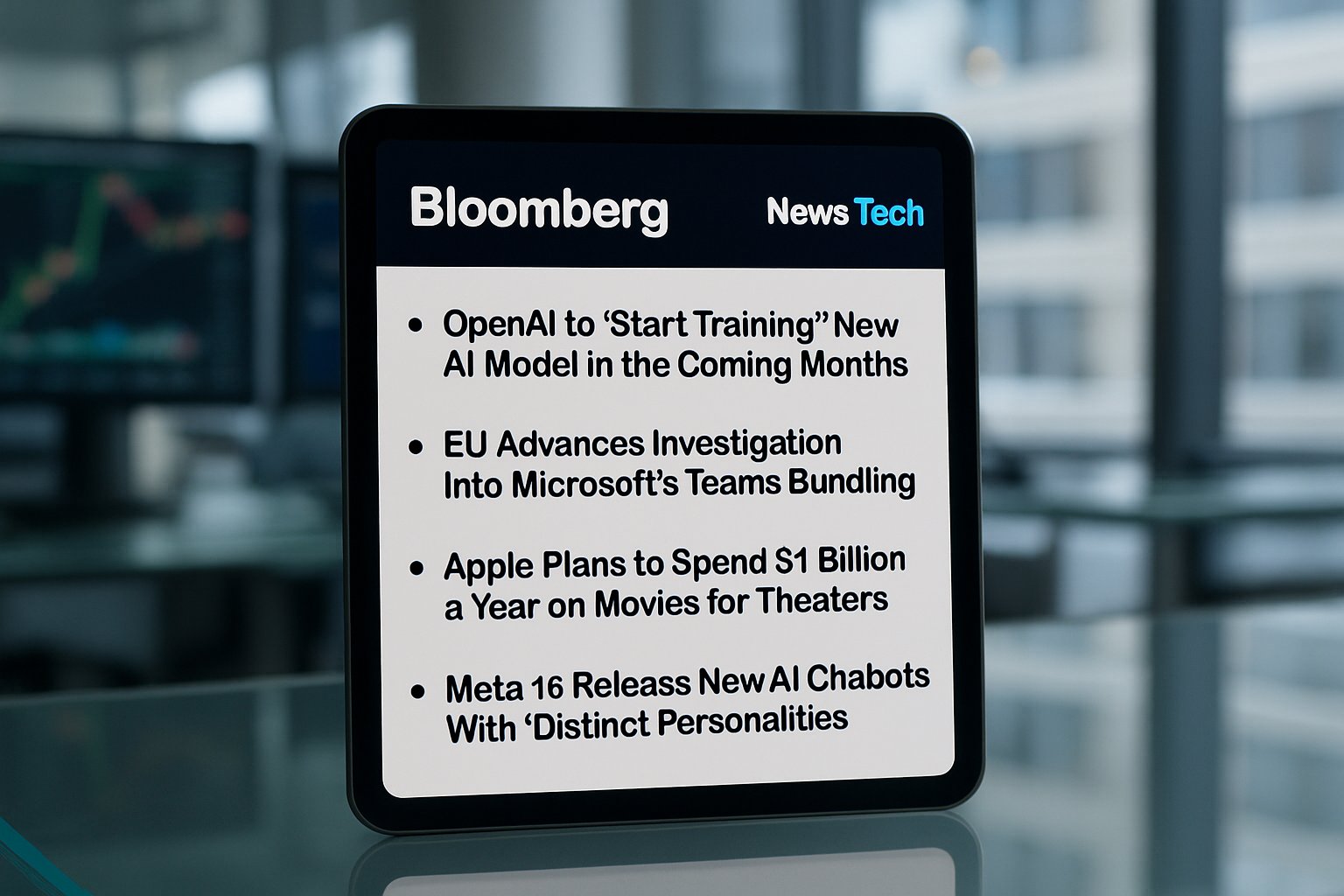
Traders digest market shifts in microseconds today. However, story overload strains attention. Moreover, recent upgrades extend reach across company filings, earnings calls, and chat-based research agents. Consequently, finance teams gain faster insight without abandoning trusted screens. Independent audits still flag hallucination hazards, yet Bloomberg insists rigorous vetting keeps errors rare. Meanwhile, rivals race to match the feature set. This article maps the rollout, probes flexibility claims, compares competitors, and weighs ongoing risks.
Bloomberg Expansion Timeline Details
January 2025 marked the public debut of three-point AI Summaries. Furthermore, November 2025 widened coverage to Company news, folding the same format into the CN screen. Subsequently, February 2026 delivered ASKB, an agentic interface that answers layered questions and reveals underlying BQL code. Therefore, Bloomberg shifted from passive digest to interactive News Tech assistant.
Bloomberg News Tech brings concise, AI-powered summaries to finance professionals on any device.
30,000 external sources feed the summary engine.
Bloomberg claims hundreds of millions of searchable documents.
Daily inputs include 5,000 original stories plus 1.1 million curated items.
These milestones illustrate rapid iteration. Nevertheless, adoption metrics remain undisclosed. The absence of third-party accuracy scores limits outside validation. These gaps highlight lingering questions. However, the next section dissects flexibility inside workflows.
Flexibility Inside Terminal Workflows
Users encounter summaries in familiar screens. Additionally, they can copy bullet points into notes if licensing allows. ASKB now lets analysts specify objective, tone, or length before generating new Summaries. In contrast, earlier static bullets offered no tuning. Consequently, customization embodies Bloomberg’s “flexibility” marketing message.
Context links accompany every output. Therefore, readers jump straight to source articles, filings, or transcripts. Moreover, attribution labels clarify provenance while reducing plagiarism fears. Professionals needing deeper mastery can pursue the AI Writer™ certification to sharpen evaluative skills.
Workflow integration reduces tab switching, saving seconds each decision cycle. Nevertheless, permission boundaries persist around print and sharing functions. These controls safeguard publisher rights yet may frustrate collaboration. The section’s lesson is clear: flexibility rises, but constraints endure. Meanwhile, accuracy concerns still demand scrutiny.
Accuracy Concerns Persist Today
Independent BBC-EBU researchers tested major assistants and found significant factual slips. Moreover, hallucinated figures appeared in 29% of generated news digests. Although the Terminal was not part of that study, the same abstractive techniques underpin its engine. Consequently, vigilance remains pivotal.
Bloomberg counters with human review loops and transparent citations. However, the firm withholds quantitative error rates. External auditors cannot yet compare Bloomberg’s News Tech to ChatGPT or Gemini on identical corpora. Therefore, clients must self-validate critical insight before trading.
Key risk signals include mismatched dates, inverted earnings trends, or missing regulatory context. Traders routinely cross-reference full filings within two clicks. These habits limit damage when problems slip through. The discussion underscores that flexibility without reliability tempts costly mistakes. Nevertheless, the competitive field keeps evolving.
Competitive Landscape Heating Up
LSEG Workspace promotes AI briefings integrated with market dashboards. FactSet markets Transcript Assistant for earnings call Summaries. Additionally, startups such as AlphaSense deliver conversational search across research libraries. Bloomberg differentiates through source breadth, deep data hooks, and enterprise-grade controls.
Bloomberg: attribution plus BQL export.
LSEG: broad market data tie-ins.
FactSet: earnings focus and Q&A features.
AlphaSense: startup agility and lower cost.
Consequently, buyers weigh trust, scope, and pricing. Market research from Grand View projects multibillion growth for generative AI in finance by 2030. Nevertheless, commoditization looms as general assistants improve. These dynamics push incumbents to embed News Tech deeper into premium bundles. The next segment explores technical levers enabling that strategy.
Technical Levers For Control
Generative models can adjust length, tone, or entity focus through prompt engineering. Furthermore, agentic orchestration inside ASKB chains multiple models to gather evidence, produce bullets, and surface code. Consequently, users refine outputs iteratively rather than accept one-shot digests.
Bloomberg also exposes confidence scores and lets teams pin preferred sources. Moreover, administrators may restrict experimental features until internal validation completes. These controllability levers mirror academic research that seeks safer abstraction.
Nevertheless, every extra dial adds complexity. Training desks must educate users on limitations. Professionals can formalize that expertise via the linked AI Writer™ program. These safeguards strengthen adoption. However, market outlook and risk factors still influence strategic value.
Market Outlook And Risks
Analysts expect spending on AI content tools to accelerate. Moreover, regulatory probes into source usage could reshape licensing costs. In contrast, open models may slash marginal summary prices, eroding premium margins. Therefore, Bloomberg’s fortress strategy relies on bundled analytics, proprietary data, and proven trust.
Clients balancing speed, cost, and accuracy will diversify suppliers. Consequently, integration depth may decide winner take most. Investors should track disclosure of error metrics, user counts, and revenue attribution to News Tech. These indicators reveal whether AI bullets drive retention or merely serve table stakes.
The industry thus enters a validation phase. Meanwhile, cautious experimentation remains prudent.
Key Takeaways Ahead
Bloomberg expanded AI summaries quickly. Flexibility improved through ASKB and customization controls. However, accuracy questions linger without transparent metrics. Competitors intensify pressure, and regulation adds uncertainty.
These factors create both opportunity and risk. Nevertheless, disciplined adoption can unlock decisive insight advantages.
Conclusion And Call-To-Action
Bloomberg’s relentless push embeds News Tech directly into professional workflows. Moreover, bullet Summaries, conversational agents, and attribution tools combine to accelerate news digestion. Nevertheless, independent studies remind users to verify every critical insight. Accuracy, licensing, and cost will shape long-term value as competitors refine similar features. Consequently, informed teams must master both technology and evaluation methods. Professionals seeking structured upskilling should explore the AI Writer™ certification to audit and deploy AI summaries responsibly. Take that step now to stay ahead in the evolving data race.