

AI CERTS
2 months ago
Semtech Launches AI Edge Computing Video Compression for 5G
Moreover, the company claims up to 90 percent data reduction on live high-definition streams. Such savings can slash recurring carrier costs and sustain coverage during congestion. Therefore, analysts view the release as a pivotal step in scaling AI Edge Computing beyond analytics to codec workloads.
The announcement arrives as 5G roll-outs heighten expectations for video everywhere. Nevertheless, many organisations still hesitate because bandwidth fees remain unpredictable. This article examines the technology, market context, and unanswered questions surrounding Semtech Video Compression.
Launch Signals Market Shift
Semtech announced the managed stack at MWC26 in Barcelona on March 10. Furthermore, the release integrates Digital Barriers’ EdgeVis encoder inside the AirLink XR60, which inherited Sierra Wireless heritage. Consequently, customers receive a single product number that bundles hardware, software, and connectivity.
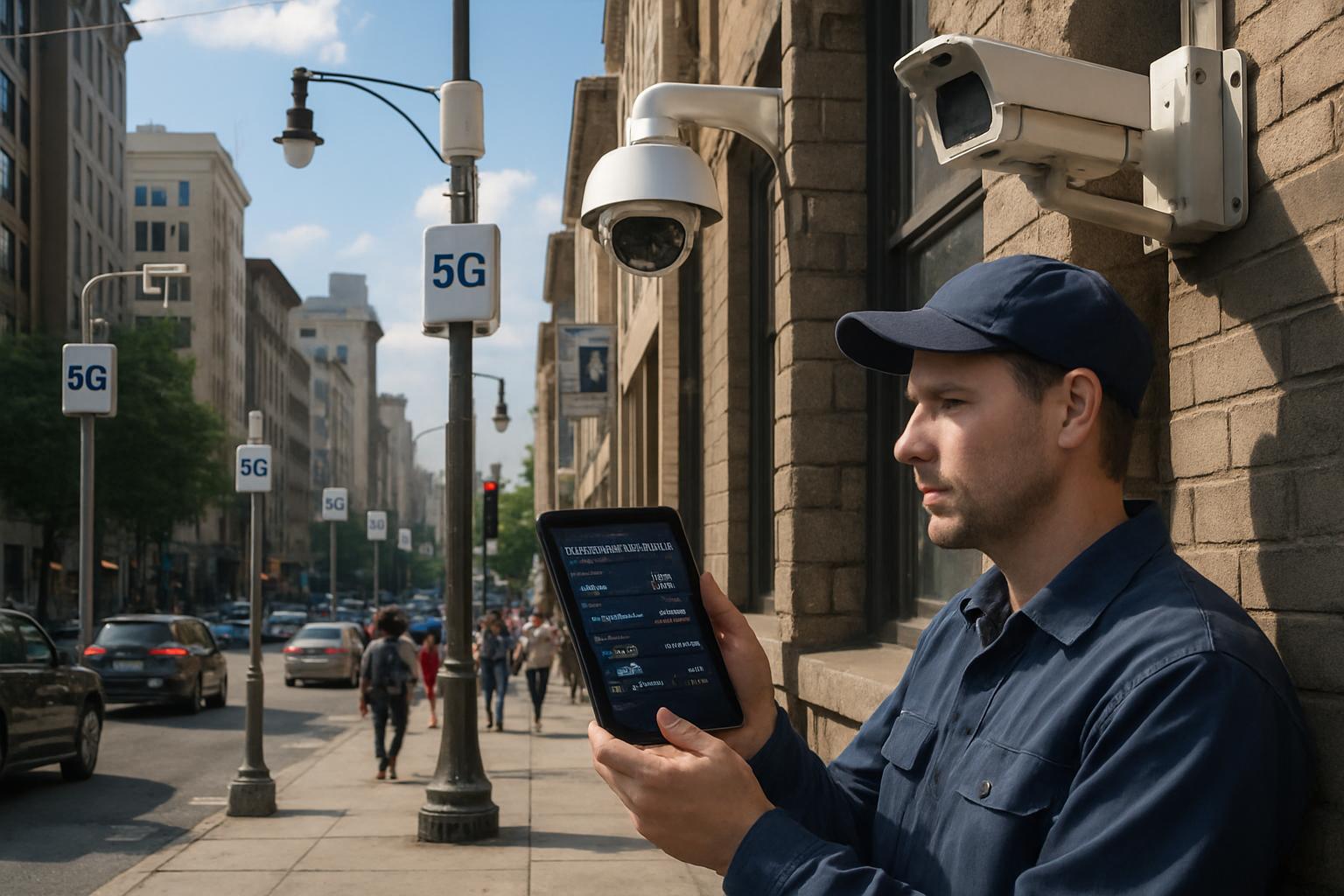
The company says availability starts immediately in North America and EMEA, with other regions planned upon demand. Moreover, Semtech positions the offer for mobile command vehicles, traffic monitoring, and critical infrastructure checks. Such scenarios depend on uninterrupted 5G uplinks yet often suffer coverage gaps and cost spikes.
Rupa Datta, Semtech VP, stated that integrating AI-powered compression “enables use cases that were not economically viable before.” Meanwhile, Digital Barriers CEO Clive Sawkins highlighted the “up to 90 percent” saving. These public claims sparked fresh analyst debate around AI Edge Computing economics.
These launch details show Semtech targeting operational simplicity. However, real-world performance will determine sustained adoption.
Consequently, deeper inspection of the technical stack becomes essential.
Tech Stack Components Explained
The Semtech Video Compression service contains four primary elements. Firstly, EdgeVis performs neural video encoding on the router. Secondly, the XR60 5G router provides rugged compute and dual cellular radios. Thirdly, Smart Connectivity uses multi-IMSI SIMs for automatic network failover. Finally, the AirVantage cloud orchestrates devices and video access.
- Claimed bandwidth cut: 4–6 Mbps down to 300–500 Kbps
- Carrier footprint: automatic roaming across 600+ networks
- Router form factor: sub-one-pound sealed chassis rated IP64
- Service launch regions: North America and EMEA today
Moreover, the encoder runs in a container, eliminating extra boxes in patrol cars or solar sites. In contrast, legacy deployments require separate encoder bricks and modems. Therefore, installation time shortens and vehicle wiring becomes cleaner.
Semtech stresses predictable subscription pricing, yet concrete tiers remain undisclosed. Nevertheless, early police pilots confirm lower data bills thanks to reduced bandwidth consumption. The field evidence underlines the financial dimension of AI Edge Computing when paired with resilient cellular links.
Component integration explains how Semtech can promise operational savings. However, performance hinges on compression science.
Advanced Compression Science Insights
Traditional codecs rely on handcrafted transforms and motion search. However, EdgeVis employs neural networks that learn spatial and temporal patterns. Consequently, objects like faces or licence plates receive priority, while static backgrounds get heavier quantisation.
Running this model on the router classifies video blocks in real time. Moreover, scene semantics steer bit allocation toward areas important for analytics and surveillance review. Therefore, the encoder can discard redundant pixels without harming mission value.
Academic papers on learned video coding report 40-70 percent gains over H.265. Nevertheless, performance varies with motion, lighting, and resolution. Semtech’s cited 90 percent figure represents favourable scenes such as fixed-angle traffic cameras.
Compute overhead remains moderate according to vendor data. Furthermore, the XR60 houses an ARM processor and AI accelerator module that handle the workload while leaving headroom for other AI Edge Computing tasks.
These technical insights indicate promising efficiency. Yet, diverse field conditions can diminish headline savings.
Use Cases And Benefits
Public-safety bodies top the early adopter list. Moreover, North Yorkshire Police confirmed that embedded encoding simplified deployment and delivered evidential quality. Traffic agencies also value the ability to stream high definition over constrained 5G cells during rush hour.
Industrial operators see parallel gains. Consequently, wind farms, pipelines, and remote substations can maintain continuous surveillance without exhausting bandwidth budgets. Additionally, edge routing and compression suit harsh environments where latency, power, and space prove scarce.
For smart-city integrators, the managed offer dovetails with IoT sensor networks. Furthermore, reduced uplink consumption allows additional sensors to coexist within the same data plan. Therefore, AI Edge Computing plus compression maximises resource utilisation across mixed workloads.
Key advantages emerge:
- Lower bandwidth costs and predictable budgeting
- Simplified architecture with fewer devices
- Improved resilience on congested networks
- Easier fleet management through AirVantage
Altogether, these benefits illustrate tangible returns. However, several open questions merit scrutiny.
Risks And Open Questions
Marketing numbers rarely survive contact with uncontrolled scenes. In contrast, independent labs still lack public VMAF data for EdgeVis. Consequently, stakeholders must request sample clips and metrics before large roll-outs.
Another concern involves forensic admissibility. Moreover, heavy neural compression can alter pixel integrity. Nevertheless, Semtech cites a police testimonial asserting evidential sufficiency; legal teams should validate against local chain-of-custody standards.
Compute overhead represents a separate variable. Consequently, prolonged high-motion events could raise CPU load and router thermals. Furthermore, battery-powered mobile kits may need careful sizing for AI Edge Computing plus networking duties.
Finally, proprietary codecs risk lock-in and archival issues. Therefore, organisations should demand reference decoders or cloud transcode guarantees.
Recognising these caveats fosters informed adoption. Subsequently, market forecasts offer a broader perspective.
Market Context Forecasts Ahead
Research groups such as Omdia project the global video-surveillance sector to reach between 38 and 66 billion USD by 2026. Moreover, analytics and services segments are growing faster than camera hardware. Consequently, vendors that pair compression with AI Edge Computing stand to capture incremental value.
Meanwhile, 5G capacity expands, yet uplink allocations remain limited compared with downstream channels. Therefore, bandwidth efficiency will stay critical across patrol, transport, and smart-city surveillance grids.
Industrial IoT portfolios also broaden. Additionally, ABI Research notes that video now accounts for a rising share of machine-generated data. Hence, solutions that compress intelligently increase project viability.
These forecast figures indicate sustained demand. Nevertheless, strategic guidance helps buyers act decisively.
Strategic Takeaways And Next
Semtech has fused compression, routing, and connectivity into one contract. Moreover, the arrangement simplifies field ops and trims bills. Consequently, many buyers will test the service during 2026 budget cycles.
Organisations pursuing smart-city IoT deployments should evaluate pilot kits early. Additionally, industrial teams can request extended trials in windy, high-motion conditions. Therefore, empirical results will confirm whether AI Edge Computing meets advertised savings.
Professionals can deepen expertise through the AI Network Security Specialist™ certification. Furthermore, vendor-neutral training clarifies how compression, 5G slicing, and bandwidth planning intersect.
In summary, Semtech Video Compression reflects a broader trend where AI Edge Computing migrates from analytics to infrastructure layers. Nevertheless, responsible buyers must demand transparency, testing, and clear exit pathways.
Future field reports will expose real-world ratios. Consequently, early adopters could shape standards for AI codecs in critical surveillance.
Semtech’s move illustrates how learned codecs, managed connectivity, and cloud control converge at the edge. Moreover, early police and industrial pilots already demonstrate dramatic bandwidth savings under live conditions. Nevertheless, independent labs must validate quality, power draw, and forensic integrity across diverse scenes. Therefore, prospective buyers should request test clips, objective metrics, and transparent pricing before signing multi-year deals.
Professionals exploring next-generation deployments can leverage AI Edge Computing guidance from certified coursework and peer communities. Consequently, continued collaboration between vendors, standards bodies, and users will shape open, interoperable ecosystems. Ready to lead that conversation? Assess current projects, then dive deeper into certifications and field trials today.


