

AI CERTS
2 months ago
Inside Lego’s Smart Brick Revolution
However, scholars of Imaginative Play sounded alarms about creativity erosion. This article dissects the technology, the market, and the debate for business and engineering readers. Moreover, it outlines professional opportunities within the wider Creative Tech ecosystem. Stay tuned as we inspect launch details, component engineering, commercial forecasts, and policy questions. Each section ends with concise takeaways that guide you toward deeper strategic insight.
CES Launch Details Unpacked
The company introduced Smart Play and the Smart Brick on 5 January during CES keynotes. Pre-orders opened four days later, while general availability starts on 1 March. Launch bundles focus on Star Wars, including Luke’s X-Wing set 75423 priced at $89.99. Additionally, a premium Throne Room package reaches $159.99 for collectors. Media outlets awarded Best in Show honours, praising precision engineering and wireless charging feats. Nevertheless, child-advocacy groups immediately urged caution, referencing previous app-dependent themes.
These mixed headlines underscore both demand and doubt. Consequently, understanding the hardware becomes essential before judging long-term value. Launch timing appears aggressive, yet price points remain within adult-fan budgets. Therefore, the next section opens the brick to examine its silicon heart.
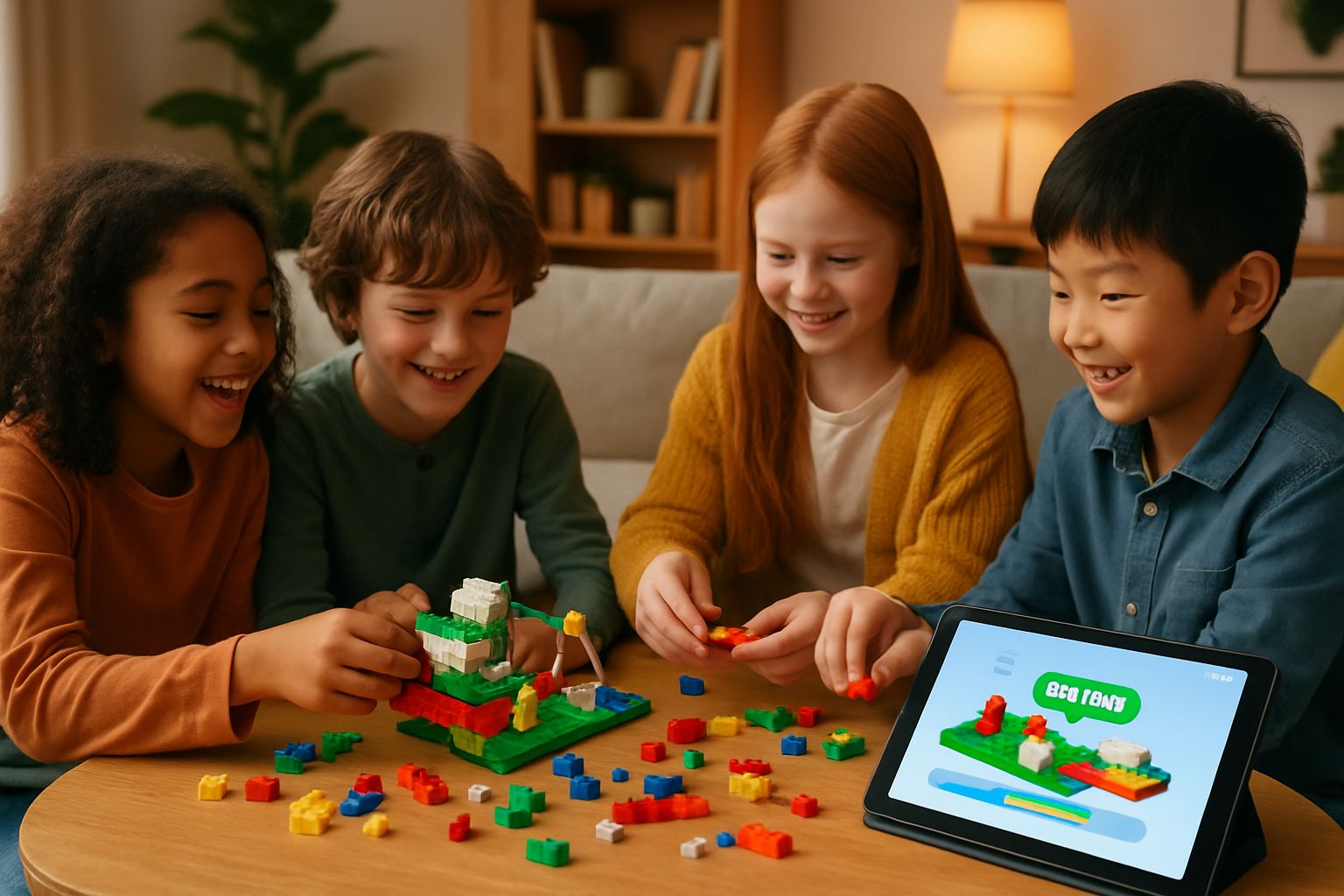
Inside The Smart Brick
Peeling the brick reveals a custom ASIC flanked by an accelerometer, microphones, and light sensors. Furthermore, multicolor LEDs occupy each stud, while a micro speaker hides beneath. Wireless coils sit below for inductive charging, avoiding bulky ports that break aesthetics. Engineers negotiated tolerances under one millimeter to preserve clutch power with legacy pieces. In contrast, earlier electronic bricks relied on removable battery boxes and external hubs.
Mesh networking, branded BrickNet, lets every Smart Brick exchange state with nearby peers locally. Moreover, an on-board synthesizer produces sounds procedurally, saving memory and avoiding licensed clips. These interior choices position the product as cutting-edge Creative Tech without cloud reliance. Miniaturization solves power, audio, and durability constraints. Consequently, networking capabilities warrant a standalone explanation next.
Mesh Network Function Explained
BrickNet forms a low-latency, ultra-short-range mesh using sub-gigahertz radio. Each Smart Brick pings neighbours sixty times per second to share motion, tag, and orientation data. Additionally, Smart Tags and SMART Minifigures broadcast unique identifiers detected within two centimeters. Therefore, a ship model recognises a pilot figure and triggers engine sounds instantly. Importantly, no internet gateway is required, appeasing privacy regulators worldwide. Tom’s Hardware reviewers measured latency under ten milliseconds during CES demonstrations.
Meanwhile, firmware updates travel over Bluetooth through a parental smartphone app. These technical decisions bolster screen-free Imaginative Play while maintaining robust safety controls. BrickNet keeps computation local and responsive. Subsequently, attention shifts toward the evolving debate on creativity versus automation.
Play Value Debate Continues
Researchers like Josh Golin argue pre-programmed effects could crowd out children's internal narratives. In contrast, Federico Begher counters that the Smart Brick merely augments open building. Moreover, educators highlight new multimodal prompts that can spark richer Imaginative Play sessions. Nevertheless, prior app-dependent lines like Hidden Side vanished after server shutdowns. Parents therefore question update commitments and potential electronic waste. Advocates suggest transparent roadmaps and spare Smart Brick replacements as partial remedies. The conversation balances wonder against worry. Consequently, commercial forecasts provide another lens for decisions.
Market Growth Context Overview
ResearchAndMarkets values the 2025 smart toy segment at roughly twenty-five billion dollars. Furthermore, connected toy subsets register fourteen to seventeen billion with double-digit CAGR projections. Analysts list Lego, Mattel, Hasbro, and Spin Master among principal innovators. Notably, the Smart Brick aligns with forecasts for sensor-rich physical toys outpacing app-only products. Moreover, adult hobbyists extend demand through maker communities and after-market mods. Such cross-generational pull boosts revenue resilience during cyclical child-toy slumps. Growth expectations remain bullish across definitions. Therefore, competition within Creative Tech intensifies rapidly.
Competitive Landscape Rapid Shifts
Mattel experiments with voice-enabled Hot Wheels, while Hasbro integrates RFID in Nerf blasters. Meanwhile, Spin Master pursues autonomous drone companions for classrooms. Nevertheless, Lego retains unmatched ecosystem compatibility, a factor reinforced by the Smart Brick. Additionally, consultants such as Cambridge Consultants assisted miniaturization, raising barriers for rivals. Competitors must match durability demands and regulatory approvals before catching up. Engineering complexity remains a formidable moat. Subsequently, attention turns to long-term maintenance and policy.
Longevity And Policy Questions
Battery lifespan, firmware cadence, and spare parts top stakeholder interviews. Hidden Side's expired servers illustrate potential pitfalls for any connected toy. However, Lego pledges multi-year update support and recyclable components for the Smart Brick. Privacy advocates still request documentation on microphone data retention. Consequently, professionals evaluating procurement should monitor forthcoming white papers.
- Warranty details expected before March street date.
- Regional compliance statements pending EU review.
- Third-party repair guides under internal discussion.
Professionals can enhance their expertise with the AI+ UX Designer™ certification. Clear policies will decide long-term acceptance. Meanwhile, career pathways emerge for builders and analysts alike.
Lego has compressed a microcomputer into a standard stud, yet retained clutch power glory. Consequently, the Smart Brick represents a pivotal intersection of Imaginative Play and Creative Tech ambitions. Hardware ingenuity, local networking, and strong branding could unlock significant recurring revenue streams. Nevertheless, sustainability, privacy, and repair commitments will determine lasting goodwill.
Executives, engineers, and educators should track forthcoming policy documents and hands-on reports. Moreover, upskilling through the referenced certification positions professionals to shape next-generation tactile experiences. Act now and translate curiosity into actionable strategy.


