

AI CERTs
3 months ago
HBM Shortage Reshapes PC and Smartphone Supply Chains
Chipmakers promised plentiful memory for years. However, AI demand has rewritten that script. The resulting HBM Shortage now ripples across the broader electronics market. PC and smartphone builders suddenly face tighter allocations and steeper bills. Consequently, product roadmaps are being redrawn on the fly. TrendForce data shows DRAM inventories falling to single-digit weeks during 2025. Meanwhile, contract prices rose double digits within one quarter. Hyperscalers secure every advanced HBM wafer they can sign. Therefore, consumer lines receive what little capacity remains. This article unpacks the forces, numbers, and strategies behind the crunch. Readers will gain actionable insights for procurement, planning, and policy decisions. Moreover, professionals can benchmark their skills against new certification paths.
Memory Allocation Shift Dynamics
High-Bandwidth Memory sits directly beside AI accelerators, delivering unmatched bandwidth. However, stacking those dies requires extra wafer starts, TSV drilling, and CoWoS packaging. Consequently, each gigabyte of HBM consumes more factory resources than legacy DDR. In contrast, commodity mobile DRAM yields far more bits per wafer.
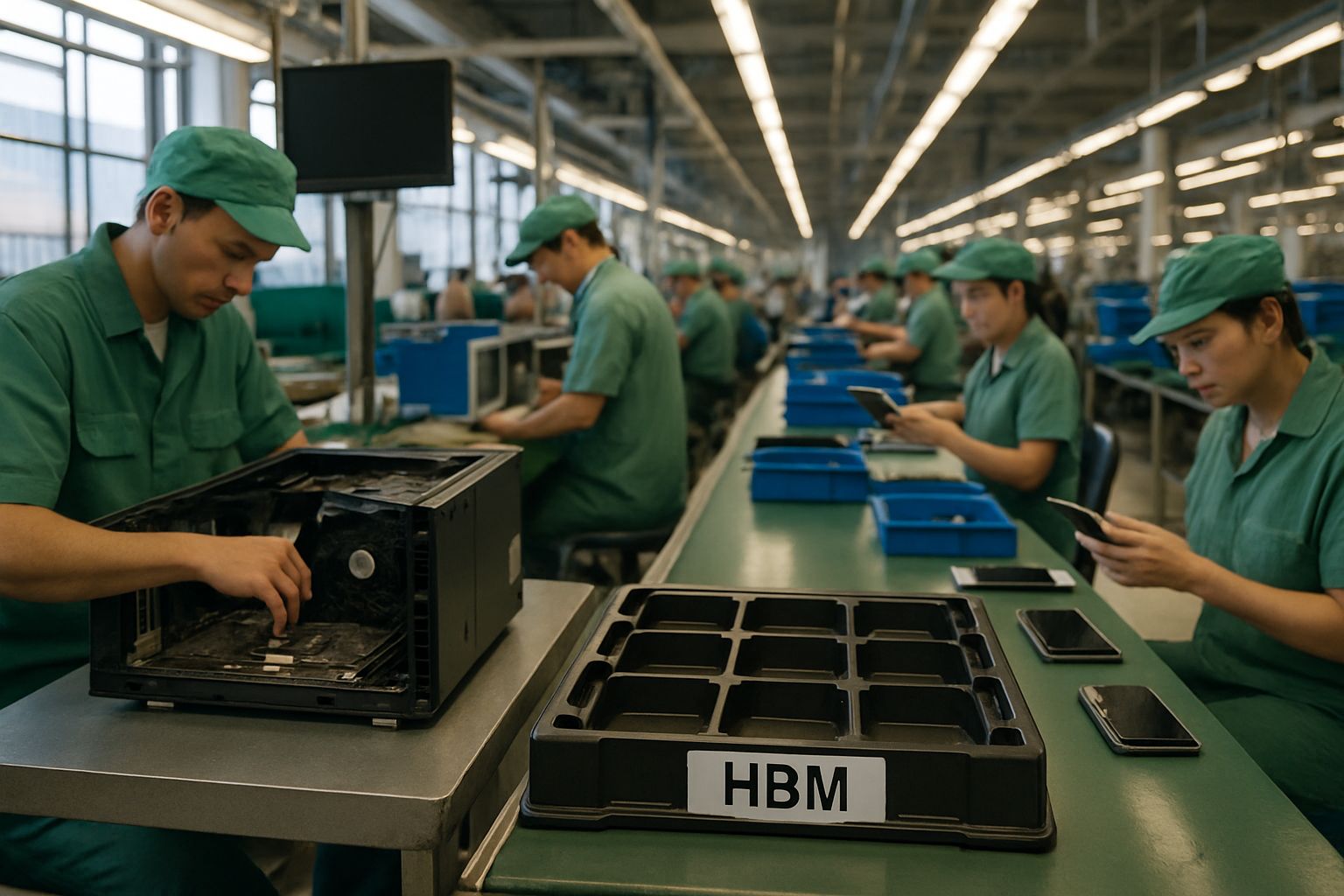
Suppliers therefore reallocate front-end capacity toward HBM and high-margin server DDR5. SK Hynix executives confirm 2025 and 2026 HBM lines are fully booked. Micron offers a similar message, warning relief may slip to 2028. These decisions underpin the present HBM Shortage and cascade through downstream tiers.
Capacity follows profit incentives, not historical share targets. However, such moves squeeze consumer segments hard. Packaging constraints deepen that pressure, as the next section explores.
Packaging Bottleneck Exposed Globally
Wafer output alone cannot ship finished memory stacks. Additionally, every HBM cube must marry a silicon interposer in advanced packaging lines. TSMC dominates CoWoS capacity, yet reported slots are oversubscribed through late 2026. OSAT partners in Taiwan and Korea rush to add 2.5D equipment. Nevertheless, qualification cycles and tool deliveries limit near-term output.
Analysts liken the choke point to the 2021 substrate crisis. Consequently, GPU modules wait months in queue before receiving HBM stacks. The delay amplifies the broader HBM Shortage and inflates inventory costs. Smartphone and PC OEMs cannot bypass this stage, even with prepaid DRAM.
Advanced packaging therefore represents the second gating constraint. Moreover, current expansion plans will mature slowly. Next, we examine how higher costs flow into device bills.
Rising Device Bill Materials
Memory once consumed roughly 12% of a mid-range phone’s BOM. Now, TrendForce sees peaks near 25% amid the HBM Shortage. PC makers report comparable inflation for DDR5 and NAND.
- Average smartphone DRAM spot price Q4-25: +38% YoY
- Average PC DDR5 module contract price: +29% YoY
- LPDDR allocation lead time: 10-16 weeks
- HBM spot price premium over DDR5: 9-12×
Consequently, budget handset vendors reduce base RAM or drop high-speed UFS options. Some PC SKUs quietly shift from dual-channel to single-channel memory. Consumer Impact grows as retail prices inch upward or features disappear.
Rising costs force trade-offs between margin and experience. Therefore, end users indirectly fund AI infrastructure. OEM countermeasures illustrate the next phase of adaptation.
OEM Strategies And Responses
Dell and Lenovo pursue long-term supply agreements to lock December 2026 volumes. Meanwhile, second-tier brands hedge by diversifying suppliers and ordering early. Samsung Mobile benefits from its captive memory arm, cushioning the HBM Shortage effect.
Smartphone assemblers also downgrade planned RAM for mid-cycle refreshes. Additionally, marketing teams emphasize AI camera features instead of memory specs. PC builders bundle cloud storage credits to offset smaller SSD capacities.
- Margin defense through feature trimming and upsell bundles.
- Forward buys and consignment inventory to secure production lines.
Together, these tactics blunt immediate pain yet add operational complexity. Nevertheless, structural shortages remain unaddressed. Long-term capacity investments aim to close that gap.
Long Term Capacity Plans
Memory leaders have announced multibillion-dollar fab and packaging projects. SK Hynix will triple HBM wafer starts by 2028, management claims. Micron plans to ramp new U.S. and Japanese facilities.
However, greenfield fabs require three to four years before volume production. Subsequently, yield learning for HBM4 will stretch timelines further. Packaging additions at TSMC, ASE, and PTI follow similar schedules.
Analysts therefore expect the HBM Shortage to linger through 2027. Consumer Impact may ease only after these assets reach yield targets.
Capacity projects deliver hope yet demand grows faster. In contrast, policy incentives could accelerate progress. Geopolitical factors may either help or hinder those incentives.
Geopolitical Supply Chain Risks
Memory fabrication remains clustered in South Korea, Taiwan, and the United States. Export controls or regional tensions could exacerbate the current HBM Shortage. Furthermore, earthquakes or power outages threaten concentrated packaging campuses.
Governments now court memory firms with subsidies to localize capacity. Nevertheless, duplicating complex supply webs is expensive and time consuming. Consequently, diversification efforts may trail demand curves for several years.
Geopolitical events add volatility to an already tight market. Therefore, proactive risk models become essential for OEM planning. Skill development forms the final lever within managerial control.
Skill Upskilling Opportunities Ahead
Supply volatility elevates the value of advanced procurement and sales expertise. Moreover, teams versed in AI solution selling can negotiate strategic memory allocations. Professionals can enhance their expertise through targeted certifications. Consider the AI Sales Pro™ program for AI-centric negotiation skills.
Additionally, SCM analysts benefit from data visualization and risk forecasting classes. These capabilities help surface early warnings of Consumer Impact.
Skill investments give companies leverage during the HBM Shortage period. Consequently, human capital complements physical capacity. A concise recap underscores the article’s actionable themes.
The HBM Shortage began with profit driven wafer shifts toward AI hardware. Packaging gates and geopolitical uncertainty then widened the supply gap. Consequently, PC and smartphone makers wrestle with ballooning memory costs and altered product plans. Consumer Impact manifests through higher prices, trimmed specifications, and delayed launches. OEM tactics offer temporary relief but cannot replace long-term capacity expansion. Meanwhile, strategic talent development counters volatility and preserves negotiation leverage. Professionals should monitor investment timelines while sharpening skills through industry certifications. Act now to lead during the next phase of the HBM Shortage, not trail it.


