

AI CERTs
5 months ago
How Patient Flow Optimization Engines Slash ER Waits
Emergency rooms still struggle with crowding despite years of process reengineering. However, many health systems now trust Patient Flow Optimization Engines to unlock hidden capacity. These platforms merge real-time data, simulation, and workflow automation into a single decision layer. Consequently, clinicians gain early warnings about surges and can reprioritize beds before lines form.
Market analysts value the patient-flow segment above one billion dollars with double-digit growth forecasts. Moreover, venture funding for capacity AI startups continues to rise, signaling mainstream confidence. This article examines the technology, evidence, and practical steps for hospital operations leaders considering adoption.
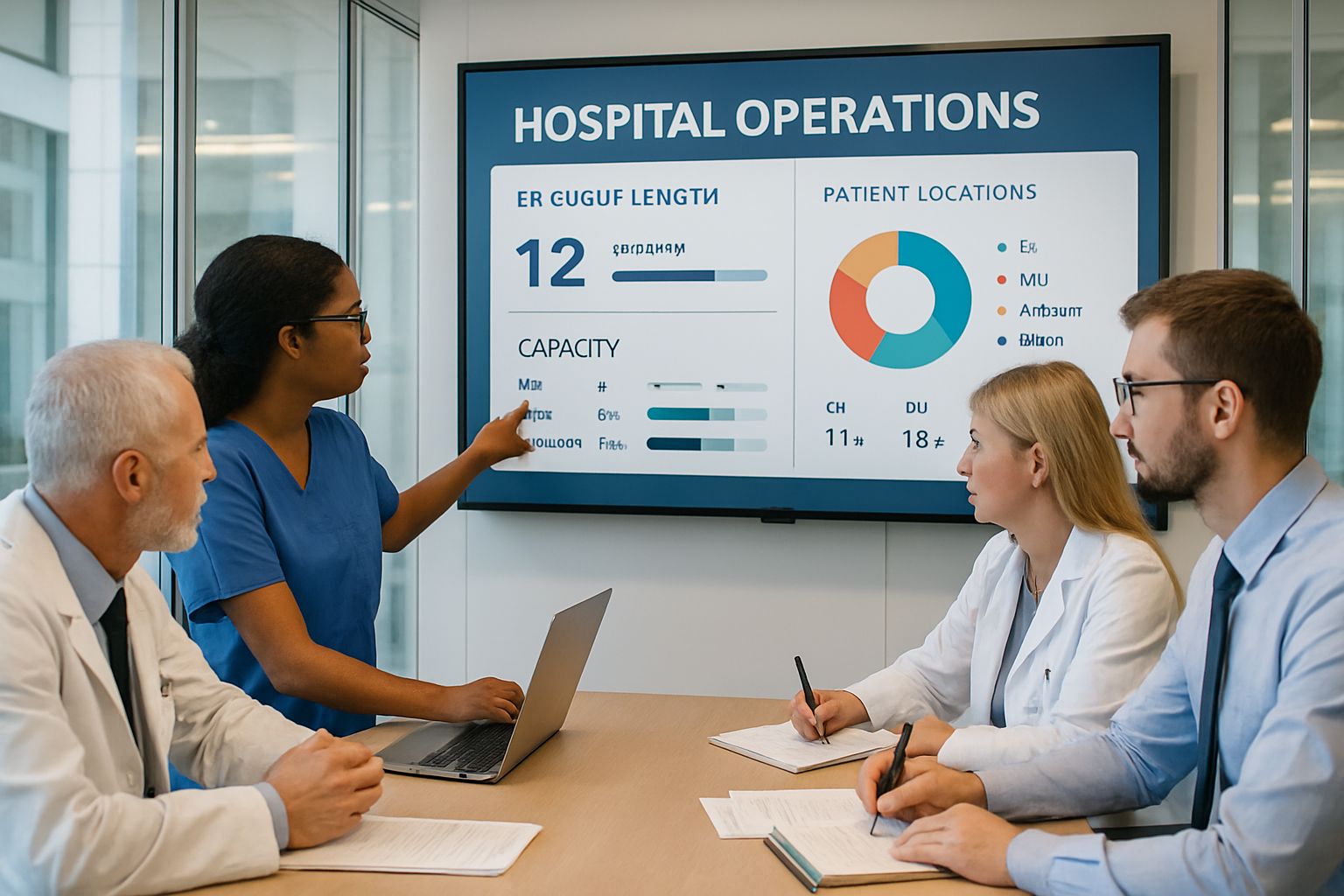
Present Market Momentum Trends
Vendor momentum accelerated during 2024 and 2025. Qventus secured new funding in January 2025 and expanded leadership to chase enterprise deals. Meanwhile, LeanTaaS publicized a 95-of-100 KLAS satisfaction score for its iQueue inpatient-flow module.
Cleveland Clinic’s Virtual Command Center, built on Palantir Foundry, now manages bed assignment across multiple campuses. Consequently, the system reports faster transfer admissions and shorter emergency department boarding hours. Hospitals adopt Patient Flow Optimization Engines to keep doors open during staffing shortages.
Market researchers estimate the patient-flow management market will grow at a high CAGR through 2035. Therefore, investors view Patient Flow Optimization Engines as a rare blend of social impact and scalable margins.
Growth signals reveal strong demand across health systems. However, understanding engine mechanics remains essential before purchase decisions.
Core Engine Mechanics Explained
Patient Flow Optimization Engines ingest live EHR feeds, staffing levels, RTLS bed status, and ambulance arrivals. Machine-learning forecasts predict census up to 24 hours ahead, while discrete-event simulation tests alternative discharge schedules. Additionally, constraint optimization recommends staffing moves that balance clinical skill and regulatory rules.
Alerts surface inside electronic health records or virtual command-center dashboards to fit existing hospital operations workflows. Subsequently, automated tasks nudge case managers and environmental services toward early action, compressing bed turnover.
These mechanics transform static data into actionable capacity AI insights. Next, real-world evidence reveals the scale of measurable improvements.
Evidence And Outcome Metrics
Academic reviews and vendor case studies present encouraging but varied statistics. In contrast, peer-reviewed meta-analyses caution that context drives effect sizes. Recent deployments of Patient Flow Optimization Engines show notable progress when analytics align with governance.
Top Reported Benefits List
- LeanTaaS reports 32% fewer boarding hours after its Patient Flow Optimization Engines went live in Florida.
- Qventus customers cite 20–33% shorter initial waits using similar Patient Flow Optimization Engines modules.
- Cleveland Clinic increased daily transfer admissions by seven percent through Palantir-powered capacity dashboards.
- A 2024 umbrella review found broad reductions in door-to-physician time across multi-site studies.
These outcomes demonstrate meaningful clinical and financial upside. Nevertheless, limitations deserve equal attention before scaling programs.
Implementation Barriers And Mitigation
Evidence quality varies because interventions often bundle software with process redesign. Moreover, many published gains originate from vendor marketing rather than independent audits. Therefore, leaders should demand raw time-series data and clarify concurrent policy shifts.
Data integration remains difficult when legacy systems fragment information. Consequently, predictions may drift or introduce bias without ongoing validation. Privacy concerns also surface when capacity AI platforms track staff locations through RTLS tags.
Governance committees, bias audits, and change-control protocols mitigate these risks. Furthermore, clinician training reduces alert fatigue and preserves trust in technology.
Barriers shrink when organizations enforce rigorous oversight. Subsequently, focus turns toward structured rollout tactics.
Strategic Adoption Roadmap Steps
Successful programs follow a phased approach. Initially, leaders benchmark baseline metrics for wait times, boarding hours, and left-without-being-seen rates. Next, cross-functional teams pilot Patient Flow Optimization Engines in a single emergency department while tracking weekly KPIs.
Parallel investments in staff communication platforms ensure recommendations reach charge nurses instantly. Additionally, professionals can enhance their expertise with the AI Executive™ certification. The credential builds fluency in data governance and hospital operations strategy.
Continuous monitoring and fairness audits follow full deployment. Consequently, organizations sustain gains and preempt model drift.
A disciplined roadmap accelerates time-to-value. Meanwhile, market trends hint at even broader applications.
Future Outlook And Insights
Researchers now explore predictive staffing, OR scheduling, and community-level surge modeling using the same analytic core. Moreover, cloud vendors embed native capacity AI services that promise tighter EHR integration. Regulatory bodies also draft guidelines to standardize algorithm transparency.
Analysts expect global spending on Patient Flow Optimization Engines to outpace other clinical AI categories through 2030. In contrast, oversight groups emphasize ongoing safety reviews to protect equity and privacy.
Innovation will likely extend to outpatient flow, ambulance routing, and home-hospital programs. Therefore, adaptive platforms may evolve into enterprise command centers controlling every patient transition.
The horizon shows both rapid progress and regulatory scrutiny. Nevertheless, informed leaders can navigate the landscape effectively.
Conclusion
Emergency departments gain tangible relief when Patient Flow Optimization Engines align forecasts, staffing, and discharge planning. Furthermore, evidence indicates significant drops in wait times and enhanced hospital operations efficiency. However, rigorous validation, privacy safeguards, and clinician engagement remain critical success factors. Leaders who follow structured roadmaps and invest in skill development position their institutions for sustained gains. Consequently, readers should assess their readiness and explore advanced credentials to guide next-step decisions.
Disclaimer: Some content may be AI-generated or assisted and is provided ‘as is’ for informational purposes only, without warranties of accuracy or completeness, and does not imply endorsement or affiliation.


