

AI CERTs
5 months ago
Employee Skill Gap Intelligence Engines: 2026 Reskilling Playbook
Generative AI, automation, and new business models are reshaping required capabilities faster than leaders can react. Consequently, persistent skill gaps threaten digital roadmaps, productivity, and retention in almost every industry. Employee Skill Gap Intelligence Engines promise a systemic, data-led remedy that traditional training programs cannot match. These engines ingest internal and market data, infer skills with NLP, and surface prioritized reskilling paths. Furthermore, early adopters report measurable ROI through faster redeployment, lower hiring costs, and stronger engagement. Global executives therefore shift budgets from generic courses to skills intelligence platforms embedded in HR ecosystems. Workforce planning teams now ask which engine offers reliable analytics, ethical foundations, and clear investment guidance. Meanwhile, vendors accelerate innovation, integrate learning networks, and certify interoperability with major HCM suites. This guide unpacks current market pressures, engine mechanics, vendor options, and governance checkpoints. Readers will leave equipped to direct reskilling funds with confidence and capitalize on emerging L&D AI capabilities.
Global Market Pressures Intensify
World Economic Forum estimates show 59% of workers require reskilling by 2030 to stay productive. Moreover, 63% of employers cite skill shortages as the top barrier to transformation. LinkedIn reports nearly half of L&D leaders perceive a worsening crisis. Consequently, boardrooms prioritize evidence-based workforce planning over ad hoc course catalogs. Investors are also watching; Amazon and Walmart committed billions to large-scale upskilling programs. Employee Skill Gap Intelligence Engines align with these fiscal realities by targeting critical competencies first. Therefore, market pressure sets a compelling backdrop for systematic engine adoption. Skill shortages now threaten growth and shareholder value alike. However, technology-driven intelligence engines turn urgency into structured action, as the next section explains.
Core Engines Explained Clearly
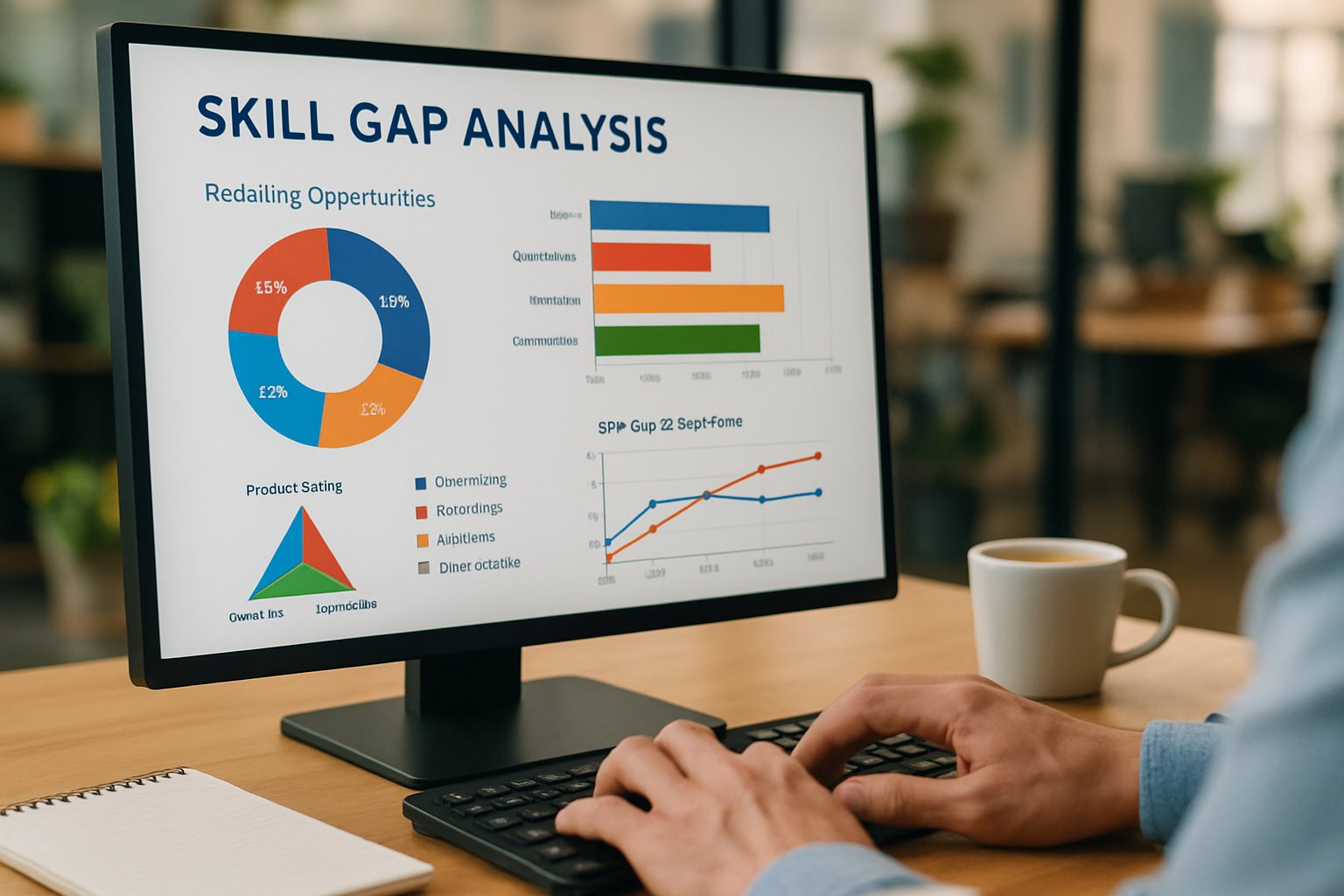
At their core, the engines ingest HRIS, LMS, project, and labor-market feeds into a unified skills graph. Next, ML models infer verified skills, map ontologies, and flag proficiencies needing development. Furthermore, role adjacency algorithms predict viable career moves and time-to-skill for each worker. Employee Skill Gap Intelligence Engines then match learning assets, projects, or hiring strategies to close gaps efficiently. Consequently, L&D AI recommendations become personalized, measurable, and tightly linked to organizational priorities. Build-buy-borrow simulations calculate cost, retention risk, and productivity upside for every scenario. Another capability surfaces gig projects inside marketplaces, giving employees low-risk pathways to practice new skills. A final output is an executive dashboard that tracks fill rates, promotion velocity, and business impact. Because Employee Skill Gap Intelligence Engines integrate existing data, deployment often begins with minimal disruption. Modern engines therefore connect data, analytics, and content into one reskilling utility. The following section shows how these insights steer investment decisions with hard numbers.
Investment Decisions Data Driven
Chief Financial Officers demand quantifiable ROI before approving new learning budgets. Therefore, engines model each role transition across cost, duration, and value dimensions. McKinsey surveys indicate organizations that reskill successfully outpace peers on productivity and revenue metrics. Employee Skill Gap Intelligence Engines feed those benchmarks into scenario tables for finance review. Moreover, workforce planning leaders compare internal upskill costs with external hiring premiums. Often, internal moves deliver faster time-to-value and higher retention, trimming recruiting overhead significantly. Additionally, engines forecast churn risk reduction when learning paths align with career aspirations. One Fortune 500 pilot saved $14.5 million by redeploying engineers through a Gloat marketplace. Consequently, L&D AI dashboards now sit beside financial KPIs during quarterly planning reviews. Data-driven comparisons convert learning conversations into strategic capital allocation discussions. Next, we examine which technology providers dominate this emerging ecosystem.
Vendor Landscape Evolves Rapidly
The marketplace features platform giants, niche innovators, and content partners racing toward interoperability. Workday Skills Cloud anchors many deployments by offering an open ontology and certified integrations. TechWolf, SkyHive, and Lightcast enrich that graph with external labor insights and automated skill inference. Meanwhile, Gloat and Eightfold deliver internal marketplaces and talent planning overlays on top of the same data. LinkedIn contributes learning content signals, while Coursera, Udemy, and Skillsoft supply credential paths. Employee Skill Gap Intelligence Engines increasingly bundle such partnerships into turnkey packages for large enterprises. In contrast, some buyers adopt point solutions and stitch capabilities through open APIs. However, analysts warn fragmented stacks may inflate maintenance costs and complicate governance. Therefore, procurement leaders evaluate vendor roadmaps, funding stability, and ecosystem certifications before signing contracts. Employee Skill Gap Intelligence Engines with robust roadmaps now dominate shortlists across regulated industries. Vendor maturity is rising, yet differentiation remains centered on data breadth and predictive accuracy. Subsequently, we must explore obstacles that still derail many rollouts.
Key Implementation Challenges Persist
Deploying any advanced analytics platform requires change management, governance, and cultural alignment. Data quality problems surface when résumés, badges, or project logs contain outdated or inconsistent information. Moreover, automatic skill inference can reinforce bias if validation workflows are absent. Employee Skill Gap Intelligence Engines mitigate risk by allowing employees and managers to confirm suggested skills. Nevertheless, many L&D teams lack the analytics fluency needed to interpret dashboard signals. Therefore, organizations invest in upskilling HR professionals alongside technical rollouts. Privacy regulations also mandate transparent consent management and secure data hosting locations. Consequently, legal counsel often joins steering committees during early design workshops. Professionals can enhance their expertise with the AI+ Legal Strategist™ certification to navigate these concerns. Challenges demand proactive mitigation, yet none are insurmountable when leaders plan deliberately. Strong governance, skills fluency, and legal rigor unlock reliable engine outcomes. The forthcoming checklist turns these lessons into simple evaluation steps.
Vital Practical Evaluation Checklist
A concise framework accelerates vendor comparison and pilot design.
- Integration breadth across HRIS, LMS, ATS, collaboration, and market feeds
- Open, extensible skills ontology alignment for future portability
- Employee and manager validation workflows to curb inference errors
- Actionable outputs: gap heatmaps, role adjacencies, ROI simulators, gig matching
- Outcome tracking for promotions, retention lift, and productivity signals
- Data privacy, consent management, and regional compliance controls
Employee Skill Gap Intelligence Engines that score high on these dimensions usually scale smoothly. Additionally, workforce planning leaders should run a 90-day diagnostic before enterprise rollout. L&D AI teams can partner with finance to define baseline metrics and validate business impact. Finally, publish transparent scorecards to maintain stakeholder confidence. Systematic evaluation curbs buying risk and speeds time-to-value. Key takeaways now crystallize the discussion and suggest immediate next moves.
Key Takeaways And Action
Organizations face historic pressure to close competency gaps before technology curves steepen further. Employee Skill Gap Intelligence Engines consolidate data, analytics, and content into actionable blueprints. Consequently, finance, HR, and business units can allocate capital with unprecedented precision. Workforce planning excellence grows as these platforms quantify build-buy-borrow trade-offs. Meanwhile, L&D AI personalization boosts engagement, retention, and internal mobility. Nevertheless, successful adoption still depends on governance, data quality, and legal safeguards. Leaders should start small, measure relentlessly, and iterate using the checklist provided. Therefore, explore certifications like the earlier AI+ Legal Strategist™ to strengthen oversight skills. Take decisive steps now, because talent agility defines competitive advantage in 2026 and beyond.
Disclaimer: Some content may be AI-generated or assisted and is provided ‘as is’ for informational purposes only, without warranties of accuracy or completeness, and does not imply endorsement or affiliation.


