

AI CERTS
1 week ago
Windows Arm AI leapfrogs with RTX Spark and Prism
This article unpacks the milestones, trade-offs, and enterprise questions shaping the Arm ecosystem. Along the way, we will spotlight practical buying guidance and certification pathways. By the end, professionals should grasp where to place their next Windows Arm AI bet.
Why Arm Still Matters
Arm laptop shipments still trail x86, yet momentum is clear. Furthermore, Qualcomm’s Snapdragon X NPUs offer 40 TOPS, meeting Copilot+ thresholds. Windows Arm AI devices therefore meet Microsoft’s definition of a next-gen AI PC. In contrast, many Intel and AMD mobile chips hover below that metric today. Therefore, early adopters see Arm hardware as an express lane to sustained on-device inference.
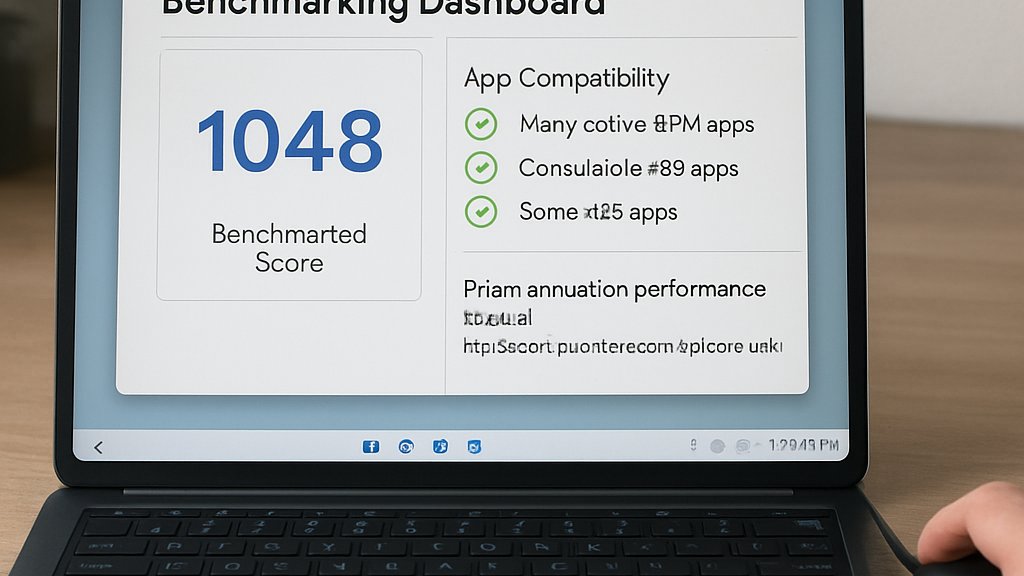
Battery life improvements reinforce that perception. Microsoft claims several Copilot+ notebooks beat comparable x86 rigs by multiple hours under local AI workloads. Consequently, field testers confirm silent, cool operation during extended editing or coding sprints. These efficiency gains keep fan noise low and wrists comfortable.
Energy savings and TOPS headroom make Arm compelling for mobile creators. However, software layers must evolve, leading directly to Prism emulation advances.
Prism Boosts App Compatibility
December’s update expanded Prism emulation to support AVX, AVX2, and other complex x86 instructions. Moreover, applications like Ableton Live and several Adobe suites now install without hacks. Windows telemetry shows crash rates falling on Arm builds using the refreshed translation layer.
Nevertheless, driver-dependent software, anti-cheat libraries, and some virtualization stacks still resist translation. Consequently, IT teams must run pilots before large fleet rollouts. Microsoft pledges quarterly Prism emulation updates, yet official roadmaps remain vague.
Compatibility gaps are shrinking but not gone. Next, Windows Arm AI ambitions pivot to model execution, where local AI defines user value.
Rise Of Local AI
Windows ML reached general availability in September 2025. The runtime chooses the fastest Execution Provider across CPU, GPU, or NPU automatically. Consequently, developers gain a single API surface for local AI deployment.
Stevie Bathiche calls the on-device agent the new unit of interaction. Moreover, Windows AI Foundry lets teams prune or fine-tune models directly on client hardware. This shift reduces round-trip latency and improves privacy compared with cloud calls.
Key local AI benefits include:
- Offline operation for travel or secure facilities
- Lower latency inferencing for media transforms
- Reduced cloud spend for enterprises
- Better data locality and compliance
NVIDIA reinforces these gains, asserting that TensorRT plus Windows ML yields 50 percent faster inference on RTX GPUs. However, GPU acceleration alone cannot guarantee friendly battery profiles on ultraportables.
Taken together, runtime and tooling updates push more intelligence to the edge. RTX Spark enters here, promising further acceleration.
Developers finally see Windows Arm AI as a credible local inference platform.
RTX Spark Accelerates PCs
Announced May 2026, RTX Spark bundles Blackwell GPUs, unified memory, and driver patches for Windows Arm AI laptops. Furthermore, Microsoft says the stack will unlock larger models than today’s 13 billion-parameter demos. In contrast, current NPUs top out on context windows and memory size.
Developers gain early access this fall, with OEM rollouts expected before holiday shopping kicks off. Consequently, buyers should watch vendor benchmarks highlighting RTX Spark throughput relative to integrated NPUs. Analysts predict premium price tags but also longer useful life for such devices.
GPU-augmented Arm notebooks may broaden the Arm ecosystem beyond efficiency narratives. Enterprise planners now weigh cost against speed, leading to the next consideration.
Enterprise Adoption Outlook 2026
IDC, in a Microsoft-sponsored brief, found 30 percent of IT buyers ready to adopt next-gen AI PCs immediately. Additionally, 45 percent plan purchases within twelve months. Nevertheless, procurement cycles hinge on app validation, management tooling, and security reviews. Prism emulation progress helps, yet some peripherals still lack signed Arm drivers.
Copilot+ gating may fragment fleets, because older hardware misses advanced Windows optimization hooks. Therefore, enterprises may standardize on specific Snapdragon X SKUs to reduce testing matrices. Meanwhile, policy teams continue auditing privacy settings around Recall and other perpetual context features.
Interest is strong, but risk tolerance varies. Next, leaders must separate hype from reality before large capital outlays. IDC projects Windows Arm AI shipments rising sharply once driver hurdles fall.
Balancing Hype And Reality
Independent benchmarks sometimes dispute vendor claims. TechSpot measured similar throughput across Arm and x86 once memory exhausts, despite slick marketing. Moreover, heavy Adobe exports can trigger throttling that nullifies nominal Windows optimization advantages.
Consequently, buyers should demand transparent workloads, power measurements, and sustained battery figures. In contrast, quick burst tests rarely mirror real creative sessions. Qualitative factors like keyboard quality or port selection still influence satisfaction.
Objective data grounds strategy. The finale distills next actions for technology teams. Without disciplined testing, Windows Arm AI hype can mask thermal throttling realities.
Key Takeaways For Teams
The following points summarize actionable guidance.
- Pilot Windows Arm AI devices with real workloads, measuring battery, thermals, and Prism emulation success.
- Evaluate RTX Spark models for GPU-heavy tasks, yet verify driver stacks before mass deployment.
- Leverage Windows ML to prototype local AI features that enhance user workflows without cloud cost.
- Align purchasing windows with Snapdragon X2 or newer silicon to secure long-term Windows optimization benefits.
- Upskill staff through the AI Cloud Architect™ certification to manage hybrid inference pipelines.
These steps build a disciplined roadmap. Consequently, organizations avoid surprise regressions during the transition to pervasive client intelligence.
Windows Arm AI momentum is unmistakable, yet success depends on careful execution. Prism emulation, Windows optimization, and RTX Spark hardware form a potent stack when aligned with business needs. Moreover, Windows ML and Foundry empower teams to deliver secure local AI experiences with minimal cloud reliance. Nevertheless, app gaps, privacy worries, and price premiums warrant sober evaluation. Therefore, start controlled pilots, gather data, and refine procurement criteria. Professionals seeking deeper expertise can validate skills through the linked certification and shape the next Arm ecosystem wave. Act now to capture early advantage while steering clear of avoidable pitfalls.
Disclaimer: Some content may be AI-generated or assisted and is provided ‘as is’ for informational purposes only, without warranties of accuracy or completeness, and does not imply endorsement or affiliation.


