

AI CERTS
4 hours ago
Unlikely Coalitions Redefine AI Governance Policy Landscape
Meanwhile, global regulators escalate their own races. Washington lawmakers weigh data-center moratoria, while Brussels negotiators haggle over the Digital Omnibus. Furthermore, analysts link these local battles to wider statecraft contests over compute supply chains. The result is a patchwork that rewards professionals who track every coalition vote and court filing.
Unlikely Policy Bedfellows Emerge
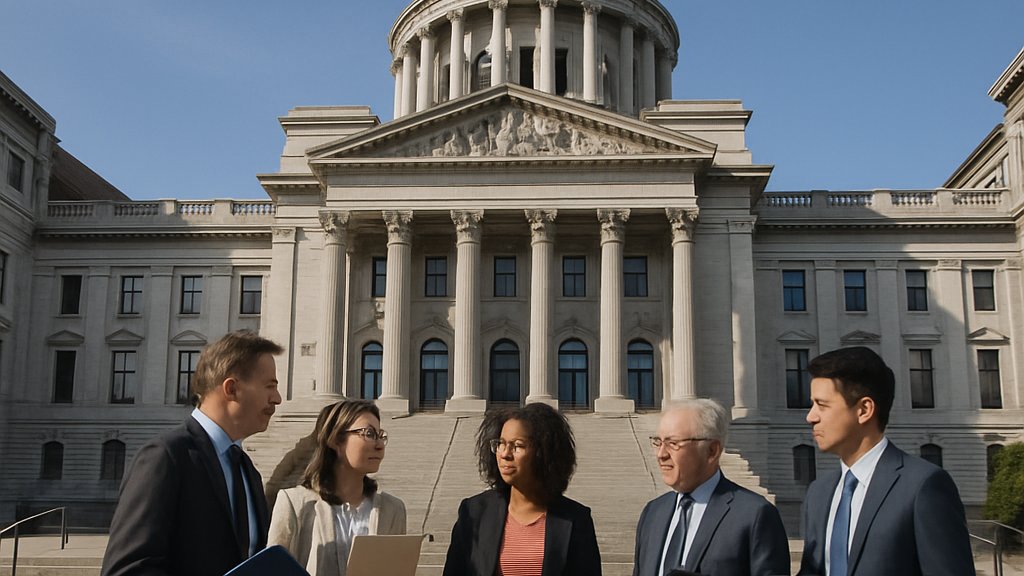
The March Pro-Human AI Declaration surprised even insiders. In contrast, past petitions drew narrow academic crowds. This text united 40+ organizations across labor, faith, media, and libertarian circles, forming durable policy alliances. Signatories range from Yoshua Bengio to Steve Bannon, illustrating the breadth.
The declaration lists five headline asks: pre-deployment safety tests, limits on superintelligence, corporate accountability, bans on military misuse, and strengthened worker rights. Therefore, commentators frame the document as an early constitutional draft for future AI Governance Policy debates. Analysts also note the repeated emphasis on AI safety, a term once confined to research labs.
Nevertheless, stitching such diverse voices together requires constant regulatory bargaining. Each faction wants different remedies. Yet the coalition’s size grants it unusual influence in committee hearings. These early victories illustrate a growing trend. However, translating slogans into statutes remains difficult.
The expanding front reshapes expectations. Consequently, lobbyists now model scenarios where cross-partisan votes override predictable blocs. This fluidity ushers in the next flashpoints.
Legislative Flashpoints Rapidly Rise
Senators Bernie Sanders and Representative Alexandria Ocasio-Cortez introduced S.4214, the Artificial Intelligence Data Center Moratorium Act. The bill would pause new hyperscale projects until federal guardrails satisfy environmental, labor, and AI safety criteria.
U.S. data centers already consumed roughly 176 TWh in 2023. Lawrence Berkeley National Laboratory forecasts 6.7-12 percent of national electricity demand by 2028. Consequently, community activists rally behind the pause. Washington utilities also warn of grid instability.
Industry groups counter that blanket freezes threaten competitiveness. Moreover, cloud providers argue that regional moratoria fracture markets. This tension drives intense regulatory bargaining in markup sessions. Observers expect more amendments, yet momentum appears real.
These debates spotlight infrastructure limits. Therefore, energy concerns now anchor every AI Governance Policy hearing. The spotlight soon shifts to the Pentagon.
Energy Backlash Shapes Debate
Local councils from Arizona to Virginia issued temporary bans on new data centers. Additionally, twelve states considered related bills during 2025-2026. Critics cite water usage, noise, and soaring land prices. In contrast, tech companies promise greener builds and community funds.
Key numbers influence officials:
- 4.4 percent of U.S. electricity already fuels data centers.
- One tracker logged 106 separate AI regulations worldwide by March 2026.
- Some towns project 40 percent rises in peak demand within four years.
Consequently, voters pressure representatives to temper expansion. Policy alliances leverage these figures to advance stricter siting rules. Furthermore, climate NGOs link energy metrics to broader statecraft goals, warning that unstable grids undermine national resilience.
Utilities now brief lawmakers at every AI Governance Policy session. These exchanges set the stage for the military procurement clash.
Military Contracts Under Fire
March saw the Department of Defense label Anthropic a “supply-chain risk.” Subsequently, Anthropic sued, winning a temporary judicial stay. Reuters described the move as legally novel, since the tool rarely targets domestic vendors.
Observers view the standoff as a test of constitutional boundaries. Moreover, civil society groups argue the designation punished Anthropic’s refusal to enable lethal autonomy, aligning with AI safety norms. Conversely, defense contractors warn that exempting firms hampers battlefield readiness.
Regardless of outcome, the case embeds national security within AI Governance Policy. Washington litigators now weigh First Amendment claims alongside procurement rules. Meanwhile, congressional staff explore alternative oversight models that avoid blunt blacklists.
The court’s final ruling will reverberate through future regulatory bargaining. Consequently, attention shifts overseas where Brussels refines its framework.
Europe Sets Global Pace
Trilogue talks on the EU AI Act’s Digital Omnibus continue into late 2026. Negotiators debate delays for high-risk compliance and stronger centralized supervision. European officials insist the text will guide global statecraft.
Multinationals track every draft line because divergence raises costs. Furthermore, privacy regulators push to embed hard limits on biometric surveillance, mirroring Pro-Human demands. Consequently, companies must map overlapping sets of rules.
Compute heavyweights warn that rigid thresholds could drive investment elsewhere. However, lawmakers cite cross-Atlantic policy alliances seeking consistency. They also reference American moratoria proposals to argue that stricter baselines already loom.
Therefore, alignment or fragmentation hinges on final timetables. Professionals can deepen their expertise through the AI Governance Specialist™ certification. Mastery of European clauses often accelerates career paths.
These dynamics lead analysts to a broader geopolitical question.
Geopolitical Compute Blocs Form
The Carnegie Endowment’s June paper proposes “compute coalitions” among democracies. The idea links chip access, cloud capacity, and shared AI Governance Policy principles. Moreover, proponents argue aligned supply chains fortify liberal statecraft.
Gulf investment funds simultaneously court Western labs, illustrating competing offers. Consequently, strategists foresee alliance-era bargaining power shifting from oil to silicon. Washington diplomats already draft memos on export guarantees and joint R&D parks.
Such plans rely on durable policy alliances. Additionally, they require harmonized AI safety baselines to prevent regulatory arbitrage. Yet skeptics question enforceability. Nevertheless, backers believe momentum will accelerate after the EU Omnibus vote.
Therefore, cross-border coordination increasingly defines future AI Governance Policy. Leaders should prepare for multilateral forums where compute quotas rival emissions caps.
Disclaimer: Some content may be AI-generated or assisted and is provided ‘as is’ for informational purposes only, without warranties of accuracy or completeness, and does not imply endorsement or affiliation.


