

AI CERTS
2 hours ago
Verge Labs’ Biotech AI Innovation pivots CNS drug strategy
This article unpacks the data, technology, and business implications for executives tracking therapeutic AI. Moreover, we examine how the recent clinical setback informs both opportunity and risk for investors. Finally, we outline validation requirements and highlight professional certifications that can deepen technical fluency. Therefore, leaders can decide whether to engage, partner, or wait for stronger evidence.
Leveraging Human Data Advantage
Traditional neuroscience screens rely on mice and immortalized cell lines. In contrast, Verge Labs capitalizes on direct human data to capture disease complexity. Consequently, its scientists argue that targets selected from patient tissue will translate better into clinics. That claim resonates because central nervous system biology displays profound inter-species variation.
Expansive CNS Dataset Scale
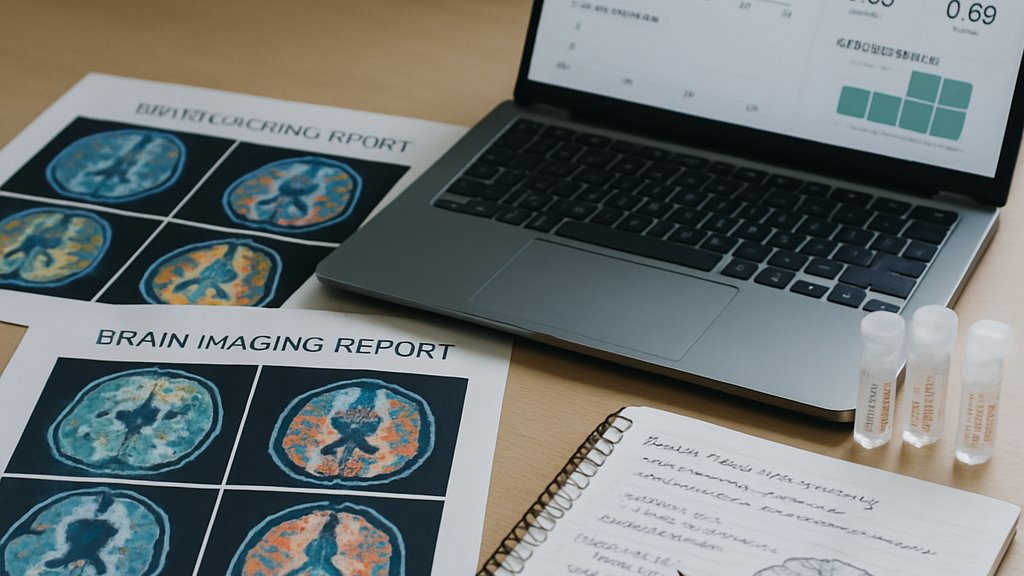
Numbers underline the advantage. The company reports more than 12,000 post-mortem brain transcriptomes spanning 6,000 individuals. Additionally, 15 million single-cell profiles enrich the atlas with cell-type granularity. Furthermore, a physical bank of 900 frozen samples supplies wet-lab validation material.
- Over 280 novel targets surfaced
- 83% preclinical validation rate
- Two AI-discovered drugs reached clinic
- $1.6B in pharma partnerships
These metrics impress partners evaluating Biotech AI Innovation. However, metrics require context, as success percentages can shift with expanding datasets. Pharma scouts monitor Biotech AI Innovation metrics before green-lighting new collaborations. Verge's scale suggests unique analytical power. Nevertheless, translation remains unproven until larger trials succeed. Next, we examine the models that mine this trove.
Foundation Models Explained Simply
Foundation models have reshaped language and images. Similarly, Biotech AI Innovation now trains massive networks on molecular patterns. Therefore, Verge Labs seeks to build the first CNS-focused foundation model of disease biology. The model learns joint representations across transcriptomic, proteomic, genomic, imaging, and clinical modalities.
Subsequently, researchers fine-tune those representations for tasks like target ranking and patient stratification. Moreover, the approach may predict biomarker shifts before wet-lab experiments begin, accelerating drug discovery. Industry conferences now dedicate plenary sessions to Biotech AI Innovation in central nervous disorders. Such models rise or fall on the richness of human data available.
Assessing Virtual Biopsy Promise
Executives highlight a 'virtual biopsy' feature. It reconstructs brain molecular states from simple blood draws. Consequently, invasive surgeries might become unnecessary during early-stage studies. Tenacia, an AI therapeutics investor, recently praised that vision as a differentiator.
However, clinicians caution that peripheral markers can diverge from cortical realities. Therefore, rigorous peer-reviewed benchmarking remains essential before claims influence treatment decisions. Foundation models promise Biotech AI Innovation could compress timelines and costs. Yet, validation and regulatory scrutiny will decide their impact. The recent ALS trial illustrates that challenge.
Pivot After Clinical Setback
VRG50635, the firm's first AI-derived drug, targeted PIKfyve in amyotrophic lateral sclerosis. Phase 1b data confirmed pharmacodynamic engagement but failed a prespecified efficacy bar. Consequently, the sponsor terminated patient enrollment, and media labeled the outcome a failure. Nevertheless, the firm quickly folded trial data back into its training corpus. Failure narratives remain vital feedback for future drug discovery algorithms.
Validation Hurdles Remain Key
Regulators and venture partners interpreted the pivot through a risk lens. In contrast, Alice Zhang framed the change as a logical evolution enabled by larger models. Meanwhile, peer reviewers urge standardized benchmarks across cell, animal, and human systems. Moreover, ethical debates around brain privacy add complexity to scaling neural datasets.
- Translational failure in future trials
- Data privacy and governance gaps
- Commercial dependence on partner milestones
- Regulatory uncertainty for generative biology
These risks temper the optimism around Biotech AI Innovation. Stakeholders fear that Biotech AI Innovation lacks mature regulatory frameworks. Yet, several positives surfaced during the transition.
First, the company announced new senior hires from Altos Labs, Calico, and Flatiron. Second, the firm claimed $1.6 billion in cumulative partnerships with Merck, Lilly, and AstraZeneca. Third, Tenacia doubled its stake, betting on the platform strategy. Early adopters see the CNS pipeline acceleration promise as worth the gamble. The ALS miss underscores biology's complexity. However, integrating failure data could strengthen future predictions. Commercial incentives will determine whether that hypothesis proves correct.
Commercial Outlook Moves Ahead
Pharma partners now weigh licensing decisions against internal build options. Therefore, Verge Labs markets its foundation model as an on-demand CNS pipeline accelerator. Executives argue that Biotech AI Innovation can cut exploratory timelines by half. Investors watch for revenue recognition from milestone payments to confirm traction.
Furthermore, Tenacia predicts broader adoption once virtual biopsy algorithms receive peer-reviewed validation. Meanwhile, regulators develop guidance on AI explainability in drug discovery workflows. Consequently, transparent model documentation may become table stakes for contracts.
CNS pipeline expansion could follow once early partnerships publish reproducible biomarker data. Moreover, success stories may encourage data-rich consortia across neurodegeneration and psychiatry. Professionals can deepen expertise via the AI+ Healthcare Specialist™ certification.
Nevertheless, competition looms from startups and in-house pharma AI teams. Therefore, Verge Labs must sustain a performance edge and justify royalty terms. Commercial fate hinges on validated predictions and clear economics. Subsequently, decision-makers should track upcoming partner data releases. We close with strategic recommendations.
Biotech AI Innovation is reshaping how neuroscience programs launch and scale. The company demonstrates both promise and peril inherent in first-of-kind platforms. Its vast human data corpus, foundation modeling plans, and virtual biopsy vision excite investors. However, the ALS setback reveals the unforgiving reality of clinical validation. Consequently, leaders should demand transparent benchmarks, reproducible evidence, and ethical safeguards before committing capital. Meanwhile, executives can sharpen evaluation skills through recognized AI healthcare credentials. Stay informed as Biotech AI Innovation moves from hype toward measurable patient benefit.
Disclaimer: Some content may be AI-generated or assisted and is provided ‘as is’ for informational purposes only, without warranties of accuracy or completeness, and does not imply endorsement or affiliation.


