

AI CERTS
4 months ago
Google Builds India Infrastructure Network for AI Era
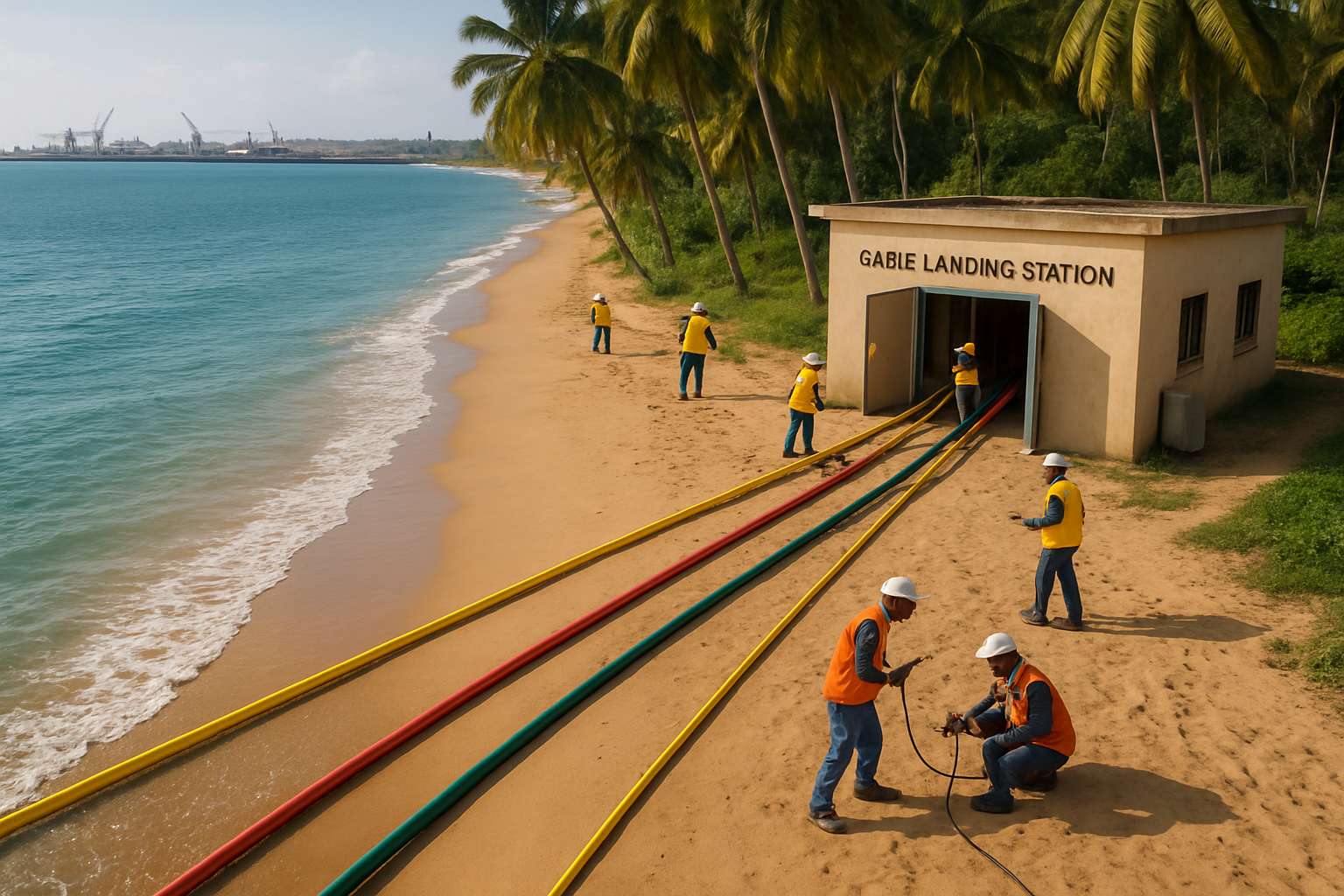
However, industry observers note that resilience, not mere speed, drives the strategy.
Consequently, Alphabet is positioning India as a central traffic hub between the Atlantic, Indian, and Pacific basins.
Furthermore, the initiative promises jobs, fresh capital, and deeper Connectivity for enterprises across South Asia.
This article unpacks the technical goals, market forces, and policy hurdles shaping the project’s next phase.
It also outlines skills and certifications that professionals should pursue to stay relevant as the Infrastructure Network scales.
Why Vizag Gateway Matters
Visakhapatnam sits on India’s less crowded east coast, distant from congested Mumbai landing sites.
Therefore, the planned gateway adds geographic diversity that regulators have demanded since 2024 cable outages.
TRAI data show India currently relies on roughly 17 Subsea cables, many clustered within one shipping channel.
In contrast, a Vizag landing reduces exposure to anchor drags and Red Sea choke points.
Google confirmed the city will host multiple new systems under the America India Connect banner.
Moreover, those systems will interconnect with Equiano, Bosun, and TalayLink routes, forming a wide Infrastructure Network spanning four continents.
Alphabet executives say the design targets predictable latency for AI model synchronisation between Indian and U.S. clusters.
Meanwhile, Airtel and AdaniConneX will build the shore station and power supply.
Analysts expect initial lit capacity to exceed earlier generation links by several factors.
Nevertheless, full capacity figures remain undisclosed until contracts reach the supply stage.
These uncertainties underscore why policy watchers track every tender announcement closely.
Consequently, the Vizag gateway has become a bellwether for India’s broader Infrastructure Network ambitions.
Vizag allows India to bypass historical chokepoints and unlock eastern routes.
Subsequently, we examine how America India Connect completes that strategic puzzle.
America India Connect Overview
Announced in February 2026, America India Connect bundles four transpacific and transatlantic fiber systems.
Furthermore, three regional branches will link Vizag with Singapore, South Africa, and Western Australia.
Each branch integrates with earlier Subsea assets such as Nuvem and Honomoana to maximize route diversity.
Consequently, traffic can detour quickly when earthquakes, fishing, or geopolitical events strike established corridors.
Google networking vice president Brian Quigley outlined the plan’s topology during his summit presentation.
He highlighted direct fiber paths connecting Vizag to Chennai and onward to South Africa via the Equiano system.
Moreover, Bosun and Tabua will bridge Southeast Asia, while TalayLink will skirt the Sunda Shelf toward Perth.
When complete, the mesh forms an Infrastructure Network that balances capacity, cost, and latency trade-offs across hemispheres.
- Design capacity per route expected in single-digit petabits, though Alphabet has not published numbers.
- Target latency between Vizag and Los Angeles under 200 milliseconds, aiding real-time AI workload replication.
- Open cable landing station model proposed to allow additional tenants, improving regional Connectivity economics.
Subsequently, engineering teams will decide whether to deploy branching units or dedicate separate trunks per market.
Those decisions affect capital cost, repair logistics, and future upgrade cycles.
America India Connect outlines multiple oceans worth of fresh bandwidth for AI traffic.
However, the initiative will only deliver value if market demand and policies align, as discussed next.
Market Context And Drivers
Hyperscaler traffic now grows faster than public internet averages, driven by large language models and video streaming.
Therefore, private cables grant control over latency and capacity planning.
Mordor Intelligence sizes the global Subsea cable market at nearly six billion dollars this year with double-digit growth.
Meanwhile, India forecasts inbound data volumes tripling by 2030 as cloud adoption expands.
Alphabet expects its Infrastructure Network investment to capture that surge while shielding workloads from carrier outages.
Additionally, regulators push for more landing stations to support Digital India goals.
Consequently, competitors like AWS, Meta, and Microsoft are also funding new routes around the peninsula.
Yet, few have matched Google’s combined cable and compute scale in one coastal campus.
- Lower round-trip delay boosts training efficiency for distributed AI clusters.
- Added route diversity cuts outage risk, improving enterprise Connectivity confidence.
- New construction stimulates skilled labor demand across marine survey, power, and civil works.
The market context therefore favors aggressive investment despite uncertain macro conditions.
Nevertheless, regulatory friction could still slow delivery, as the next section explains.
Risks And Regulatory Hurdles
India’s International Long Distance licensing regime complicates foreign ownership of landing assets.
Consequently, partners like Airtel must hold the permits while Alphabet funds construction.
Delayed clearances would cascade into ship scheduling issues and miss optimal weather windows.
Moreover, India lacks domestic cable repair vessels, extending restoration times when faults occur.
Environmental impact studies also add months, especially where coral ecosystems line proposed Subsea approaches.
In contrast, Singapore and Oman pre-approve routes, offering shorter timelines and lower cost.
Furthermore, cost recovery depends on wholesale buyers accepting long-term capacity contracts.
If demand softens, the Infrastructure Network would struggle to achieve planned returns.
Analysts warn that limited transparency on design capacity may deter some investors.
Nevertheless, Google could disclose additional details during its next Cloud Next conference, reassuring the market.
Policy, permitting, and repair gaps threaten schedule certainty and lifetime economics.
Consequently, stakeholders now focus on immediate milestones to gauge execution health.
Next Milestones To Watch
Over the coming quarters, several public signals will indicate progress.
Firstly, contract-in-force notices from cable manufacturers should specify route lengths and fibre pairs.
Secondly, Airtel and AdaniConneX must break ground on the Vizag cable landing station.
Additionally, the Department of Telecommunications will issue initial spectrum allocations for wet plant rollout.
Brian Quigley promised further Infrastructure Network technical briefs once marine surveys finish later this year.
Meanwhile, state authorities are expected to finalize land allotments for the gigawatt data center campus.
Subsequently, ship mobilisation schedules will appear in Lloyd’s List and other maritime trackers.
Therefore, analysts recommend monitoring those feeds for supply-chain indicators.
Achieving these milestones would greatly de-risk capital already committed by the parent company and partners.
Next, we examine how professionals can position themselves for opportunities arising from the build.
Skills And Certifications Path
Large infrastructure projects demand talent across optical engineering, marine survey, and network architecture.
Consequently, upskilling remains urgent for engineers serving hyperscaler clients.
Professionals can enhance their expertise through targeted credentials.
One option is the AI+ UX Designer™ certification.
Additionally, fiber planners benefit from vendor courses covering coherent optics and spectrum management.
Meanwhile, project managers should study marine permitting frameworks to accelerate clearances.
Those skills align directly with delivery risks outlined earlier in the Infrastructure Network discussion.
- Study submarine power feed design fundamentals.
- Learn redundancy modeling for multi-path Connectivity.
- Practice latency simulation using open-source tools.
Developing these competencies increases employability across cable owners, vendors, and regulators.
Consequently, certified experts will be well placed when the Infrastructure Network reaches operational status.
India’s east coast is set to host a cable cluster unlike any before it.
America India Connect, combined with the Vizag AI campus, signals a maturing market where hyperscalers shape international routing strategies.
However, regulatory clarity, skilled talent, and reliable supply chains will decide whether the promised bandwidth arrives on time.
Consequently, professionals who master optical design, marine permits, and AI-centric workload planning will find their skills in high demand.
Consider strengthening your profile today with the accredited AI+ UX Designer™ program and stay ahead of the curve.
Take action now and prepare to lead the next generation of global data routes.
Disclaimer: Some content may be AI-generated or assisted and is provided ‘as is’ for informational purposes only, without warranties of accuracy or completeness, and does not imply endorsement or affiliation.


