

AI CERTs
4 months ago
Google LiteRT Graduates GPU and NPU Acceleration
Google has delivered another major leap for on-device machine learning. Yesterday's release graduates the LiteRT acceleration stack into full production readiness. Consequently, mobile developers gain immediate access to cross-platform GPU and emerging NPU power. However, the public repository still labels the runtime alpha, prompting important deployment questions. Meanwhile, benchmark figures suggest impressive speed and power advantages over legacy solutions. Therefore, product managers must examine the news carefully before shipping next-generation AI experiences. This article unpacks the announcement, performance data, and strategic implications for the wider ecosystem. Along the way, we highlight certifications that boost professional readiness for incoming demand.
Google Debuts LiteRT Acceleration
Company engineers announced the milestone during a detailed developer blog post on January 28. Moreover, four authors from Google Edge AI framed the graduation as a universal accelerator rollout. The post states, “these advanced acceleration capabilities have now graduated into the LiteRT production stack.” Consequently, developers can access GPU and NPU backends using one consistent CompiledModel API. Independent coverage from InfoWorld and InfoQ echoes the significance, calling the framework an evolution beyond TensorFlow Lite. In contrast, the Git repository tags version two alpha and lists an Early Access Program. Therefore, due diligence remains essential before production rollout.
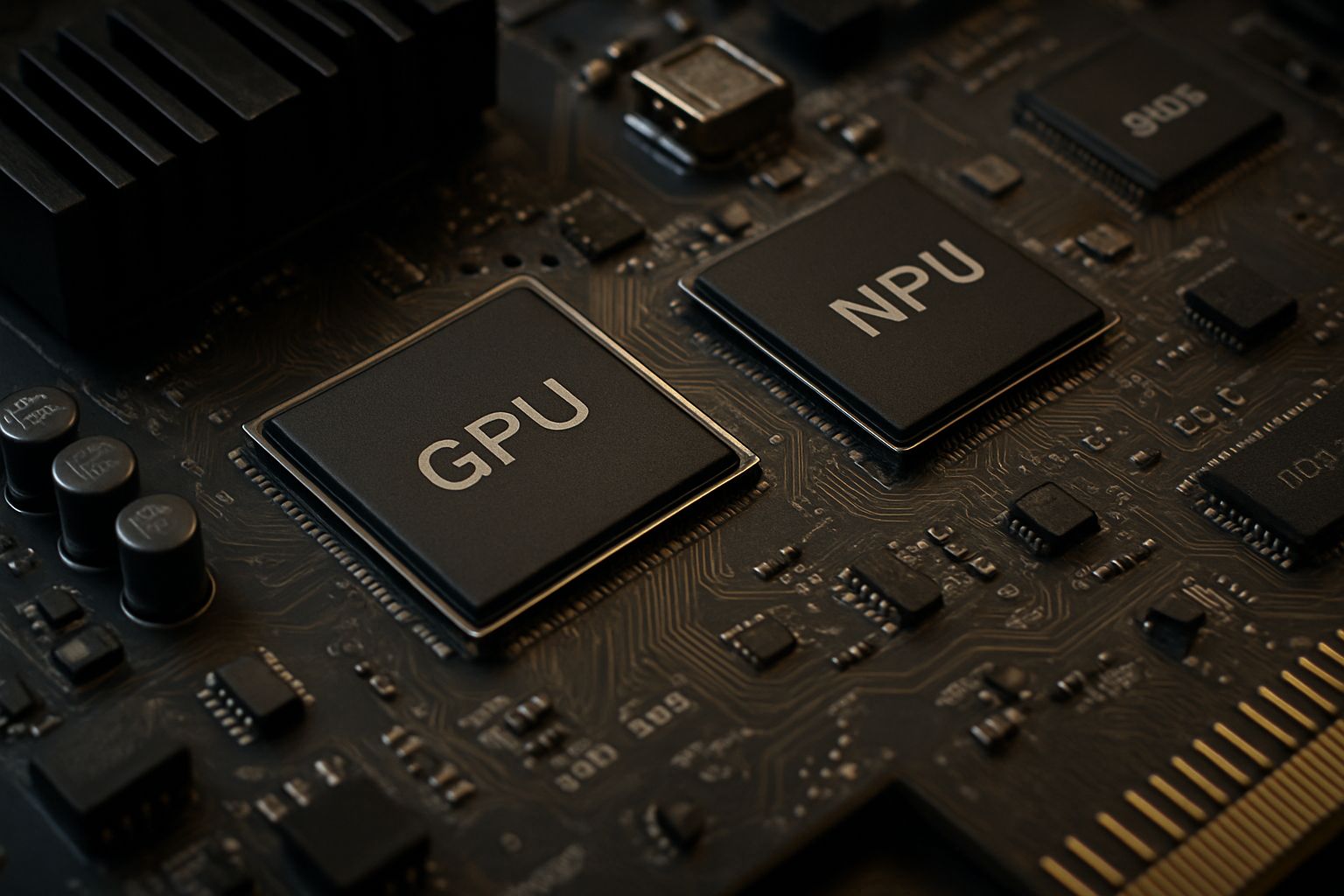
Google's messaging positions the stack as ready, yet documentation signals caution. Nevertheless, the performance claims deserve closer inspection, which the next section provides.
Acceleration Breakthrough Key Details
Google published headline figures covering GPU and NPU throughput, latency, and energy use. Furthermore, internal benchmarks show the new ML Drift GPU engine averaging 1.4× faster than the TFLite delegate. Sample segmentation apps reportedly enjoy up to two-fold lower latency thanks to asynchronous execution paths. Meanwhile, NPU integrations claim up to 100× CPU speed and ten-fold GPU advantage on Snapdragon 8 Elite Gen 5. MediaTek quotes twelve-fold CPU gains and similar GPU savings across Dimensity devices using its NeuroPilot accelerator. Consequently, sustained on-device inference becomes feasible without thermal throttling or rapid battery drain. InfoQ summarizes power efficiency as five-times better than CPU for many workloads.
- 1.4× average GPU uplift versus TFLite delegate.
- Up to 2× lower latency in segmentation demos.
- Up to 100× CPU speed on select Snapdragon NPUs.
- Approximately 80% power savings reported in InfoQ examples.
These figures illustrate significant leaps yet vary widely by model and silicon. Therefore, readers should treat vendor numbers as directional until independent labs publish cross-platform tests. Next, we explore the GPU engine responsible for many of these gains.
GPU Engine ML Drift
ML Drift replaces the older GPU delegate with a ground-up rewrite. Additionally, it supports OpenCL, OpenGL, Metal, and WebGPU through one abstraction layer. Zero-copy shared buffers minimise host-device transfers and shrink end-to-end latency further. Consequently, cross-platform developers no longer juggle multiple graphics APIs or bespoke shaders. Google highlights pipeline parallelism and deferred command submission as core latency reducers. In contrast, the previous delegate synchronised steps that blocked efficient utilisation. Benchmarks against llama.cpp show seven-fold decode improvements and nineteen-fold prefill boosts on GPU.
ML Drift therefore positions the GPU as a viable LLM accelerator, not just a graphics fallback. However, NPUs promise even greater performance, which we examine next.
NPU Integrations Expand Reach
LiteRT integrates two major NPU paths today: Qualcomm QNN and MediaTek NeuroPilot. Moreover, the CompiledModel API lets developers target these accelerators with minimal conditional code. Ahead-of-time compilation produces device-specific binaries, while on-device compilation covers unknown SoCs at runtime. Google claims automatic fallback to GPU or CPU if an operator lacks NPU support. Nevertheless, any unsupported graph sections may erode the headline performance gains. Developers should consult per-SoC coverage tables before promising sub-second interactions to product teams. MediaTek emphasises massive device reach, stating the partnership will bring advanced AI to millions of handsets. Qualcomm echoes that narrative, positioning its flagship Snapdragon lineup as the reference platform for mobile assistants.
Collectively, these integrations broaden the accelerator footprint beyond GPU, driving new tier-one experiences. Subsequently, we analyse how these changes influence daily developer workflows.
Developer Impact Deep Analysis
An immediate benefit involves reduced integration complexity. Previously, teams stitched together separate delegates for every vendor and API. Now, one LiteRT build can route workloads dynamically based on detected Hardware. Furthermore, zero-copy buffers simplify memory management, freeing precious engineering cycles. Compilation flexibility also matters. Developers may ship precompiled models for flagship devices while trusting on-device compilation for legacy Hardware. Consequently, app packages stay small and update cycles accelerate. Tooling improvements include profiler hooks, verbose logging, and graph visualisation integrated into Android Studio.
- Add LiteRT runtime dependency in Gradle or CMake.
- Enable CompiledModel API and select preferred accelerator target.
- Review vendor coverage tables for critical operators.
- Run provided benchmarks to validate actual Hardware performance.
These steps illustrate the reduced cognitive load compared with manual delegate switching. However, unresolved risks merit discussion in the following section.
Risks And Next Steps
Mismatch between blog rhetoric and repository status creates confusion. Additionally, Early Access markings suggest potential API changes before Google I/O. Therefore, enterprises should lock dependencies using semantic versioning and monitor release notes closely. Security professionals flag the new on-device compilation path as a broader attack surface. In contrast, static binaries simplify signature verification and supply-chain auditing. Vendor SDK fragmentation also persists despite LiteRT abstractions, particularly when proprietary kernels control Hardware.
These caveats underline the need for staged rollouts and continuous benchmarking. Consequently, organisations should weigh advantages against compliance obligations before mass deployment. Looking ahead, the final section reviews Google's public timeline and community expectations.
Future Outlook And Timeline
The public README targets a general-availability release at Google I/O in May 2026. Meanwhile, production language in the January blog hints many components are already stable internally. External partners will likely pressure for firm commitments before flagship handset launches in autumn. Moreover, independent benchmarking consortia plan cross-vendor tests to validate Google's claims objectively. Subsequently, expect updated figures that either confirm or temper the current excitement. Professionals can upskill through the AI Design certification, gaining on-device AI expertise.
The roadmap appears aggressive, yet recent execution suggests Google can hit the milestone. Therefore, continuous evaluation remains prudent as the ecosystem races toward local GenAI ubiquity.
Conclusion
Google's upgraded LiteRT stack signals on-device generative models are ready for mainstream applications. Moreover, ML Drift and vendor NPUs deliver compelling latency and energy advantages over traditional Hardware pathways. Consequently, developers can unify deployment around one adaptable runtime instead of juggling many code branches. Nevertheless, alpha labels in the repository remind teams to verify stability before scaling launches. Independent benchmarks and security audits will soon clarify production readiness for regulated sectors. Meanwhile, Google's planned May GA offers a concrete checkpoint for strategic planning. Professionals should track version changes, experiment with LiteRT previews, and refine optimisation pipelines. Finally, upskilling through the AI Design certification empowers practitioners to craft high-impact experiences. Using LiteRT effectively requires continuous profiling to match models with available accelerators.
Disclaimer: Some content may be AI-generated or assisted and is provided ‘as is’ for informational purposes only, without warranties of accuracy or completeness, and does not imply endorsement or affiliation.


