

AI CERTs
6 months ago
Elon Musk AGI Timeline: Will Machines Surpass Humans by 2026?
Analysts have debated artificial general intelligence for decades. However, the conversation intensified after Elon Musk AGI forecasts placed the milestone within months. His claim has polarized researchers, investors, and policymakers. Consequently, the 2026 horizon now shapes budgets, hiring, and regulation.
This article dissects the prediction, supporting data, and counterarguments. Moreover, it highlights infrastructure limits and market implications while offering actionable next steps.
Elon Musk AGI Claim
Musk told an X Spaces audience in April 2024 that AI could top the best human by 2025–2026. He repeated the timeline at Davos 2026, sharpening the window to “by year-end.” Elon Musk AGI rhetoric hinges on Grok’s roadmap. Musk said version two used 20,000 Nvidia H100 GPUs, while Grok-3 may need 100,000 units.
Furthermore, Musk links progress to hardware scaling and affordable energy. He argues compute expansion will unlock emergent abilities, pushing systems into general intelligence territory. Nevertheless, he offers no formal benchmark. Definitions of “smarter than humans” remain fluid across disciplines.
These bold declarations drive media cycles and investor excitement. However, past Musk schedules—robotaxis and Mars flights—often slipped. Therefore, many observers treat the dates as directional rather than precise.
Those caveats frame the debate ahead. In contrast, technical barriers could delay achievements well beyond 2026.
Infrastructure And Energy Constraints
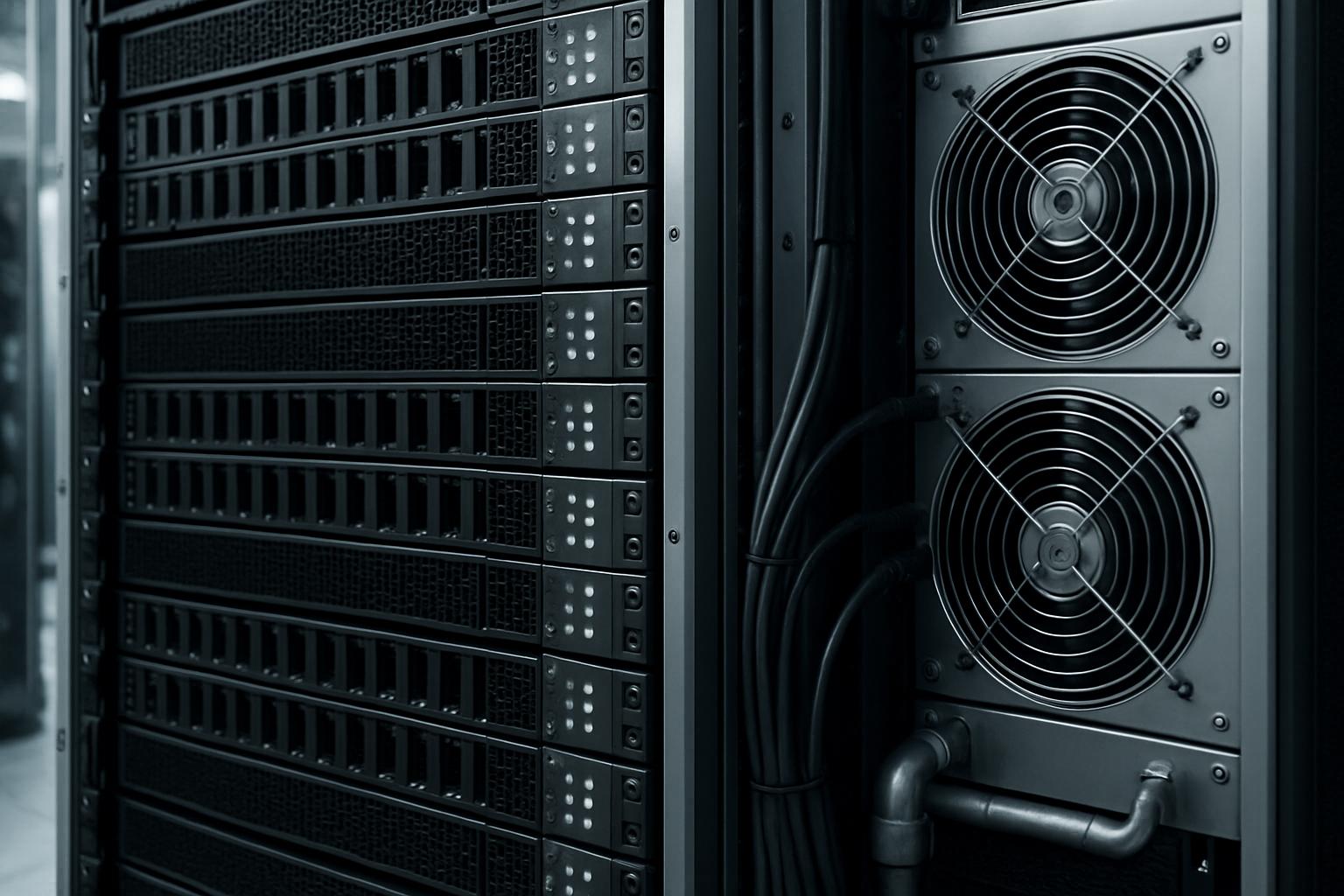
Scaling to 100,000 H100 GPUs demands prodigious power and cooling. Each H100 can draw about 700 W. Consequently, a Grok-3 cluster might need 70 MW before considering networking overhead. Analysts note that larger “50 exaFLOPS” visions would approach gigawatt scales.
Additionally, supply chains struggle to deliver enough advanced chips, fiber, and transformer capacity. Grid upgrades require multi-year permitting. Meanwhile, sustainability goals pressure data-center operators to secure renewable sources.
- Nvidia H100 peak draw: ~700 W per GPU
- Projected Grok-3 GPUs: 100,000 units
- Rough power budget: 70 MW at minimum
- Global AI spending forecast: $300 B by 2026 (IDC)
These numbers illustrate the physical heft behind the software narrative. Moreover, outages or delays in power delivery could stall ambitious training runs, regardless of algorithmic advances.
Infrastructure realities complicate the Elon Musk AGI timeline. Nevertheless, rapid capital expenditure and grid partnerships may compress lead times.
Hardware constraints underscore the need for strategic planning. Subsequently, expert voices weigh timeline credibility.
Expert Opinions And Pushback
Meta’s Yann LeCun calls near-term AGI “completely ridiculous.” He argues current models lack reasoning and world knowledge. DeepMind’s Demis Hassabis foresees possible breakthroughs in the 2030s but urges caution.
Forecasting models from Ajeya Cotra position median AGI arrival in the 2030s-2040s. In contrast, a minority assign double-digit probabilities to late-2020s milestones. Safety researchers emphasize alignment challenges that lag capability gains.
Furthermore, some investors view Elon Musk AGI claims as strategic hype. Public urgency can attract engineers, compute discounts, and political goodwill. Nevertheless, sustained credibility requires tangible milestones.
Expert divergence highlights foundational uncertainty. Consequently, markets react to probability, not certainty.
Market And Investment Impacts
IDC projects AI-centric spending to surpass $300 B by 2026. GPU shortages already inflate accelerator prices. Moreover, energy utilities court hyperscalers with bespoke tariffs.
Investor sentiment shifts quickly when charismatic founders speak. Elon Musk AGI narratives have raised expectations for xAI and boosted Nvidia’s valuation. Additionally, startups pitching “alignment” or “safety” solutions report easier fundraising as the AI Singularity conversation intensifies.
However, inflated timelines risk backlash if milestones slip. Therefore, prudent boards hedge with diversified AI portfolios and scenario planning.
Capital flows follow perceived opportunity. Meanwhile, regulation could reshape profit pools.
Timeline Scenarios And Uncertainty
Scenario planners model three broad paths:
- Accelerated path: breakthroughs plus sufficient energy unlock AGI before 2027.
- Moderate path: compute bottlenecks slow progress, moving AGI into the early 2030s.
- Extended path: fundamental scientific gaps delay AGI beyond 2040, casting doubt on the AI Singularity this century.
Each path carries distinct social, economic, and security implications. Moreover, policy choices—such as export controls or carbon taxes—could nudge probabilities.
Consequently, organizations must monitor benchmarks like multimodal reasoning, autonomous tool use, and robotics deployment. Tracking these signals helps validate or refute Elon Musk AGI expectations.
Scenario analysis clarifies strategic options. Nevertheless, preparation beats prediction.
Preparing For Rapid Change
Enterprises should invest in talent, governance, and flexible infrastructure. Professionals can deepen skills through the AI Supply Chain™ certification, gaining insight into operational bottlenecks.
Moreover, risk officers must update contingency plans for both disruptive automation and stalled progress. Embedding foresight exercises ensures agility if the AI Singularity arrives abruptly.
Finally, boards should set ethical guardrails that scale with capability. Public trust will determine adoption velocity as Elon Musk AGI milestones approach.
Strategic readiness mitigates downside while capturing upside. Consequently, leaders position themselves for any timeline outcome.
Conclusion
Debate around Elon Musk AGI timelines reflects excitement and uncertainty. Infrastructure limits, expert skepticism, and market dynamics create a complex picture. Nevertheless, investment, regulation, and research continue to accelerate.
Organizations should track technical signals, build flexible strategies, and upskill teams. Therefore, explore certifications and stay informed to navigate the potential AI Singularity ahead.
Disclaimer: Some content may be AI-generated or assisted and is provided ‘as is’ for informational purposes only, without warranties of accuracy or completeness, and does not imply endorsement or affiliation.


