

AI CERTS
2 hours ago
Siri AI Beta Arrives: What Tech Leaders Must Know
However, the release arrives amid regulatory drama and stiff competition in the broader consumer AI landscape. This article unpacks the launch details, performance claims, privacy architecture, market implications, and the looming European standoff. Consequently, executives and architects will gain a clear roadmap for evaluating Apple's next-generation strategy.
Meanwhile, public curiosity accelerates software adoption cycles faster than many analysts predicted. The iOS 27 beta sits at the center of that surge, distributing the assistant to supported iPhones. In contrast, the European Union remains excluded for now, fuelling policy debates on digital sovereignty. Our deep dive begins with the mechanics of the public beta launch.
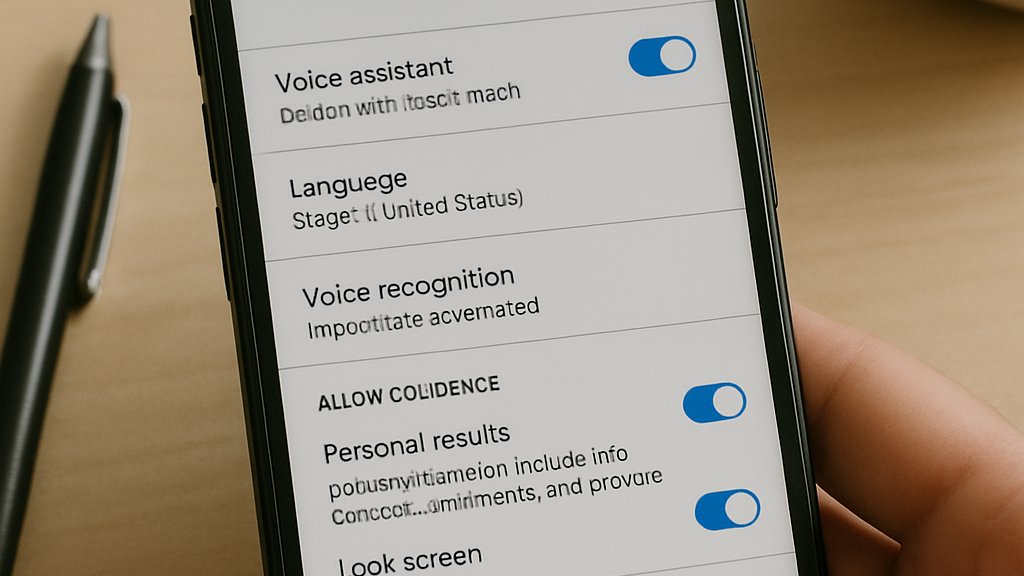
Public Beta Launch Overview
Apple released the iOS 27 beta, iPadOS 27 beta, and macOS 27 Golden Gate on 13 July 2026. Consequently, Siri AI Beta moved from developer builds into the wider Apple Beta Software Program. Enrollment remains free, though Apple warns that unfinished code can affect battery life and app stability. Furthermore, after installation the device performs an indexing pass labeled “Optimizing Search and Siri,” which may last days. Early WIRED reports documented week-long waits before full personal context became available. The staggered approach helps Apple monitor crash telemetry while ramping model capacity on its Private Cloud Compute clusters. However, some testers complain about opaque waitlists and uncertain activation timelines.
These rollout mechanics illustrate Apple’s careful risk management during the first large public rollout. Nevertheless, attention quickly shifts to the assistant’s new abilities. Next, we examine the expanded skillset powering Siri's conversational leap.
New Siri AI Skills
At WWDC 2026, Craig Federighi called the assistant “a dramatically more capable and conversational partner.” Thanks to on-device models, Siri AI Beta reads the screen, interprets camera input, and orchestrates cross-app actions. Users can request, “Find the slide Jenny shared yesterday.” The assistant then sends it to the team automatically. Furthermore, the assistant now handles multimodal requests, summarizing PDFs, scheduling follow-ups, and adding reminders in one command. Developers can expose app intents, enabling deeper tasks like editing images or creating invoices through natural language. Moreover, Apple promises language expansion beyond English during the public rollout phase. These capabilities push Siri into the broader consumer AI arena, challenging Google Assistant and Alexa.
- Contextual file retrieval
- Cross-app action chaining
- Screen and camera understanding
In short, the assistant now sees, understands, and acts instead of merely responding. Consequently, users can delegate multi-step jobs without opening additional apps. Next, we explore the privacy framework that enables those feats without surrendering personal data.
Privacy Architecture Explained Clearly
Apple brands the design “Private Cloud Compute.” Data stays on device unless large transformer models require more memory. Then, an ephemeral cloud container spins up, processes encrypted embeddings, and deletes itself after the response returns. Importantly, Apple claims human reviewers cannot access raw content inside that sandbox. Furthermore, the Secure Enclave attests the binaries, ensuring only signed Apple code handles private context. Nevertheless, privacy researchers still demand external audits to verify the boundary between on-device inference and cloud escalation. Apple has not yet published a third-party report, leaving open questions for compliance teams.
The broader Apple Intelligence suite coordinates those safeguards across devices, ensuring consistent policy enforcement. Beta testers report that Siri AI Beta sometimes refuses tasks when it cannot guarantee privacy compliance. These mechanisms reassure many consumer AI skeptics, yet independent validation remains essential.
The architecture balances contextual power with rigorous access controls. However, without audits, organizations must assign provisional trust. Performance claims provide another dimension for that trust assessment.
Performance Gains In Preview
Apple states that apps now launch 30% faster in the iOS 27 beta. Moreover, new photos process 70% faster, and AirDrop transfers accelerate by as much as 80%.
- App launches: up to 30% faster
- Photo processing: up to 70% faster
- AirDrop transfers: up to 80% faster
TechRepublic reviewers observed snappier animations yet warned that beta telemetry can mask real-world variance. Meanwhile, Siri AI Beta leverages the same efficiency work, reducing latency even during cloud escalation. Apple Intelligence features rely on A17 Pro, M1, and newer chips, so older devices miss those gains. Reviewers note that the upgraded voice assistant no longer defaults to scripted answers and instead reasons using local vectors. Consequently, performance becomes another incentive for hardware upgrades as the public rollout progresses.
Benchmarks suggest meaningful speed boosts for everyday workflows. Still, final verdicts await the autumn release candidate. Regulatory dynamics could influence that timeline significantly.
Regulatory Hurdles And Exclusions
The European Commission stated, “The decision not to launch is Apple’s alone.” In contrast, Apple cited the Digital Markets Act, claiming uncertainty over interoperability duties for generative models. Therefore, Siri AI Beta remains unavailable across 450 million European devices during the testing phase. China is also excluded pending separate approvals, limiting reach within the world’s largest smartphone market. Analysts warn that delayed access could erode share as regional competitors intensify consumer AI investments. Meanwhile, privacy mandates like GDPR may force Apple to disclose more about on-device data processing. These disputes spotlight the tension between innovation speed and regional compliance.
Regulatory risks now rival technical ones in shaping the assistant’s destiny. Consequently, market forecasts must account for staggered access. The next section explores those forecasts in detail.
Market Impact And Forecast
Apple reports 2.5 billion active devices, with roughly one quarter being iPhones according to Counterpoint Research. Even with EU and China exclusions, the initial public rollout still targets over one billion endpoints. Furthermore, every new capability encourages higher engagement, driving services revenue and hardware upgrade cycles. IDC analyst Nabila Popal praised the deep OS integration, calling the implementation “well done.” Meanwhile, rivals race to differentiate; Google funnels Gemini Nano into Android, and Samsung pushes Gauss across its portfolio. Enterprises evaluating voice assistant platforms must therefore analyze ecosystem lock-in, privacy posture, and localized compliance support.
Professionals can enhance decision frameworks through the AI Essentials™ certification, which covers responsible deployment principles. Each activation of Siri AI Beta strengthens Apple’s data advantage without violating user confidentiality, according to analysts. Counterpoint expects Apple Intelligence to raise average selling prices as enthusiasts chase on-device inference. These trends indicate significant upside for Apple’s services margin. In contrast, competing consumer AI suites still struggle with cohesive hardware integration.
Market math shows enormous headroom even under regional constraints. Nevertheless, adoption depends on consumer trust in the assistant’s reliability. Therefore, final evaluation returns to hands-on beta experiences.
Conclusion And Next Steps
The Siri AI Beta experiment signals Apple’s intent to dominate on-device intelligence. Across iOS 27 beta builds, testers see meaningful gains in speed, privacy, and cross-app understanding. Moreover, the upgraded voice assistant already automates tasks that once required manual tapping. However, EU exclusions and pending audits prove that progress still faces legal and ethical guardrails. Organizations should validate claims, monitor regional policy, and plan phased deployments.
Professionals seeking deeper insight can pursue the earlier linked certification to guide responsible adoption. Ultimately, Siri AI Beta offers a preview of how Apple Intelligence will redefine personal computing. Act now, join the beta, and shape the roadmap before the feature reaches general availability this autumn.
Disclaimer: Some content may be AI-generated or assisted and is provided ‘as is’ for informational purposes only, without warranties of accuracy or completeness, and does not imply endorsement or affiliation.


