

AI CERTS
1 hour ago
New York Halts AI Data Centers Amid Sustainability Concerns
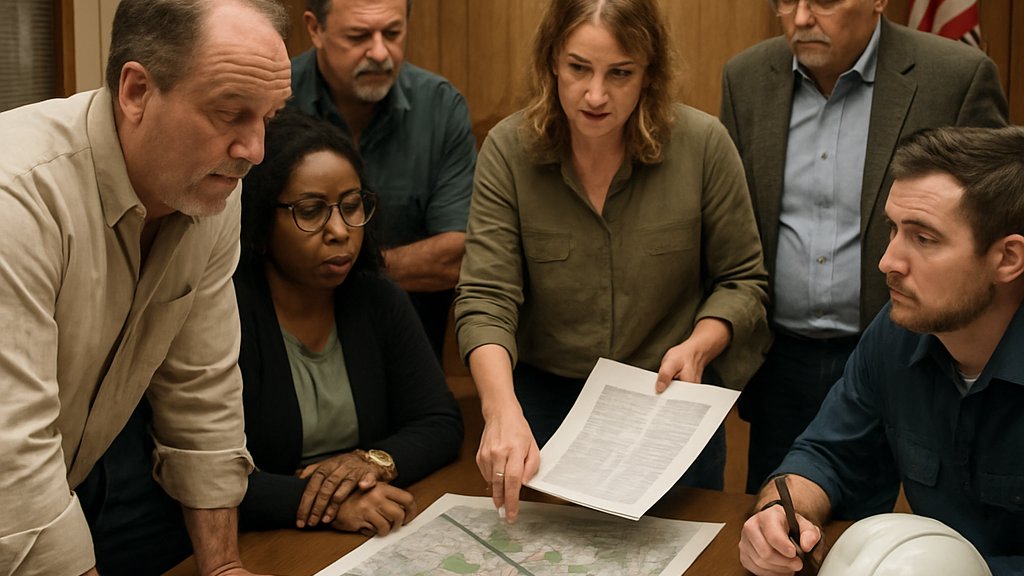
Environmental advocates applaud the datacenter moratorium as a necessary cooling off period.
Industry groups, in contrast, warn that capital will flee to competing states.
Meanwhile, municipal officials worry about lost construction jobs and tax revenue.
This article unpacks the rationale, mechanics, and broader implications of New York’s decision.
It also outlines what professionals must know to navigate the shifting policy landscape effectively.
Finally, readers will discover skill pathways and certifications that support sustainable hyperscale compute careers.
Moratorium Rationale And Stakes
Firstly, state leaders see accelerating grid stress from clustered digital infrastructure.
Furthermore, NYISO data shows more than eight gigawatts of large load requests since 2025.
These figures dwarf previous industrial expansions.
Therefore, officials fear unchecked growth could raise residential bills and delay decarbonization targets.
Community concerns extend beyond electricity.
High performance servers generate massive heat that requires evaporative cooling and substantial water usage.
Consequently, some upstate towns worry about aquifer drawdowns during summer peaks.
Noise, traffic, and zoning disputes compound local unease.
Governor Hochul summarized the stakes succinctly during the signing ceremony.
"Progress shouldn’t arrive with a higher utility bill or depleted water supply," she stated.
Supporters argue the datacenter moratorium buys time for a comprehensive Generic Environmental Impact Statement.
That document will guide consistent statewide siting standards.
In short, unchecked cluster growth threatens grids, aquifers, and ratepayers.
However, the next question concerns how the pause actually works.
Permitting Pause Core Mechanics
The Executive Order freezes state discretionary permits for facilities exceeding 50 megawatts.
Meanwhile, local zoning boards may continue reviewing ancillary approvals.
Projects with applications already deemed complete escape the freeze.
Therefore, developers caught mid-process face immediate uncertainty.
DEC must hold affected applications in abeyance until the Department of Public Service finishes a GEIS.
Additionally, Empire State Development will release a Community Investment Framework within sixty days.
The framework may outline benefit agreements, workforce plans, and energy demand mitigation strategies.
Key agency deadlines include:
- DPS: Draft GEIS scoping within 45 days.
- DEC: Publish interim water usage disclosure rules.
- NYISO: Convene interconnection working group within 90 days.
Consequently, stakeholders should monitor each milestone closely to anticipate permit reactivations.
The process introduces multiple checkpoints and offers limited grandfathering.
Nevertheless, project economics depend on how fast agencies complete the GEIS.
Next, we examine how different constituencies assess those costs.
Stakeholder Reactions Diverge Widely
Business advocates quickly labeled the action an investment killer.
Dan Diorio of the Data Center Coalition warned jobs will shift to neighboring states.
Moreover, construction unions fear thousands of skilled tradespeople could lose near-term work.
In contrast, environmental NGOs praise the datacenter moratorium as prudent risk management.
NYPIRG contends that residential customers already shoulder climbing energy demand costs.
Earthjustice similarly highlights potential water usage shocks during drought periods.
Governor Hochul attempted balance, noting New York still welcomes innovation that respects community boundaries.
Analysts point to a proposed nineteen-billion-dollar hyperscale compute campus in Genesee County as emblematic.
Supporters cite 1,200 permanent roles; opponents emphasize 300 megawatts of additional grid stress.
Consequently, public hearings remain heated.
Stakeholder positions reveal a stark economic versus environmental divide.
However, technical resource issues influence both narratives.
Therefore, the next section quantifies grid and water impacts.
Grid And Water Impacts
NYISO queue data lists 12,000 megawatts of prospective digital loads, equal to several nuclear stations.
Such concentration could necessitate billions in transmission upgrades.
Moreover, peak energy demand may increase during night hours when cooling systems work hardest.
Rate design debates already surface at the Public Service Commission.
Water usage also presents material risk.
Hyperscale evaporative towers can consume millions of gallons annually in semi-arid counties.
Additionally, cooling blowdown effluent may carry chemical additives into municipal systems.
Consequently, some towns propose stricter zoning setbacks from residential wells.
Recent studies highlight the compound pressures:
- Tripling of national data center electricity use by 2030.
- Projected 9,000 megawatts of new New York draw.
- Up to 25% local aquifer depletion during summer peaks.
In contrast, industry notes ongoing efficiency gains in chips and cooling.
The numbers confirm that resource planning must evolve quickly.
Nevertheless, policy outcomes will shape the final load footprint.
We now explore those policy trajectories and market signals.
AI Data Centers Outlook
Policy watchers expect the GEIS to recommend tiered permitting paths for AI Data Centers based on load size.
Moreover, the Commission could introduce a special rate class for hyperscale compute consumers.
Developers may receive incentives to colocate renewable generation or fund grid acceleration bonds.
In contrast, projects below 20 megawatts might progress under streamlined reviews.
Capital markets remain watchful but not frozen.
Several brokers report continued land banking near major substations.
Additionally, some operators pivot toward modular 10-megawatt pods that dodge the current datacenter moratorium thresholds.
Consequently, enforcement clarity will determine whether lateral strategies scale.
New York’s actions could inspire similar pauses in water-constrained Western jurisdictions.
However, Sun Belt states advertise abundant power and streamlined zoning to attract AI Data Centers.
Therefore, regional competitiveness hinges on balancing sustainability with predictable permitting.
Market sentiment remains cautiously optimistic despite headline risks.
Yet, workforce competencies must evolve to meet stricter sustainability standards.
Our final section outlines those professional pathways.
Professional Skill Development Pathways
Sustainability expertise now ranks alongside network architecture for hiring managers.
Moreover, site selection analysts must master regulatory zoning nuances and hydrological assessments.
Facilities engineers also need fluency in high-density liquid cooling systems that slash water usage.
Project finance teams increasingly model hourly energy demand curves to price risk accurately.
Professionals can enhance their expertise with the AI Sustainability Specialist™ certification.
Additionally, curricula cover carbon accounting, hyperscale compute efficiency metrics, and water stewardship frameworks.
Therefore, graduates position themselves to guide responsible AI Data Centers expansion worldwide.
Key competencies recommended by recruiters include:
- Integrated power and cooling modeling
- Community benefit negotiation strategies
- SEQRA and federal NEPA literacy
Consequently, multi-disciplinary agility becomes a core differentiator in this competitive labor market.
Skill investments help professionals stay ahead of evolving compliance requirements.
Meanwhile, organizations gain capacity to execute projects that withstand public scrutiny.
The discussion now circles back to overarching lessons.
Key Takeaways And Action
New York’s pause signals that sustainability questions now shape every conversation about AI Data Centers.
Nevertheless, investors still pursue AI Data Centers where predictable rules and robust infrastructure coexist.
Consequently, states competing for construction dollars must harmonize grid resilience, water safeguards, and zoning clarity.
Project teams that internalize holistic metrics will steer compliant AI Data Centers through shifting regulations.
Meanwhile, communities expect verifiable benefits before granting social license to future AI Data Centers.
Professionals armed with sustainability credentials can bridge trust gaps and accelerate responsible AI Data Centers deployments.
Therefore, enroll in advanced courses and attain the linked certification to stay indispensable.
Forward-looking expertise will convert today’s moratorium challenges into tomorrow’s competitive advantages.
Disclaimer: Some content may be AI-generated or assisted and is provided ‘as is’ for informational purposes only, without warranties of accuracy or completeness, and does not imply endorsement or affiliation.


