

AI CERTS
54 minutes ago
VLA Inference Optimization Shrinks Robot Latency
FASTER, vla.cpp, and RhinoVLA each attack different latency sources. Meanwhile, practitioners report measurable boosts in manipulation speed after adopting these ideas. This article distills the latest findings for engineering leaders planning real-time control stacks. Readers will learn why latency remains stubborn, which optimizations matter, and how to deploy efficiently. Finally, actionable checklists and certification links support immediate skill building.
Why Latency Still Matters
Dynamic tasks like table tennis require sub-100 ms perception-to-action loops. In contrast, many baseline VLAs consume 150 ms or more per iteration. That excess delay increases robot latency and causes missed returns. Therefore, shortening TTFA directly elevates manipulation speed in frantic scenes. Effective VLA Inference Optimization shortens the perception-action gap for agile tasks.
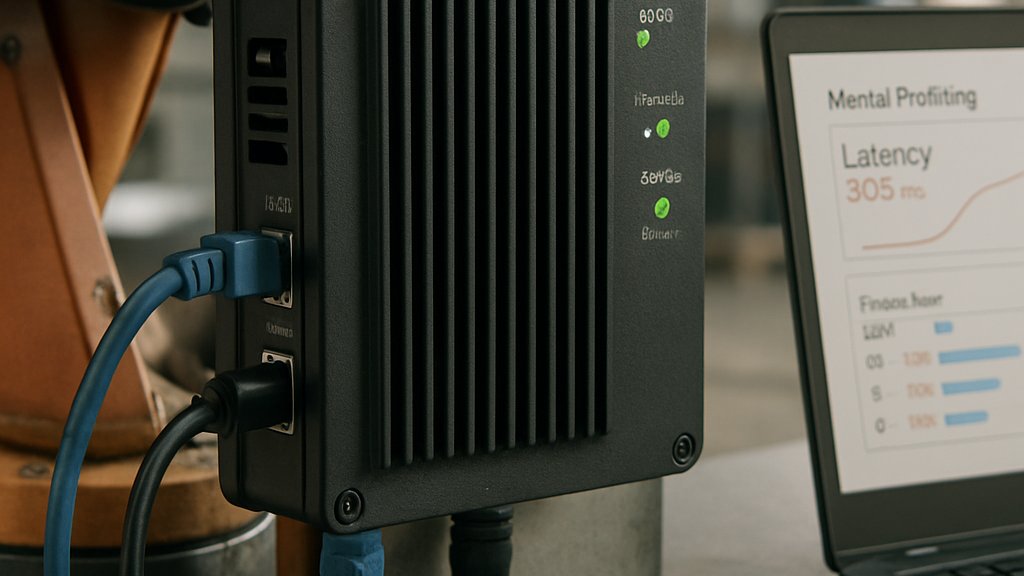
Latency also drives safety. Slow feedback permits dangerous overshoot during heavy lifting. Moreover, Chef Robotics recorded 64.9% lower velocity discontinuity after shrinking inference delay. These numbers show that real-time control quality scales with microsecond budgets. Consequently, executives now treat optimization budgets as first-order product features.
Reduced delay safeguards humans and boosts scores. However, fresh research is rewriting possible targets. Let us examine those breakthroughs.
Core Advances This Year
Three seminal projects headline 2026 advances. Firstly, FASTER introduced a Horizon-Aware Schedule plus streaming dispatch. Consequently, π0.5 TTFA dropped from 80.0 ms to 62.1 ms on an RTX 4090. Authors also claim up to 10× faster immediate sampling under specific settings. These results highlight the tangible benefits of VLA Inference Optimization across hardware classes.
Secondly, vla.cpp delivered an IMMA ladder GEMM that trims BitVLA per-step cost by 4.5×. Moreover, cross-hardware roofline analysis confirmed compute-bound behavior at batch one. Diffusion compression techniques further slashed memory traffic during denoising. As a result, developers can hit 30 Hz closed loops on consumer cards.
Thirdly, RhinoVLA and TinyVLA provided compact checkpoints optimized for edge SoCs. RhinoVLA achieved 11.69 Hz end-to-end throughput on the Huixi R1 arm. In contrast, earlier models failed to sustain 10 Hz without cloud offload. Consequently, on-site inference now supports delicate pick-and-place real-time control pipelines.
Collectively, these advances prove multi-layer gains are possible. Next, we unpack specific mechanisms. The following subsections detail scheduling and kernel engineering.
Horizon-Aware Schedule Basics
FASTER’s schedule partitions diffusion steps by temporal horizon. Near-term perception tokens finish first, enabling earlier action delivery. Consequently, the robot begins movement while longer-horizon refinement continues asynchronously. This streaming lowers robot latency by overlapping compute and actuation. Nevertheless, quality degradation remains minimal on published benchmarks.
Implementation requires minor code changes around sampler callbacks. Moreover, early-stop thresholds adapt automatically per task complexity. Therefore, engineers gain speed without manual tuning.
Prioritizing immediacy pays significant dividends. Meanwhile, runtime kernels add further headroom. We now explore those kernels.
Runtime Kernel Engineering
vla.cpp attacked matrix multiplications with hardware-aware tiling and fusion. Additionally, the IMMA ladder GEMM maximizes integer matrix multiply accumulation units. Consequently, per-step latency fell by 4.5× across A100, H100, and RTX 4090.
The library also embraces mixed precision with fallback guards. Diffusion compression reduces denoising iterations while preserving accuracy. In contrast, naive float kernels waste bandwidth and energy. Therefore, developers focusing on VLA Inference Optimization should audit kernel paths early. Such low-level VLA Inference Optimization complements model-level changes.
Kernel tuning multiplies scheduling gains. The comparison section quantifies combined impact. Let us contrast techniques across scenarios.
Optimization Techniques Compared
Teams often ask which lever to pull first. Table 1 summarises relative benefits. FASTER’s schedule usually halves TTFA, while vla.cpp’s kernels achieve 4-5× micro-step speedups. Meanwhile, model pruning and diffusion compression offer 1.3-2× gains with small accuracy drops. Strategic VLA Inference Optimization sequencing prevents wasted engineering hours.
- FASTER: 1.3-2.5× TTFA reduction on consumer GPUs; marginal quality loss under 2%.
- vla.cpp: 4-5× per-step speed boost through IMMA ladder GEMM and fusion.
- RhinoVLA: 11.69 Hz inference on Huixi R1, meeting 10 Hz real-time threshold.
- Chef Robotics: 64.9% drop in velocity discontinuity after integrated tuning.
Notice that results compound. Applying schedule, kernels, and compression together delivers exponential gains. Consequently, several labs report manipulation speed doubling without hardware upgrades. However, aggressive trims risk stability during long horizons.
Comparative data guides deployment priorities. Next, we turn to edge considerations. Edge contexts introduce unique constraints.
Edge Deployment Realities
Embedded boards lack ample memory and cooling. Therefore, RhinoVLA’s token-efficient design becomes crucial. The model uses fewer perception tokens and mixed precision to fit eight-gigabyte footprints. Moreover, TinyVLA compiles kernels specifically for Jetson Orin.
Developers must monitor power spikes during burst inference. In contrast, server GPUs absorb peaks easily. Consequently, scheduling algorithms should balance heat and latency. Real-time loops also need deterministic message passing over ROS or ZeroMQ.
Certification tracks help engineers validate design decisions. Professionals can pursue the AI Engineer™ certification for structured guidance.
Moreover, edge deployment demands reproducible benchmarking. NVlabs’ VLA-Perf offers scripts for cross-hardware profiling. Therefore, teams can forecast robot latency before soldering boards. Smaller checkpoints still double manipulation speed when paired with efficient kernels. Edge-focused VLA Inference Optimization depends on disciplined measurement.
Edge success hinges on compact models and careful profiling. Nevertheless, speed must not outpace reliability. The next section explores that balance.
Future Research Directions
Researchers identify four open challenges. Firstly, reproducibility across diverse robots remains scarce. Secondly, safety testing under adversarial noise needs formal protocols. Moreover, balancing diffusion compression against failure risk requires longitudinal studies. Finally, standardized metrics beyond TTFA could capture user-perceived responsiveness.
Community tool maintainers plan to add jerk and energy indicators. Consequently, product teams will map VLA Inference Optimization directly to maintenance budgets.
Meanwhile, hardware vendors explore on-die accelerators for perception tokens and denoising steps. These innovations could cut robot latency to single-digit milliseconds. Therefore, close collaboration between model and silicon designers will be essential.
Future work targets holistic, safe, and verified real-time control. Consequently, continual learning remains vital for professionals. The conclusion distills actionable insights.
Conclusion
Faster robots depend on disciplined engineering across model, runtime, and system layers. Moreover, recent case studies validate that VLA Inference Optimization can shrink TTFA by orders of magnitude. Scheduling, kernel tuning, and diffusion compression combine without heavy hardware spending. Consequently, manipulation speed and safety improve together. Nevertheless, rigorous benchmarks and safety audits remain essential.
Engineers seeking structured skills should review the AI Engineer™ certification pathway. Additionally, subscribing to our newsletter keeps teams current on emerging kernels and schedules. Act now to place your organization at the forefront of frontline robotics innovation.
Disclaimer: Some content may be AI-generated or assisted and is provided ‘as is’ for informational purposes only, without warranties of accuracy or completeness, and does not imply endorsement or affiliation.


