

AI CERTS
2 hours ago
AI Password Security: MindReader Elevates Credential Hygiene
However, many practitioners remain cautious because LLM coaching also empowers attackers with smarter guessing frameworks. This article dissects the research, evaluates benefits and exposes unresolved gaps. Readers will leave equipped with actionable guidance and links to relevant certification pathways. In contrast, generic password policies seldom reflect evolving model-based attacks. Therefore, understanding AI Password Security at this pivotal moment is essential for every security leader.
Rising Password Threat Landscape
Attackers have already weaponized foundation models for password cracking. PASSLLM experiments showed up to 103 percent higher success within the first hundred guesses. Consequently, account safety metrics now look outdated against model-driven attacks. Meanwhile, GitGuardian detected 28,000 likely LLM-generated passwords leaked on GitHub during a four-month span. These datasets confirm detectable fingerprints that specialized Markov pipelines can exploit. AI Password Security research underscores the urgency of adaptive defenses. Offensive AI raises baseline risk faster than legacy controls evolve. However, a defensive twist arrives with MindReader.
MindReader Coach Core Mechanics
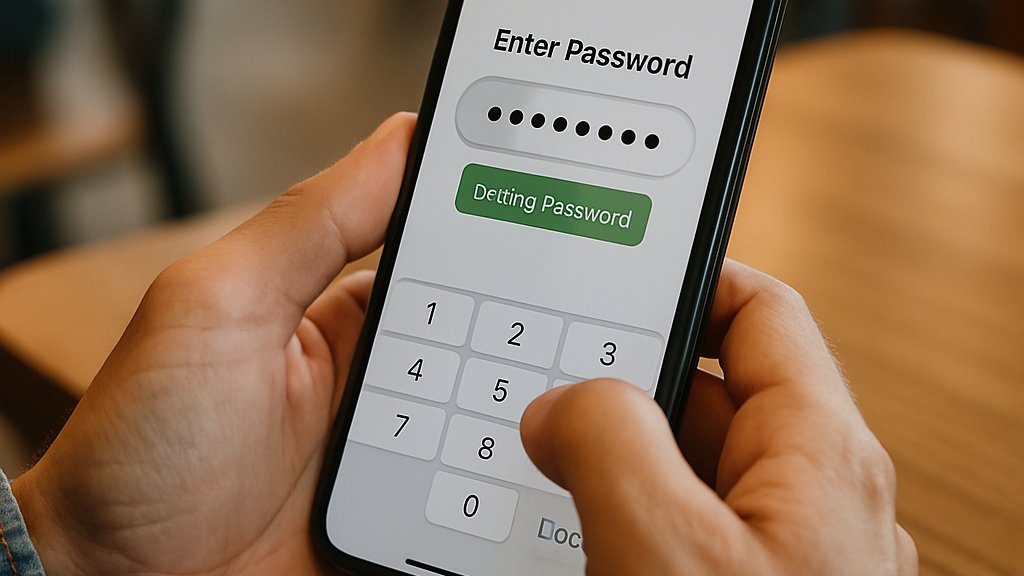
MindReader positions itself as personalized LLM coaching rather than generic generation. Researchers feed the user's old password into a local model segmenter. Then, semantic vectors identify meaningful chunks such as sports teams or pet names. Subsequently, the coach proposes syntactically different but semantically similar replacements. Therefore, users remember new strings because mental associations persist.
Early testers reported crafting memorable passwords without writing hints. Furthermore, a model-based entropy filter rejects low-diversity suggestions before display. By combining cognitive science and AI Password Security principles, MindReader targets stronger yet usable credentials. MindReader's architecture exploits LLM coaching to amplify user memory while raising guess costs. Next, we review the empirical evidence supporting those claims.
Empirical Security Gains Reported
MindReader's controlled study enrolled 56 participants across two campuses. In the baseline, users crafted their own replacement passwords using standard advice. Consequently, those manual replacements improved offline resistance only 2.2 times. In contrast, MindReader passwords demanded 106.8 times more black-box guesses. Moreover, white-box online attacks succeeded against merely 3.5 percent of coached passwords. User security improved without severe memorability loss. The experiment suggests improved credential hygiene through structured guidance.
- 89.29% immediate login success for coached users.
- 57.14% recall after seven days with no paste allowed.
- Typing time rose slightly during initial adoption phase.
- Only 3.5% cracked in adversarial white-box online scenario.
These outcomes mark a milestone for AI Password Security benchmarking. These numbers demonstrate tangible protection gains over ad-hoc strategies. However, several caveats temper optimism.
Risks And Open Questions
Every upside invites parallel risks. Nevertheless, feeding passwords into remote models could expose secrets through logging or interception. GitGuardian's fingerprint study shows many developers hardcoding LLM-suggested credentials directly into source. Such practices undermine credential hygiene and erode regulatory compliance. Moreover, adversaries can tune their own models toward the same statistical patterns, shrinking defense margins. In contrast, running coaching locally reduces exposure yet complicates device management.
User security teams must weigh privacy, performance, and deployment cost. Additionally, some coached strings increased typing friction, possibly discouraging memorable passwords under stress. The tension illustrates why AI Password Security demands balanced governance. Defenders cannot ignore these structural drawbacks. Consequently, careful deployment planning becomes essential.
Practical Deployment Considerations Now
Security architects should treat MindReader as one tool, not a silver bullet. Therefore, combine coaching with multi-factor authentication, strict rate limits, and detection blocklists. Such layering fortifies account safety even if a coached password eventually leaks. Furthermore, enterprises must log LLM coaching sessions carefully to avoid retaining sensitive material. Policy teams should specify whether inference runs on premises, on devices, or via vendor clouds.
Regular audits ensure credential hygiene remains high as policies evolve. AI Password Security dashboards can track entropy scores and flag declining strength over time. Professionals can enhance their expertise with the AI Security Level 1™ certification. Thoughtful controls convert promising research into resilient practice. Next, we outline a strategic roadmap.
Strategic Defensive Roadmap Ahead
First, pilot the coach with non-privileged accounts and gather telemetry. Collect memorability feedback to ensure coached strings remain truly memorable passwords under daily pressure. Subsequently, integrate entropy APIs into existing identity platforms. Monitor account safety events for any regression in lockout or breach rates. Meanwhile, develop user security training that explains semantic replacement rather than random substitution.
Moreover, schedule periodic credential hygiene reviews to retire stale coached secrets. Stakeholders should publish quarterly AI Password Security metrics to maintain executive visibility. Finally, prepare incident response playbooks that anticipate model-aware attackers. Following a phased roadmap reduces rollout risk. The next section synthesizes key insights.
Conclusion And Next Steps
MindReader proves that language models can enhance defensive posture without eroding usability. However, enduring success depends on disciplined deployment and layered safeguards. Consequently, leaders who embrace AI Password Security must also monitor fingerprints, entropy, and downstream developer habits. LLM coaching will only thrive when combined with clear privacy architecture and transparent governance. Therefore, upskill teams today through the previously mentioned AI Security Level 1™ certification and start controlled pilots. Timely action can convert rising threats into lasting advantages.
Disclaimer: Some content may be AI-generated or assisted and is provided ‘as is’ for informational purposes only, without warranties of accuracy or completeness, and does not imply endorsement or affiliation.


