

AI CERTS
1 hour ago
OpenAI’s 4-Day Week Proposal Recasts AI Labor Policy
Moreover, it intends to reduce disruptive layoffs and health risks. Leaders now weigh bold experimentation over cautious inertia. Academic trials already demonstrate feasibility. In contrast, skeptics question sectoral compatibility. Nevertheless, mounting evidence pressures policymakers. Therefore, the blueprint’s timing feels strategic. Meanwhile, unions see negotiation opportunities. Consequently, investors monitor cost implications. Understanding these dynamics is critical for executives. Future competitiveness may hinge on early adoption.
Superintelligence Sparks Week Reform
OpenAI warns that superintelligence could eclipse human expertise soon. Therefore, the company argues that social contracts must adapt preemptively. That message underpins its wider AI Labor Policy vision.
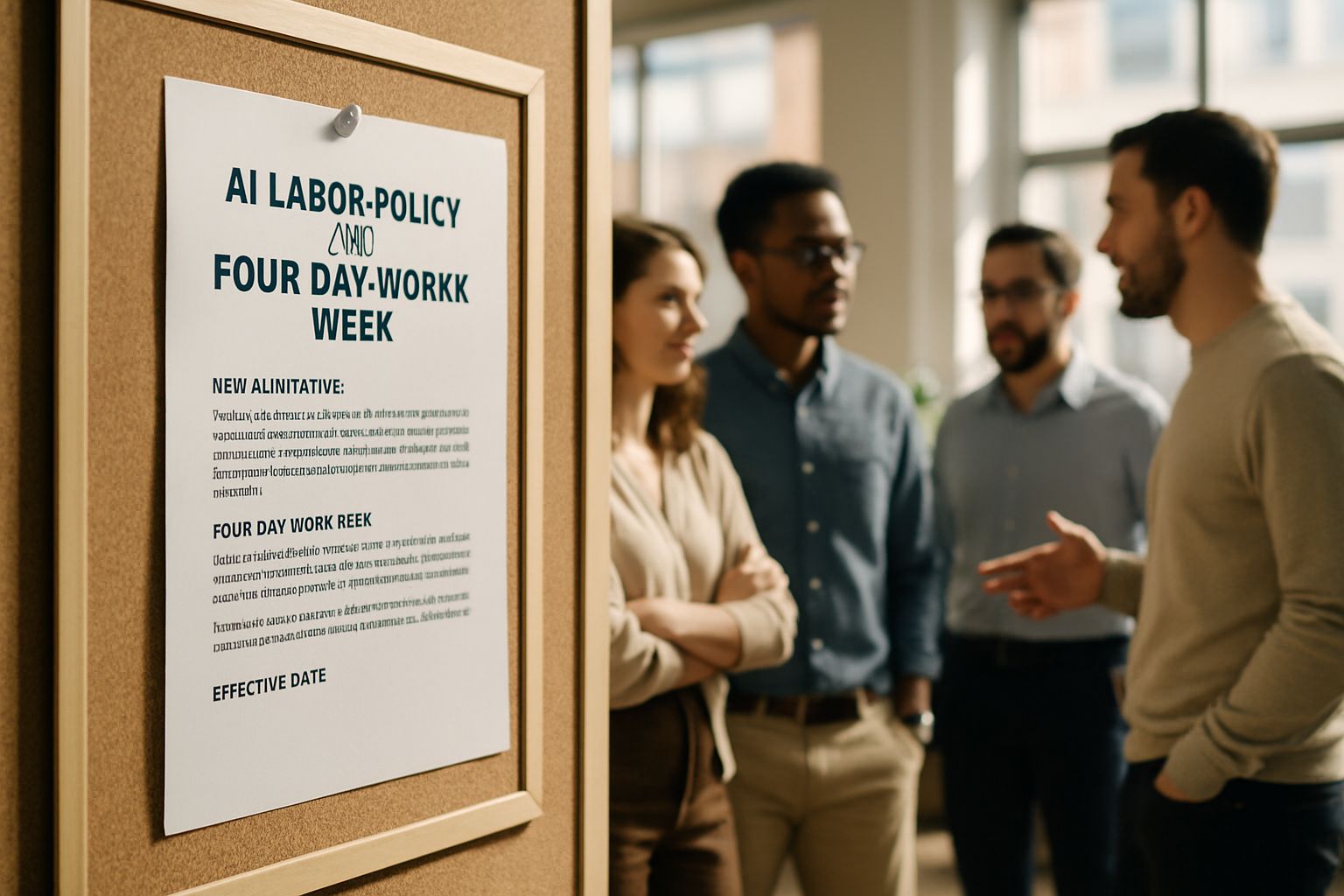
Key to the vision is sharing efficiency dividends unlocked by advanced models. Moreover, shorter weeks transform technological surplus into tangible employee value.
The blueprint suggests pilot subsidies to keep pay constant during the transition. Consequently, firms can compare pre-AI and post-AI Productivity metrics objectively.
OpenAI states, “We’re beginning a transition toward superintelligence.” Such frank language elevates urgency across boardrooms.
This urgency reframes workforce strategy. Next, leaders must examine specific blueprint details.
Policy Blueprint Key Details
OpenAI’s 13-page document outlines three flagship ideas. Firstly, a 32-hour, 4-Day Week pilot with full wages. Secondly, a robot tax shifting levies from labor toward capital. Thirdly, a Public Wealth Fund would distribute investment returns nationally.
Additionally, the paper proposes direct grants for unions and employers testing schedule changes. Such supports aim to preserve service levels during Shifts in hours.
Collectively, these elements form an integrated AI Labor Policy toolkit.
These mechanisms form a cohesive package. However, fiscal execution requires deeper analysis, explored next.
Fiscal Support Tools Explained
Robot tax proposals would capture AI windfalls. Meanwhile, fund revenues could stabilize social insurance contributions.
Economists still debate optimal tax rates. In contrast, OpenAI declines to name specific percentages.
Nevertheless, the blueprint references Alaska’s dividend model as inspiration.
Fiscal architecture remains undefined. Consequently, evidence from existing trials becomes essential.
Funding decisions will shape long-term AI Labor Policy credibility.
Evidence From Global Trials
Empirical data from recent 4-Day Week pilots informs debate. Researchers tracked 61 UK companies across six months. Productivity stayed level or improved for most participants.
Moreover, headline metrics proved compelling.
- 92% of firms kept the schedule post trial.
- Employee turnover fell by 57%.
- Self-reported burnout dropped 71%.
Juliet Schor labels the model “100-80-100,” emphasising output preservation. Consequently, critics lose ground when Productivity data align with well-being gains.
Trials demonstrate feasibility across sectors. However, scaling pilots reveals operational hurdles discussed below.
Positive results give lawmakers empirical backing for AI Labor Policy legislation.
Implementation Hurdles And Costs
Compressed schedules complicate customer-facing Shifts and 24/7 operations. Moreover, union negotiations must safeguard staffing ratios.
Managers also track service levels to validate AI Labor Policy goals. In contrast, highly automated teams may transition smoothly. Still, not all roles align with a 4-Day Week cadence.
Cost accounting poses another barrier. Organizations need granular dashboards measuring output against wage bills.
Sectoral variability complicates universal AI Labor Policy mandates.
These obstacles require structured change management. Therefore, strategic guidance now becomes paramount.
Strategic Steps For Leaders
Boards should initiate small, reversible pilots first. Subsequently, expand scope once metrics confirm viability.
Cross-functional teams must redesign Shifts, workflows, and automation triggers.
Professionals can enhance their expertise. They can pursue the AI+ Human Resources™ certification.
Such credentials align with emerging AI Labor Policy frameworks. Clear communication ties each pilot to overarching AI Labor Policy metrics.
Moreover, leaders should document baseline metrics before altering hours. Comparative analysis will showcase Productivity shifts to stakeholders.
Workforce Upskilling Path Options
Upskilling programs keep displaced employees relevant. Additionally, pairing training with reduced hours minimizes anxiety.
Government vouchers and corporate study time feature in OpenAI’s menu.
Upskilling strengthens resilience. Consequently, policy momentum gains durability.
Forward-thinking governance builds public trust. Finally, how does policy momentum look ahead?
Conclusion And Outlook
OpenAI’s blueprint reframes time, tax, and talent management for the intelligence age. Positive trial data supports decisive experimentation. However, implementation costs and governance choices remain unresolved. Nevertheless, firms can pilot compressed schedules while refining automation. Governments should coordinate subsidies, tax design, and upskilling incentives. Consequently, a balanced AI Labor Policy could convert superintelligence gains into shared prosperity. Readers seeking tactical skills should consider accredited certifications. Explore the linked program and prepare your workforce future today. In contrast, delaying action risks widening inequality. Therefore, momentum now decides who benefits from AI acceleration.
Disclaimer: Some content may be AI-generated or assisted and is provided ‘as is’ for informational purposes only, without warranties of accuracy or completeness, and does not imply endorsement or affiliation.


