

AI CERTS
1 hour ago
Anti AI Movement Goes Mainstream In U.S. Politics
Industry leaders warn of lost competitiveness, yet polling shows widespread unease. Moreover, only 31% of Americans trust government oversight, according to Stanford’s 2026 AI Index. This article unpacks surge of AI populism, maps stakeholders, and draws lines to upcoming elections.
Anti AI Movement Politics
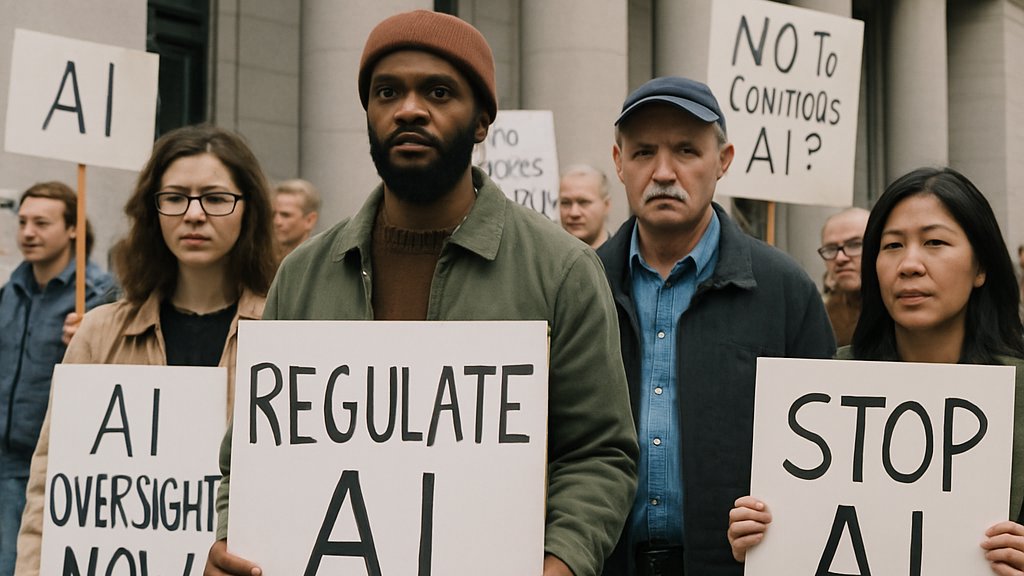
Populist rhetoric around automation simmered for years before crossing into elections. Meanwhile, the 2026 cycle shows candidates testing sharpened messages that blame elite technologists for lost jobs. Strategists quoted by Politico frame this messaging as the next evolution of the Anti AI Movement. Senator Bernie Sanders and Representative Alexandria Ocasio-Cortez crystallized the shift by introducing the AI Data Center Moratorium Act. Consequently, the proposal transformed local zoning fights into federal theater. Republicans remain split; some echo economic fears, while others tout technological supremacy against China.
Senator Mark Warner dismissed the moratorium as “idiocy,” illustrating intra-party fractures over competitiveness narratives. Nevertheless, polls cited by Gallup show majorities favor slowing development until safeguards improve. These dynamics confirm that AI populism has leaped from Twitter threads to Capitol Hill. However, understanding the underlying emotions remains essential. Therefore, the next section traces the drivers of public sentiment.
Drivers Of Public Sentiment
Gallup finds 98% of adults encountered AI news last year, yet only 8% feel very informed. Consequently, information asymmetry fuels unease when headlines warn of job automation and deepfakes. In contrast, only 31% trust AI decisions to be fair, underscoring fragile public sentiment.
Stanford’s AI Index adds another layer. Documented AI incidents jumped from 233 in 2024 to 362 in 2025, reinforcing perceptions of unchecked risk. Moreover, just 31% trust government regulators, a figure that erodes faith in institutions.
Local fights over water-hungry data centers personalize abstract fears. Residents link energy bills and drought warnings to corporate expansion, intensifying public sentiment. Consequently, community meetings now feature cross-ideological alliances, from environmentalists to rural conservatives. As a result, the Anti AI Movement finds fertile ground where residents feel excluded from decisions.
- 362 documented AI incidents in 2025, up 55% year over year.
- 31% trust government oversight, per Stanford.
- 60% distrust AI fairness, according to Gallup.
Survey data and local experiences converge into a clear story of distrust and anxiety. Therefore, campaigns are crafting backlash politics to harness that mood. Next, we examine how strategists turn worry into organized activism.
Backlash Campaign Strategies Rising
Campaign professionals describe three pillars for effective backlash politics against AI. Firstly, they spotlight local harms such as water consumption, traffic, and strain on grids. Secondly, they contrast soaring tech valuations with stagnant wages to stoke inequality narratives. That framing positions the Anti AI Movement as protector of local sovereignty.
Thirdly, they promise voters immediate relief through moratoria and zoning limits. Moreover, digital ads test slogans like “Pause The Machines” to gauge resonance among swing voters. Data from pilot districts shows engagement rates doubling when messages mention everyday costs instead of abstract ethics.
Grassroots groups adapt similar tactics. Community organizers distribute door hangers linking specific data center projects to household utility hikes. Meanwhile, conservative “Humans First” coalitions host town halls with unions, forming surprising alliances. Coordinated storytelling converts diffuse anxiety into shareable talking points and volunteer action. However, messaging alone cannot succeed without legislative footholds. Subsequently, we explore where policy fights are occurring.
Legislative Frontline AI Battles
Federal attention centers on the Sanders-AOC moratorium bill, now awaiting committee hearings. Supporters argue that halting new data centers buys time for safety and environmental reviews. In contrast, industry lobbyists warn the pause undermines national security by aiding Chinese competitors. For activists, the bill marks institutional recognition of the Anti AI Movement.
Statehouses mirror the clash. Maine’s 2026 veto fight showed governors weighing rural jobs against voter concerns over water rights. Moreover, several Arizona counties passed temporary bans, citing drought emergencies. Backlash politics also surfaces in bipartisan ratepayer protection bills.
Local boards add another layer. Permitting meetings increasingly last past midnight as residents cite noise, light pollution, and equity. Consequently, developers face higher legal costs and extended construction timelines.
- Federal AI Data Center Moratorium Act.
- Hawley-Blumenthal GRID Protection Bill.
- Maine Data Center Freeze Proposal.
Policy arenas from Congress to county halls are now ground zero for the Anti AI Movement. Therefore, economic factors demand closer scrutiny. The next section assesses how inequality pressures feed the rebellion.
Economic And Inequality Pressures
Automation anxiety links directly to pocketbooks. Brookings research shows regions with higher robot adoption see sharper right-wing or populist shifts. Similarly, AI job displacement fears magnify inequality narratives already prevalent after the pandemic. Meanwhile, gig workers fear algorithmic pay cuts that escape traditional labor protections.
Stanford reports 88% of organizations use AI, yet wage growth remains uneven. Furthermore, creative and white-collar workers now feel threatened, expanding the Anti AI Movement beyond manufacturing. In contrast, tech firms tout new roles, but retraining programs lag adoption speed.
Water and power subsidies for data centers exacerbate perceptions of unfair advantage for wealthy corporations. Consequently, opponents frame moratoria as straightforward fairness measures for taxpayers. Economic storylines give moral weight to calls for a pause. Nevertheless, distrust toward technology itself amplifies these arguments. Accordingly, we now examine the roots of tech distrust.
Tech Distrust And Risks
Public confidence in algorithms remains stubbornly low. Only 31% trust AI fairness, according to Gallup, despite constant product launches from major platforms. Meanwhile, high-profile failures like biased hiring tools reinforce tech distrust across demographics.
Threats and violence, including the Altman incident, crystallize fears that AI elevates social tensions. Moreover, documented AI incidents rose 55% in a single year, giving opponents empirical ammunition. Law enforcement officials warn copycat attackers may emerge if rhetoric continues to escalate. In contrast, labs tout improved safety benchmarks, yet transparency gaps persist.
Professionals can pursue the AI Ethics for Business™ certification for balanced insights. Consequently, structured ethics education may ease some voter concerns. Such episodes supply headline fuel for the Anti AI Movement. Escalating incidents and opacity deepen tech distrust despite industry reassurances. However, the ultimate test will arrive at the ballot box. Therefore, we conclude with likely electoral outcomes.
Future Electoral Implications Ahead
Pollsters observe that AI anxiety cuts across class and party lines. Consequently, consultants from both parties experiment with slogans that foreground jobs, safety, and community control. Early models suggest an authentic Anti AI Movement narrative could shift three Senate races.
However, the coalition is brittle. Tech employees, unions, and environmentalists share goals today but may diverge over solutions tomorrow. Moreover, bipartisan bills that address water usage without full moratoria could defuse momentum.
Industry also adapts. OpenAI and rivals promise rural job creation and renewable investments to weaken opposition narratives. Nevertheless, unless wages and bills improve, public sentiment will likely stay volatile. Election outcomes will hinge on who appears to protect ordinary people from unchecked AI power. Consequently, both parties are rewriting playbooks. Therefore, we summarize key insights and outline next steps.
AI populism has entered mainstream politics and shows little sign of retreat. Legislation, campaigns, and local zoning fights now orbit the Anti AI Movement as it builds influence. However, public sentiment remains fluid and could swing if tangible economic gains appear. Backlash politics will persist while inequality indicators worsen and water bills climb. Consequently, policymakers must address voter concerns with transparent costs, fair labor plans, and credible oversight. Moreover, companies should tackle tech distrust head-on through audits, open data, and workforce retraining. Professionals can begin with the AI Ethics for Business™ credential to guide ethical adoption. Take action today, because informed leadership may shape a fairer AI future for everyone.
Disclaimer: Some content may be AI-generated or assisted and is provided ‘as is’ for informational purposes only, without warranties of accuracy or completeness, and does not imply endorsement or affiliation.


