

AI CERTS
1 hour ago
Anthropic Service Outage Exposes Notion Workflow Risks
Moreover, social media amplified the incident, generating more than 1,200 reposts of the alert. Industry leaders therefore revisited their contingency plans and observability dashboards. This article unpacks the timeline, impact, root causes, and emerging mitigation tactics. Additionally, it highlights certification pathways that help managers build resilient AI products. Each section maintains strict word limits and actionable insight for busy professionals. However, the central takeaway is clear: single-provider dependencies now equal strategic risk.
Outage Hits Enterprises Today
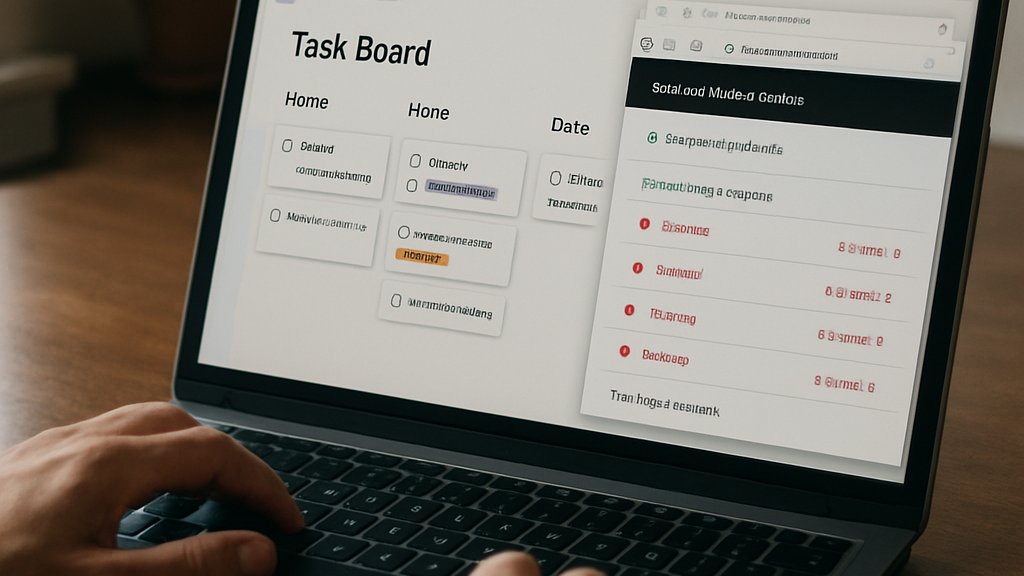
Organizations awoke to error spikes across key Notion features shortly after 03:30 UTC. Subsequently, dashboards flagged elevated failure rates on Claude Opus 4.7 and 4.8 calls. The Anthropic Service Outage forced Notion engineers to switch those models off for safety. In contrast, users of other productivity tools that rely on different providers saw normal performance. Customer tickets nevertheless surged, citing broken document generation and stalled meeting notes. Therefore, product teams sent status emails and banner alerts referencing the broader service disruption. The immediate impact underlined how tightly enterprise workflows integrate external AI endpoints.
Ultimately, clients experienced hours of lost automation capacity. However, swift investigation set the stage for a transparent timeline review.
Full Timeline And Response
Accurate chronology clarifies accountability during any Anthropic Service Outage. Consequently, we mapped incident milestones using official status pages and press reports. The following list summarizes confirmed timings.
- Jun 5, 17:12 UTC: Opus 4.7 recovered after early elevated errors.
- Jun 7, 03:31 UTC: Anthropic opened investigation into renewed model failures.
- Jun 7, 04:28 UTC: Infrastructure fix restored success rates.
- Jun 7, 14:35-15:41 UTC: Separate Opus 4.7 incident resolved.
Notion confirmed AI access restoration roughly 12 hours after its first social alert. Meanwhile, Anthropic published a brief post-mortem citing an infrastructure misconfiguration. The quick closure limited legal exposure under existing SLA terms.
These timestamps illustrate fast containment yet highlight recidivism potential. Therefore, we turn next to economic fallout.
Key Productivity Costs Calculated
Quantifying downtime converts anecdote into boardroom language. Furthermore, stakeholders demanded numbers immediately after the Anthropic Service Outage. We extrapolated impact using publicly posted 90-day uptime metrics. Claude API shows 99.15% reliability; a three-hour gap thus equals half a monthly budgeted failure window. In contrast, many productivity tools promise 99.9% application uptime. Therefore, the recent service disruption consumed up to 30% of their annual error allowance.
Notion’s head of product admitted surprise at the social amplification scale. Moreover, every minute without AI saved workers no time on drafting or summarizing. Independent analysts estimated lost productivity worth between $300,000 and $500,000 across large enterprise workflows. Nevertheless, the absence of hard customer numbers limits precise accounting.
The financial stake is unmistakable. Consequently, leaders now probe deeper technical causes.
Critical Root Causes Examined
Root cause analysis transcends blaming language models. Additionally, observers spotlighted rapid Opus iteration as a reliability pressure point. Anthropic had rolled out versions 4.7 and 4.8 within weeks. Each revision introduced new infrastructure nodes, thereby extending blast radius during faults. Meanwhile, single-tenant isolation remains limited for most Claude customers. Independent write-ups also noted monitoring blind spots in downstream SaaS code. Consequently, Notion lacked granular model-level circuit breakers at incident onset. The Anthropic Service Outage thus propagated until manual toggling occurred. Engineers agree that automated health checks should fail fast and reroute traffic. However, such observability requires careful token logging and latency baselines.
These findings suggest shared responsibility. Therefore, strategy discussions now focus on mitigation.
Best Mitigation Strategies Emerging
Multiple mitigation patterns surfaced during post-mortems. Moreover, multi-model routing topped every recommendation list. Teams configure gateways to swap Claude requests for alternate providers when thresholds trip. Another tactic involves local caching of recent AI outputs to reduce repeat calls during a service disruption. Subsequently, vendors negotiate stricter SLAs, including refund triggers on any Anthropic Service Outage. Observability upgrades also gain traction through distributed tracing. Finally, regular chaos testing validates switchover logic before production crises.
- Implement latency-aware routers that assess model health every 30 seconds.
- Maintain signed backup prompts on at least two alternative providers.
- Store anonymized request logs for post-incident forensic analysis.
These steps reduce outage blast radius from hours to minutes. Nevertheless, execution demands skilled project oversight and change management.
Effective mitigation balances cost with resilience. Consequently, leadership training becomes essential.
Essential Lessons For Leaders
Board members increasingly question AI dependency risks. In contrast, product managers emphasize innovation speed. Therefore, balanced governance frameworks now appear. Policies require documenting provider selection, failover triggers, and user communication templates. Moreover, quarterly resilience drills simulate another Anthropic Service Outage. Notion’s rapid model disablement served as a practical tabletop scenario. Furthermore, enterprises diversify productivity tools to avoid single-stack paralysis. Regulators may eventually mandate transparency around AI outage handling. Meanwhile, procurement teams already insert penalty clauses when service disruption breaches agreed thresholds. Ultimately, culture shifts toward continuous risk assessment.
Leadership must treat AI reliability as core strategy. Next, professionals can seek targeted education.
Clear Certification Path Forward
Technical managers often lack formal training in AI resilience planning. Accordingly, professionals can enhance expertise with the AI Project Manager™ certification. The curriculum covers SLA drafting, multi-model routing, and outage post-mortems. Moreover, case studies include the recent Anthropic Service Outage. Graduates subsequently lead cross-functional reliability efforts inside similar environments. Additionally, certification holders report faster career progression within productivity tools companies. Candidates complete modules online, enabling flexible learning for busy enterprise workflows stakeholders. Nevertheless, experience still matters; the credential amplifies, not replaces, on-the-ground practice.
Structured learning cements lessons into repeatable processes. Therefore, organizations should support staff enrollment immediately.
The Anthropic Service Outage underscored hidden dependencies across cloud products. Nevertheless, Notion contained user frustration through rapid communication and model isolation. Wider industry analysis revealed significant cost exposure for productivity tools relying on Claude alone. Consequently, technical leaders are prioritizing multi-model routing, stronger SLAs, and active observability. An additional Anthropic Service Outage could strike at any time, yet prepared teams will absorb the shock. Moreover, structured education accelerates that readiness. Interested readers should explore the linked certification and reinforce their enterprise workflows against future turbulence. Act now to transform risk into competitive resilience.
Disclaimer: Some content may be AI-generated or assisted and is provided ‘as is’ for informational purposes only, without warranties of accuracy or completeness, and does not imply endorsement or affiliation.


