

AI CERTS
1 hour ago
Autonomous Delivery Robots Drive Pizza Commerce Revolution
Meanwhile, labor shortages and wage pressures intensify the search for reliable kitchen cobots. This article dissects the latest players, economics, and delivery tie-ins defining the forthcoming commercial rollout. Furthermore, we outline risks and concrete steps for restaurant professionals evaluating deployments. Readers will discover certifications to deepen robotics fluency and position operations for the robot shift.
Market Size Snapshot
IMARC estimates American pizza revenue will reach $39 billion during 2025. Consequently, automation vendors view the category as an ideal proving ground. Global market reports place total pizza sales around $150 billion for 2024. Moreover, analysts project expansion beyond $220 billion by 2032, fueled by ghost kitchens and delivery apps. Such growth underpins bullish forecasts for Autonomous Delivery Robots partnering with pizza brands.
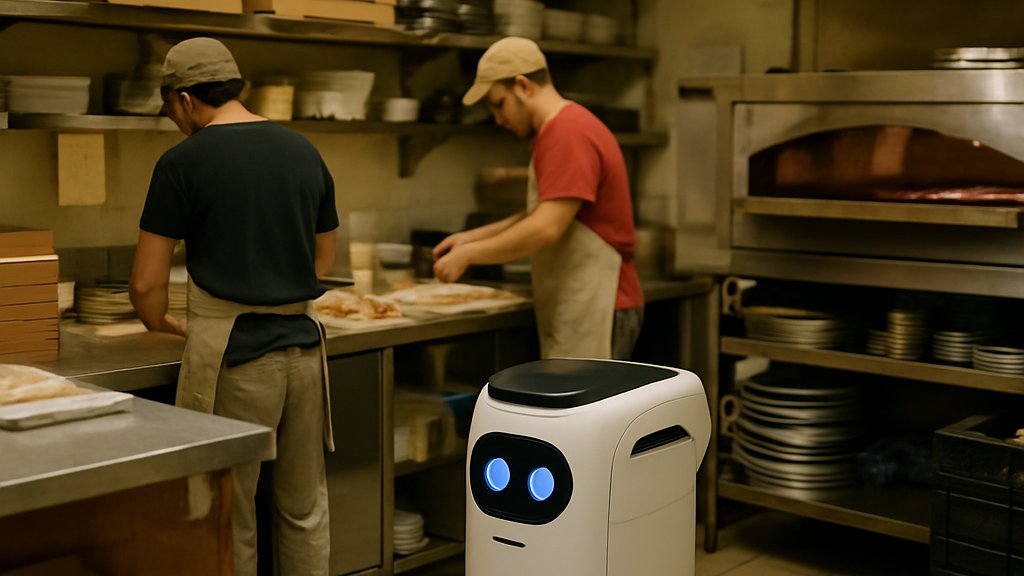
Labor economics further strengthen the case. National Restaurant Association surveys show operators citing wage pressure as their top pain point. Therefore, automated assembly promises consistent output without overtime or sick days. Nevertheless, capex hurdles still stall many pilot programs. These figures establish why venture dollars continue chasing robotic pizza ventures.
Pizza’s scale and labor woes create an attractive sandbox. However, achieving profitable automation now depends on the next wave of specialized players.
Robotics Players Overview
Several tech startups currently chase the pizza crown. XRobotics in San Francisco markets the countertop xPizza Cube, leasing units for about $1,300 monthly. Additionally, the fleet reportedly produces 25,000 pizzas per month across food tech customer sites. Picnic Works once touted 100 pies hourly yet entered liquidation during May 2026. In contrast, vending player Piestro pursues retail pods co-branded with 800 Degrees Pizza.
Zume’s 2023 collapse still shadows the field, highlighting burn-rate dangers. Serve Robotics and Uber partner on sidewalk couriers enabling autonomous delivery of robot-made pizzas soon. Moreover, equipment giants like Middleby integrate conveyors and software, giving incumbents a hedge. Together, these actors shape an ecosystem where Autonomous Delivery Robots complete assembly, baking, and last-mile automation. Industry observers therefore track funding rounds and pilot counts rather than hype alone.
A dynamic vendor map keeps investors cautious yet intrigued. Subsequently, understanding success factors requires studying both triumphs and recent failures.
Recent Successes And Setbacks
XRobotics claims customers save up to 80 percent of topping labor. Consequently, some operators report faster order times during peak Friday rush. Nevertheless, Picnic’s demise left Seattle restaurateur Lee Kindell with idle hardware worth $250,000. Kindell now warns peers to demand robust service agreements. Moreover, vendor throughput often reflects ideal labs rather than cramped back-of-house realities.
Analysts from QSR Pro estimate fewer than 15 percent of chains trial full kitchen robotics. In contrast, partial automation enjoys broader acceptance because integration risk stays lower. Therefore, success stories often pair modular robots with human oversight rather than full autonomy. Zume’s high burn and maintenance costs further demonstrate the balance sheet stakes. These mixed results underscore the need for disciplined Autonomous Delivery Robots pilots and clear ROI modeling.
Wins inspire headlines, yet collapses supply sobering context. Consequently, business model structure becomes the next critical lens.
Business Models Emerging
Vendors pursue three dominant commercial paths. First, outright hardware sales give operators depreciation incentives but demand high upfront capital. Second, leasing arrangements like XRobotics’ $1,300 subscription convert capex into predictable opex. Third, Robot-as-a-Service models bundle maintenance, software, and revenue share, lowering barrier costs. Moreover, some companies pitch turnkey vending pods, a familiar playbook in broader food tech.
Each path carries unique risk allocations between vendor and operator. In contrast, franchise groups often request outcome-based pricing tied to pizza output. Therefore, contract specificity around uptime, ingredient waste, and software updates remains essential. Professionals can enhance their expertise with the AI Robotics Certification to negotiate these terms. These structures illustrate why financial engineering equals technical engineering for Autonomous Delivery Robots.
Selecting the right contract safeguards margins and relationships. Subsequently, delivery integration determines whether savings materialize downstream.
Delivery Automation Synergy
Assembly speed alone fails without efficient last-mile automation. Serve Robotics, Starship, and Uber pilots demonstrate autonomous delivery curb-to-door potential. Furthermore, Little Caesars recently tested sidewalk bots in Los Angeles neighborhoods. Autonomous Delivery Robots carrying hot pizzas could eliminate driver costs and shrink wait times. Additionally, integrated software can dispatch ovens to finish baking during the trip.
However, municipalities regulate sidewalk traffic and impose speed or insurance limits. Consequently, mixed fleets of human couriers and robots remain common. Moreover, consumer acceptance hinges on food temperature and security upon arrival. Operators should benchmark delivery KPIs before expanding pilots. These alignment efforts tie kitchen gains to customer satisfaction for Autonomous Delivery Robots.
Assembly bots shine only when the handoff stays seamless. Therefore, operator ROI analysis must include curb dynamics.
Key Operator ROI Considerations
Restaurants evaluate payback using several quantitative levers. First, hourly throughput must match advertised specifications during real shifts. Second, uptime percentage drives actual capacity and ingredient waste levels. Third, maintenance response time affects weekend service when volume peaks. Moreover, energy consumption and floor space impact lease negotiations.
- Target payback period: 24-36 months under current wage rates
- Minimum uptime SLA: 95 percent across rolling 30 days
- Throughput threshold: 90 pizzas hourly during peak
- Maintenance budget: under 10 percent of lease cost annually
Consequently, thorough due diligence includes site visits and reference calls. Professionals gaining the AI Robotics Certification can structure these evaluations with data rigor. These disciplined steps prevent surprises once Autonomous Delivery Robots roll through the door.
ROI hinges on dependable engineering, clear contracts, and measured expectations. Subsequently, industry outlook gains clarity.
Outlook And Next Steps
Experts agree kitchen robotics momentum will continue despite recent failures. National Restaurant Association leaders foresee broader pilot activity within two years. Moreover, falling component costs and improved machine vision accelerate food tech iteration cycles. Autonomous Delivery Robots should cross the chasm as delivery partners mature regulatory frameworks. Nevertheless, investor patience will hinge on verified deployment numbers and transparent economics.
Analysts recommend three immediate actions for stakeholders.
- Request audited uptime and unit counts from vendors.
- Interview peers operating pizza robots for six months or more.
- Run sensitivity analyses on wage, volume, and maintenance scenarios.
Consequently, data driven conversations replace marketing gloss. Professionals armed with certification and rigorous models can lead the coming commercial rollout.
The next 18 months will test hype against operations. Therefore, measured diligence today secures competitive advantage tomorrow.
Pizza automation sits at the intersection of labor economics, hardware engineering, and consumer patience. Autonomous Delivery Robots promise quicker pies and thinner cost lines when executed correctly. However, recent shutdowns remind us that capital intensity can overwhelm untested assumptions. Consequently, professionals must examine throughput data, maintenance cadence, and last-mile automation ecosystems together. Moreover, balanced contracts and modular deployments mitigate risk while markets mature. Savvy leaders should pursue the linked certification to deepen robotics literacy and negotiation confidence. Take strategic steps now, pilot carefully, and track metrics relentlessly. Therefore, your operation can seize market share as the commercial rollout accelerates.
Disclaimer: Some content may be AI-generated or assisted and is provided ‘as is’ for informational purposes only, without warranties of accuracy or completeness, and does not imply endorsement or affiliation.


