

AI CERTS
1 hour ago
South Korea’s Sovereign AI Strategy Reshapes Tech Landscape
Subsequently, the National AI Council began translating rhetoric into budget commitments and governance reforms. This article unpacks how policy, capital, and technology intersect to accelerate the plan. Professionals will gain actionable insight into where opportunities and pitfalls may surface.
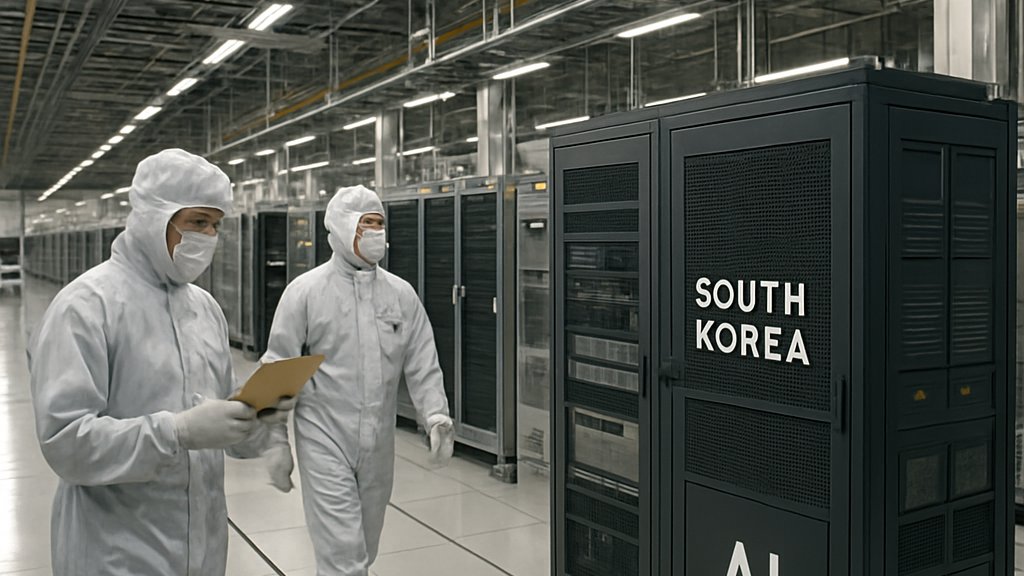
However, ambition alone never guarantees delivery. Therefore, understanding funding flows, infrastructure timelines, and regulatory mechanics is vital. In contrast, many global peers still debate frameworks. The country already funds GPUs, drafts safety rules, and mobilizes private finance. These early moves foreshadow wider changes across industrial policy, semiconductors supply chains, and defense tech innovation.
AI Elevated To Priority
President Yoon formalized the Sovereign AI Strategy during a televised address. Immediately, ministries received directives to embed concrete milestones in annual plans. Furthermore, the June 2025 statement targeted a top-three AI ranking by 2030. That ranking anchors every subsequent guideline drafted by the Presidential AI Council.
South Korea framed the move as essential for prosperity and resilience. Moreover, officials linked AI ambitions to demographic decline and external security pressures. The narrative positions national AI capacity as the next growth engine after shipyards and smartphones.
Summing up, political commitment is now unmistakable. Consequently, the budget spotlight grew brighter, which our next section explores.
Budget Signals Massive Bet
The 2026 science and ICT draft budget earmarks KRW 23.7 trillion. Additionally, KRW 10.1 trillion sits explicitly under AI programs. MSIT controls about half, steering research grants and GPU procurement. Moreover, lawmakers expect private firms to match public capital multiple times over.
South Korea projected KRW 65 trillion in private investment through 2027. Consequently, AWS alone pledged roughly USD 5 billion for new data centers. These sums underline how industrial policy becomes tangible through ledger lines.
The budget acts as the financial spine of the Sovereign AI Strategy.
- KRW 23.7T total MSIT budget
- KRW 10.1T dedicated AI allocation
- +15,000 GPUs planned for 2026
- KRW 65T private investment goal
These figures dwarf earlier digital budgets and illustrate fiscal resolve. Nevertheless, money without infrastructure cannot deliver scale, so compute capacity merits attention next.
Compute Capacity Race Ahead
Policy plans convert funds into silicon. Therefore, MSIT will expand the National AI Computing Center and acquire 15,000 new GPUs. Engineers target more than two exaflops national performance by 2030. Moreover, shared clusters will lower entry barriers for startups lacking expensive hardware.
Semiconductors remain the country's comparative advantage. In contrast, few nations combine foundries, memory giants, and packaging houses. Consequently, coupling local chips with hyperscale centers aligns the Sovereign AI Strategy with manufacturing strengths.
The nation's industrial policy links compute access to sectoral adoption quotas. Additionally, ministries will measure GPU utilization across education, defense tech, and healthcare pilots. The next section examines how industry champions accelerate those pilots. Collectively, infrastructure and chips transform abstract budgets into usable capability.
Industrial Giants Mobilize Rapidly
Samsung, SK, Naver, and LG AI Research occupy core roles inside advisory committees. Moreover, Ha Jung-woo moved from Naver to a senior presidential AI role, tightening public-private loops. Companies share data, staffing, and capital under joint MOUs that reference the Sovereign AI Strategy.
Semiconductors roadmaps integrate with cloud expansions, ensuring supply security. Additionally, SK Hynix positions high-bandwidth memory as a cornerstone for domestic AI workloads. Meanwhile, defense tech subsidiaries explore trusted large-language models for autonomous systems.
Industrial policy incentives include tax credits, accelerated depreciation, and export financing. Consequently, boardrooms treat AI investments as strategic rather than optional expenditures. The roadmap clarifies each conglomerate’s deliverables under the Sovereign AI Strategy.
Collaboration speeds progress but invites regulatory complexity. Therefore, governance mechanisms deserve closer inspection in the following section.
Governance And Safety Layers
Legislators passed the AI Basic Act in late 2024. Subsequently, enforcement decrees in 2025 created a risk-based system for high-impact AI. The framework compels transparency, safety testing, and human oversight. Moreover, a new AI Safety Research Institute will audit models before deployment in critical infrastructure.
Coordination spans MSIT, MOIS, and the Personal Information Protection Commission. Consequently, data privacy and algorithmic safety advance together. The Sovereign AI Strategy stresses that trust will decide adoption rates as much as compute.
Professionals can deepen compliance expertise through the AI Government Specialist™ certification. Additionally, certified leaders gain credibility when guiding national AI implementations.
These guardrails mitigate systemic risks. Nevertheless, gaps persist, as the next section reveals.
Risks And Critical Gaps
Ambitious timelines create execution risk. For instance, a September 2025 data-center fire exposed weak redundancy. Moreover, enforcement capacity may lag behind rapid market rollout. Social consequences also loom; IMF studies warn of labor displacement without retraining.
Defense tech ethics represent another unresolved area. South Korea seeks autonomous capabilities yet must align with global humanitarian norms. Additionally, cultural stakeholders worry about copyright erosion inside training datasets.
In contrast, opponents do not dismiss the Sovereign AI Strategy outright. They instead urge phased implementation, robust audits, and expanded worker support. Without careful pacing, the Sovereign AI Strategy could face public backlash.
These concerns underscore implementation fragility. However, forward planning can convert challenges into catalysts, as the final outlook shows.
Strategic Outlook To 2030
Economic modelling by Bain and the IMF suggests AI could inject KRW 310 trillion into GDP. Furthermore, productivity gains could offset demographic headwinds. South Korea therefore views the Sovereign AI Strategy as a social contract as much as a tech roadmap.
Industrial policy will continue blending public spending with private ingenuity. Semiconductors advances, domestic AI compute, and defense tech applications form a mutually reinforcing stack. Additionally, global investors monitor policy clarity before releasing queued funds.
Watch upcoming milestones: final budget approval, GPU center inauguration, and publication of detailed enforcement guides. Consequently, each milestone provides investors and policymakers with performance indicators.
These forward signals complete the strategic canvas. Nevertheless, actionable impact depends on coordinated execution across government and industry.
South Korea has pivoted from ambitious slogans to funded programs. Moreover, leadership framed AI as critical infrastructure, protected by new laws and built on domestic semiconductors. The Sovereign AI Strategy unites budgets, compute centers, and governance under a single banner.
Nevertheless, effective execution will hinge on resilience, workforce upskilling, and responsible defense tech integration. Consequently, professionals who master regulatory nuance can shape deployments that deliver inclusive growth.
Therefore, consider strengthening policy credentials through the AI Government Specialist™ program. Acting now positions you to guide domestic AI initiatives and capture emerging market opportunities.
Disclaimer: Some content may be AI-generated or assisted and is provided ‘as is’ for informational purposes only, without warranties of accuracy or completeness, and does not imply endorsement or affiliation.


