

AI CERTS
1 hour ago
How Physical AI Systems Fuel Nvidia’s Robotics Expansion
Industry analysts see the effort as the next frontier for Physical AI Systems. Moreover, MarketsandMarkets forecasts the embodied AI segment to surge past $23 billion by 2030. Start-ups and incumbents therefore face a pressing question. Which technologies, partners and risks matter most when software starts touching metal? This article unpacks Nvidia’s physical AI push, evaluates market traction, and outlines open challenges. Readers will gain actionable insight for upcoming industrial automation roadmaps. Finally, we flag certifications that can sharpen professional credentials in this fast evolving field.
Market Momentum Rapidly Builds
Nvidia began framing 2025 as the year of embodied intelligence. In March 2025, the firm revealed Isaac GR00T, a humanoid foundation model and simulation suite. Subsequently, March 2026 saw Cosmos 3, an open world model for robotics perception and prediction. Combined, these releases mark a shift from isolated demos to productized Physical AI Systems.
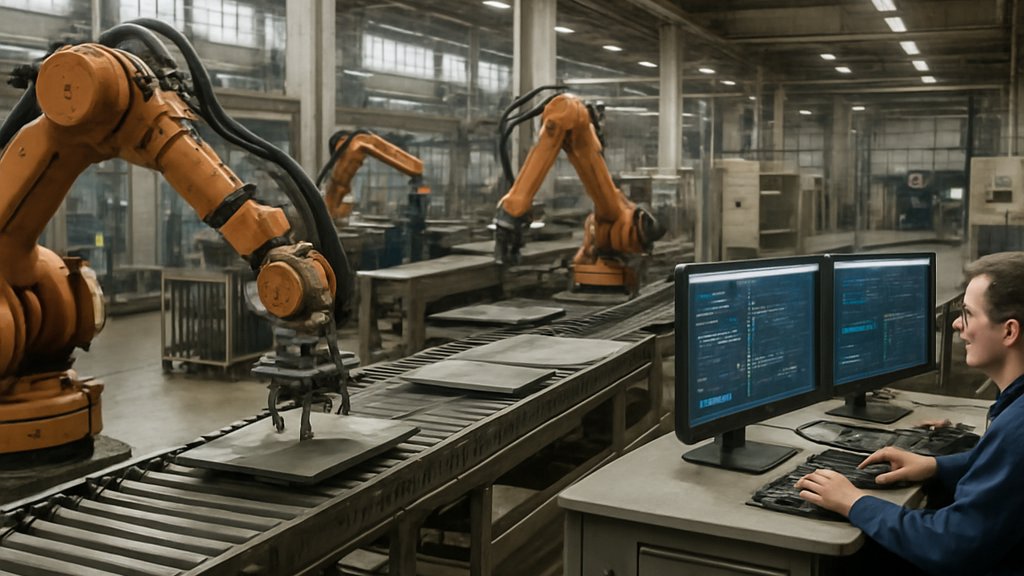
Analysts highlight supportive hardware economics. MarketsandMarkets cites a 39 percent CAGR for embodied AI, eclipsing several adjacent segments. Furthermore, Blackwell-based DGX GB300 promises 70× training performance versus prior generation clusters. Meanwhile, Jetson Thor boards deliver over 2,000 TOPS at edge prices below $3,500. Such numbers attract both venture capital and boardroom attention.
Therefore, market signals confirm real appetite, not mere hype. Next, we examine the hardware backbone enabling scale.
Integrated Hardware Edge Gains
Physical agents demand low-latency reasoning, tactile feedback, and energy efficiency. Consequently, Nvidia pairs Blackwell GPUs with high-bandwidth memory and specialised interconnects in DGX SuperPODs. These clusters train giant multimodal policies in weeks not months. In contrast, Jetson Thor provides inference near the sensors inside arms, wheels, or drones. Such ingredients underpin Physical AI Systems deployed outside laboratory walls.
Moreover, the same silicon appears in desktop developer kits, lowering experimentation barriers. Humanoids from Agility Robotics and Toyota Research Institute already mount Thor boards on torsos. Schneider Electric pilots the boards within industrial automation cells that require millisecond response times. Therefore, the hardware continuum spans cloud, factory data center, and embedded endpoints.
This continuum forms a foundational layer of the emerging physical AI stack. However, models alone do not move servos, as the next section shows.
Foundation Models Empower Robots
Large foundation models once lived only on chatbots. Now, Cosmos 3 and GR00T teach bodies to understand physics, semantics, and intent. Therefore, a single network can parse camera feeds, predict object trajectories, and generate control waypoints. Jensen Huang claims this yields "generalist robotics" that adapts across form factors. Nevertheless, builders still fine-tune policies for domain precision.
Humanoids especially benefit because bipedal balance couples vision, force sensing, and whole-body coordination. GR00T’s motion priors reduce sample complexity, shrinking real-world trial requirements. Additionally, Foxconn laboratories report faster pick-and-place learning curves using the model’s reusable embeddings. Consequently, Physical AI Systems reach production evaluation stages sooner.
Unified perception and control compress development calendars. Next, we explore how simulation and synthetic data amplify that compression.
Simulation Data Flywheel Grows
Building real datasets for manipulation or driving is expensive and slow. Omniverse tackles the issue with photorealistic digital twins and Newton physics integration. Moreover, Cosmos 3 supplies environment priors that seed varied scenarios automatically. Synthetic frames then flow into training pipelines, boosting robustness against corner cases.
In contrast, conventional labs often label millions of real images by hand. Nvidia argues its approach cuts annotation costs by 80 percent. Furthermore, Ansys and Siemens plug CAD data directly into the engine, generating domain-accurate collisions and stresses. Such interoperability strengthens the physical AI stack narrative.
Key numbers illustrate the momentum:
- 70× training speed claimed for Blackwell DGX GB300 clusters.
- ~2,070 TOPS inference on Jetson Thor edge boards.
- $23 billion embodied AI market estimated by 2030.
- 39 percent projected CAGR across embodied segments.
As a result, Physical AI Systems ingest diverse synthetic scenes before ever touching hardware. Consequently, data generation scales with hardware improvements, forming a reinforcing flywheel. The following section assesses early enterprise adoption patterns.
Adoption Signals Across Industries
Automakers lead early trials. Mercedes-Benz simulates assembly lines with Omniverse digital twins before applying changes on real floors. Meanwhile, GM evaluates mobile manipulators trained on Cosmos 3 for materials handling in Physical AI Systems. These robotics proofs hint at faster payback periods for capital equipment. Foxconn reports 30 percent faster deployment cycles for electronics industrial automation cells.
Healthcare also probes possibilities. Johnson & Johnson MedTech uses GR00T gestures to prototype surgical-assist humanoids. Additionally, Accenture pilots inspection drones using the same multimodal stack. Forrester’s Mike Gualtieri therefore flags inference workloads as the next enterprise bottleneck.
Nevertheless, customers praise cohesive support across the physical AI stack. The next section considers unresolved risks that could slow scale-up.
Risks And Open Gaps
Despite momentum, several hurdles persist. Simulation fidelity still limits seamless sim-to-real transfer. Consequently, teams must budget lab hours for calibration. Inference economics also concern CFOs. Batch-one workloads consume energy disproportionately compared with server LLM traffic.
Moreover, safety regulations for humanoids remain fluid across regions. Certification bodies demand fail-safe design reviews, slowing pilot rollouts. Such diligence is crucial before scaling Physical AI Systems globally. In contrast, Nvidia’s vertical approach could raise lock-in worries among integrators. Nevertheless, open-model licensing for Cosmos 3 and GR00T may alleviate some fears.
Therefore, risk mitigation requires independent benchmarks, transparent costs, and workforce retraining plans. The final section outlines steps professionals can take to stay ahead.
Skills And Next Steps
Talent shortages pose another bottleneck. Engineers must blend control theory, perception, and DevOps for effective deployment. Additionally, domain experts need fluency in the evolving standards that govern safety. Professionals can enhance their expertise with the AI+ Robotics™ certification.
Moreover, open-source tasks on Isaac Gym and Omniverse Playground provide practical sandbox environments. Graduates often iterate policies on simulators before porting them to factory lines.
Consequently, upskilled teams accelerate Physical AI Systems pilots and capture first-mover value. Let us summarise the road ahead.
Nvidia’s unified hardware, software, and model roadmap is converging fast. Consequently, Physical AI Systems look set to graduate from pilot to fleet deployment within three years. However, funding, safety, and benchmarking gaps require sober diligence. Enterprises should budget edge inference power, simulation infrastructure, and multi-disciplinary hiring early. Meanwhile, regulators continue drafting humanoid and cobot guidelines that could alter compliance costs. Professionals who master control loops, synthetic data, and risk frameworks will guide rollouts confidently. Therefore, earning the AI+ Robotics™ credential can differentiate leaders in Physical AI Systems delivery. Act now, deepen expertise, and shape the next wave of embodied innovation.
Disclaimer: Some content may be AI-generated or assisted and is provided ‘as is’ for informational purposes only, without warranties of accuracy or completeness, and does not imply endorsement or affiliation.


