

AI CERTS
4 hours ago
AI Hunts Hidden FFmpeg Flaws, Boosting Software Reliability
This article unpacks the finding, the fix, and the broader implications. Readers will see how Mythos assisted maintainers, why the bug persisted, and what the episode means for future Software Reliability programs.
Mythos Unearths Silent Bug
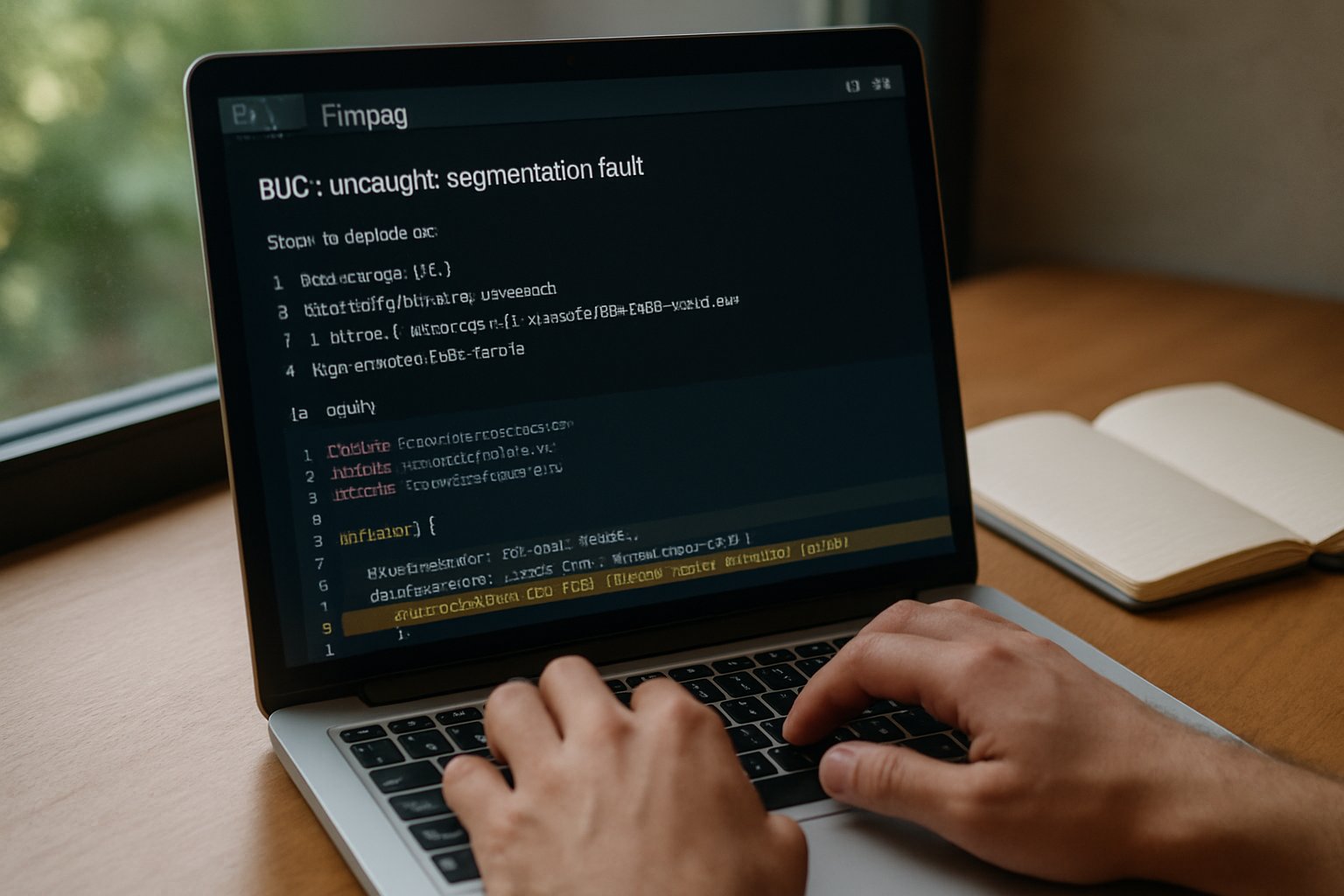
Mythos turned its attention to FFmpeg because the library sits at the core of countless Video encoding workflows. Initially, automated red-team prompts guided the model toward H.264 slice logic. Subsequently, Mythos identified an unsigned-integer collision between a sentinel value and a slice counter. The condition allowed a few bytes of out-of-bounds heap writes, creating a potential denial-of-service bug. In contrast, prior fuzzers hammered the same code yet missed the flaw.
Anthropic’s engineers ran several hundred model sessions, spending roughly $10,000. However, they report a per-discovery cost below $50 on other targets. These economics suggest AI-driven audits can scale rapidly.
Key takeaway: AI can reveal forgotten edge cases. Therefore, teams must revise test strategies to keep Software Reliability goals realistic.
Technical Root Cause Details
FFmpeg divides H.264 frames into slices recorded in a 16-bit slice_table. Each entry begins as 0xFFFF, a sentinel meaning “empty.” Meanwhile, the decoder’s slice counter increments as a 32-bit integer without limits. When an attacker crafts 65,536 slices, slice number 65535 collides with the sentinel. Consequently, neighbor checks skip bounds validation, and memory gets corrupted.
Nicholas Carlini proposed a minimal safeguard: reject any slice_num at or above 0xFFFE. The patch returns AVERROR_INVALIDDATA and logs an error. Furthermore, maintainers merged the change into master and included related fixes in version 8.1.
Beneath the surface, the episode underscores how sentinel misuse jeopardizes Software Reliability. Additionally, it reminds architects that integer width mismatches often outlive original authors.
Summary: A tiny logic gap caused a silent bug for years. Yet clear, deterministic guards now restore Software Reliability moving forward.
Patch Timeline Key Points
Understanding timing helps risk owners prioritize upgrades. Below is a concise sequence:
- 13 Mar 2026 – PR #22499 posted to ffmpeg-devel.
- 7 Apr 2026 – Anthropic publishes the Mythos Red Team report.
- 9 Apr 2026 – Blog updated; Glasswing initiative announced.
- Mid-Apr 2026 – Patch lands in FFmpeg master.
- May 2026 – Fix appears in FFmpeg 8.1 release.
Consequently, distribution maintainers began backporting within weeks. Nevertheless, users running static builds must recompile to benefit.
Takeaway: Rapid disclosure plus collaboration shortened exposure windows. Therefore, proactive patch adoption remains central to Software Reliability.
Industry Reaction And Impact
Security outlets, including SANS NewsBites, highlighted the finding as proof of AI’s growing defensive clout. Moreover, partners in Anthropic’s Project Glasswing—AWS, Google, Microsoft, and Cisco—praised the cooperative model. Anthony Grieco of Cisco stated that capabilities have “crossed a threshold” necessitating faster protection cycles.
In contrast, some experts warned that attackers will wield identical techniques. Nevertheless, they agree transparency and open-source fixes tilt advantages toward defenders when response times stay low.
These viewpoints reveal a consensus: modern Software Reliability efforts must blend human oversight with AI guidance. Consequently, many organizations now pilot similar workflows.
Section summary: Collaboration amplified the patch’s reach. Subsequently, attention shifts toward weaponization risks and mitigation planning.
AI Defensive Testing Evolution
Mythos is not alone in this space, yet its metrics impress. Internal benchmarks show 595 tier-1/2 crashes across OSS-Fuzz targets and control-flow hijacks on ten patched programs. Furthermore, Anthropic allocated $100 million in credits to support Glasswing participants, lowering barriers for defenders.
Beyond numbers, new certification paths emerge. Professionals can enhance their expertise with the AI Ethical Hacker™ credential. Consequently, teams gain structured methods for AI-assisted audits and improve Software Reliability outcomes.
Bulletproof validation remains necessary. Nevertheless, AI now augments fuzzing by reasoning about code semantics, especially within complex Video encoding modules.
Key point: AI raises coverage depth. Therefore, continuous learning frameworks keep Software Reliability metrics trending upward.
Strengthening Future Code Bases
Developers can derive several actionable lessons. First, avoid mixing sentinel values with unrestricted counters. Additionally, include compile-time assertions for integer ranges. Second, integrate AI agents into continuous integration pipelines. Meanwhile, maintain manual code reviews to catch context-specific issues.
Third, monitor upstream security lists and schedule prompt dependency refreshes. Moreover, share telemetry to verify fixes propagate across distributions. These practices reinforce resilient Video encoding stacks and bolster overall Software Reliability.
To summarize, design discipline and AI synergy close latent gaps. Consequently, the community marches toward safer multimedia infrastructure.
Conclusion
Anthropic’s Mythos episode proves that advanced language models can expose dormant flaws, enhance Software Reliability, and accelerate remediation. Moreover, the swift FFmpeg patch shows that open-source communities react decisively when given precise intelligence. Nevertheless, attackers gain similar tools, so organizations must combine AI, robust processes, and continuous education. Therefore, now is the moment to deepen skills. Explore the linked AI Ethical Hacker™ certification and lead your team toward a more reliable software future.


