

AI CERTS
5 months ago
Synthetic Populations Elevate Forecasting Accuracy
Moreover, corporate partners claim near-human fidelity. Investors have noticed. However, industry scientists still debate representativeness and governance. This article unpacks the promise, pitfalls, and business context around Aaru’s disruptive approach.
Synthetic Populations Transform Forecasting
Traditional polls require weeks and costly fieldwork. In contrast, Aaru spins up 5,000 synthetic respondents in under two minutes. Furthermore, each agent holds demographic traits, a media diet, and evolving opinions. That structure permits continuous Forecasting across scenarios instead of single snapshots.
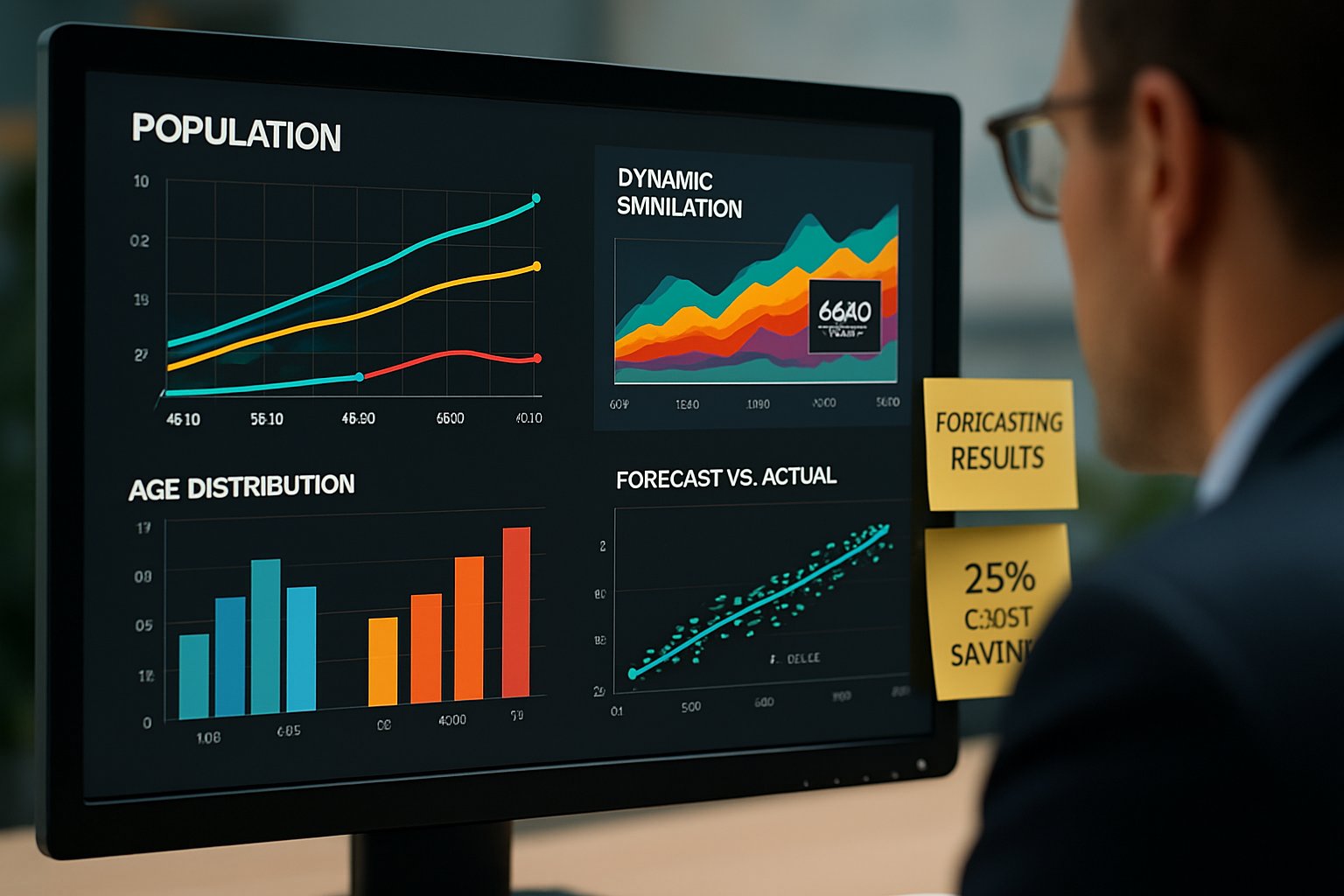
Speed is only one benefit. Additionally, management claims the service costs less than one-tenth of comparable human studies. Those economics allow more frequent Prediction cycles for campaigns and brands. Nevertheless, critics question whether agent answers truly capture subtle demographic shifts.
These gains excite data teams. However, unresolved fidelity issues demand further scrutiny.
Therefore, the next section drills into Aaru’s technical core.
Inside Aaru's Core Methodology
Aaru layers multi-agent architecture on large language models. Each agent interacts with news feeds and other agents. Subsequently, population-level outcomes emerge. EY’s partner report labels the approach a revolutionary Methodology for high-velocity insights.
Calibration starts with census data and proprietary voter files. Agents then receive personality vectors and media consumption weights. Moreover, engineers tune sentiment drift to mimic real communities. Consequently, aggregate outputs often mirror historical turnout patterns.
Yet transparency remains limited. Independent academics seek deeper code access to validate sampling rules and weighting. Nevertheless, Aaru plans a public white paper. Professionals can enhance their expertise with the AI Supply Chain™ certification.
Method engineering drives competitive edge. However, performance metrics ultimately decide success.
Performance And Accuracy Metrics
Evidence is emerging. EY reproduced its 3,600-respondent wealth survey in one day and saw 90% median correlation. Meanwhile, the June New York Primary outcome differed by only 371 votes. TechCrunch notes that Aaru’s annual revenue still sits below $10 million, yet investors cite growing confidence in predictive Accuracy.
Key Result Highlights
- 90% correlation across 53 single-choice questions, EY 2025 study
- 371-vote error in New York Democratic Primary Prediction
- Simulations finish in 30–90 seconds, reducing cost by 90%
However, Semafor reports mixed national election forecasts during 2024. Harvard researchers also observed demographic blind spots. Consequently, stakeholders insist on rigorous benchmarking.
Current data suggests promising Forecasting gains. Yet sustained validation will shape adoption trajectories.
Commercial And Political Applications
Political strategists deploy the platform to test messaging before ad buys. Additionally, consumer brands explore pricing scenarios. Accenture Song intends to integrate Aaru into creative workflows, enabling rapid Market Research on brand sentiment.
Scenario testing extends beyond polls. Moreover, wealth managers simulate regulatory shocks, while public-health teams model vaccine uptake. Therefore, synthetic studies broaden the frontier of real-time Prediction.
Applications keep expanding. Nevertheless, capital and governance shape the project’s trajectory.
Investment And Market Research
Redpoint Ventures led a Series A above $50 million at a $1 billion headline valuation. Previously, Accenture Ventures placed Aaru in its Spotlight program. Consequently, Baiju Shah said anticipating customers with agent simulations grants a strategic edge.
Despite lofty valuation, annual revenue remains under $10 million. In contrast, potential total addressable Market Research spend tops $90 billion. Moreover, lower cost barriers may unlock underserved geographies.
Investors view scalable Forecasting as a disruptive moat. However, public disclosures lag investor enthusiasm.
Funding accelerates development momentum. Yet ethical questions loom large.
Risks And Ethical Considerations
Representativeness gaps top the risk list. Harvard studies show agent answers replicate partisanship while missing race-based nuances. Moreover, language models may hallucinate implausible beliefs, hurting Accuracy. Therefore, governance frameworks become essential.
Transparency also matters. Independent audits want access to agent construction details. Additionally, regulators may demand disclosures when synthetic outputs guide policy. The National Academies urge proactive oversight for AI influence operations.
Nevertheless, structured validation and third-party reviews could mitigate many issues. Subsequently, strategic adopters should combine synthetic insights with small human benchmarks.
Risks underline the need for responsible Methodology. However, balanced practices can unlock transformational value.
Conclusion
Aaru’s synthetic populations compress timelines, cut costs, and elevate Forecasting precision across domains. Furthermore, early case studies demonstrate competitive Accuracy and flexible scenario modeling. Nevertheless, demographic fidelity, transparency, and governance remain open challenges. Therefore, decision-makers should pilot the technology while demanding rigorous audits. Professionals eager to lead data-driven transformation should explore the linked certification and stay ahead of this evolving field.
Disclaimer: Some content may be AI-generated or assisted and is provided ‘as is’ for informational purposes only, without warranties of accuracy or completeness, and does not imply endorsement or affiliation.


