

AI CERTS
1 hour ago
AI Trials Reinvent Rail Safety Infrastructure
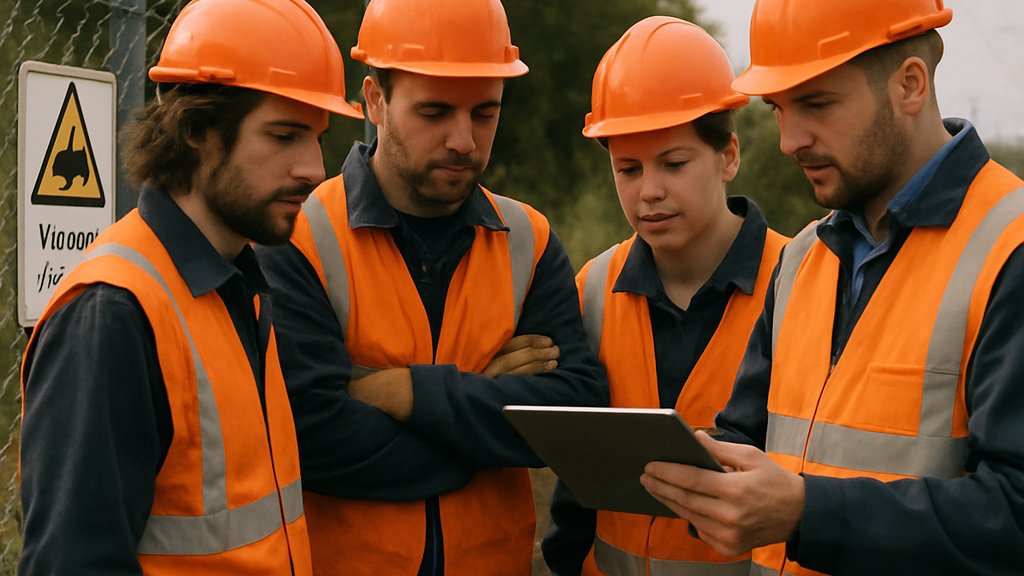
The second trial phase began in April 2026 across Dalabanan, Bergslagsbanan and other corridors. Industry experts call the approach a breakthrough for rail innovation. Moreover, regulators monitor results closely to quantify safety and ecological gains. This article examines the tests, performance data, challenges and future deployment scenarios. Along the way, it explores costs, model training and certification opportunities for engineers. Ultimately, readers gain actionable insight into balancing innovation and animal welfare.
AI Trials Expand Rapidly
Initial prototype work started in 2023 under a Vinnova grant of SEK 3.3 million. Subsequently, Alstom installed roof-mounted cameras on regional trains in central Sweden. Meanwhile, Flox Intelligence fine-tuned image classifiers using thousands of labeled frames. Accuracy for cattle, sheep and certain birds exceeded 95 percent during lab validation. However, moose and roe deer required additional winter footage to reduce misidentification. Consequently, engineers expanded training datasets before the April 2026 field rollout.
The latest stage couples vision with directional speakers that play species-specific alarm calls. Furthermore, the deterrent triggers automatically within 300 milliseconds of detection. Field crews mounted microphones to log animal reactions for later analysis. Preliminary observations indicate many ungulates retreat after first burst of sound. Wildlife response patterns vary by season. Nevertheless, long-term habituation remains a concern among ecologists. Operators view the tests as vital Rail Safety Infrastructure proofs of concept. Therefore, success could accelerate smart Rail Safety Infrastructure across Nordic corridors.
Trials now span multiple routes and combine detection with deterrence. These results set the performance baseline for wider adoption. Next, collision statistics reveal the economic imperative.
Collision Numbers Drive Action
Trafikverket records show 4,000 to 6,000 animal strikes on Swedish rails each year. Consequently, societal costs reach up to 1.5 billion SEK annually. Delays, equipment repairs and driver trauma all compound the burden. In contrast, better Rail Safety Infrastructure could lower both human and ecological tolls. Moreover, each avoided collision reduces greenhouse emissions by preventing heavy braking cycles.
International data mirrors the Swedish pattern across forested rail corridors. Canada, Norway and Finland report similar ungulate issues despite fences. Therefore, scalable onboard solutions attract operator interest as a form of rail innovation. Analysts estimate collisions add 20 minutes of average delay per incident. Reducing this figure would release capacity for freight and passenger growth.
These statistics underline why Alstom and Flox Intelligence secured public funding. Subsequently, stakeholders demanded transparent performance metrics during the ongoing pilot. However, early qualitative reports already influence future procurement budgets.
High collision counts generate clear economic drivers. Lowering strikes benefits passengers, operators and wildlife alike. Understanding system design explains how those benefits might materialize.
How Detection System Works
Edge cameras stream 60 frames per second to a rugged GPU computer. Meanwhile, convolutional networks classify each frame against a library of 20 species. Confidence thresholds trigger alerts only when probability exceeds 0.8. Furthermore, detections feed a closed-loop pipeline that retrains overnight in the cloud. Labels derived from operator feedback refine weights and reduce false alarms.
Directional speakers under the cab play predator growls or alarm snorts tailored per species. Additionally, the control module logs reaction videos for behavioural science partners. Latency from sighting to sound stays below 300 milliseconds at 110 km/h. Consequently, animals usually receive warning several seconds before a passing wheelset. Driver dashboards display bounding boxes and a countdown timer for situational awareness.
Integration with signalling remains optional because the deterrent acts autonomously. Nevertheless, APIs allow future links to automatic braking if required. Thus, architecture aligns with modern Rail Safety Infrastructure standards.
Real-time vision and audio operate as a compact digital ranger. Closed-loop learning promises better accuracy each season. The next section weighs tangible operator benefits.
Benefits For Rail Operators
Reduced collisions translate into fewer emergency repairs and timetable disruptions. Moreover, insurance premiums could drop when incident rates fall. Passenger perception of punctuality also improves, strengthening brand trust.
Key projected gains include:
- Up to 1.5B SEK saved annually across Swedish network
- Average delay reduction of 20 minutes per avoided collision
- Lower maintenance carbon footprint through fewer heavy braking events
- Improved real-time data on wildlife movement along tracks
Additionally, the data layer supports predictive maintenance of rolling stock sensors. Rail innovation teams can mine images for vegetation encroachment or track debris. Consequently, the same hardware improves multiple operational domains. These multidimensional savings reinforce investment cases for Rail Safety Infrastructure. In contrast, traditional fencing offers only single-purpose protection. Stakeholders thus view the platform as next-generation Rail Safety Infrastructure rather than niche gadgetry.
The business case spans cost, capacity and carbon benefits. Such breadth strengthens executive support. Yet unresolved hurdles could slow deployment.
Remaining Technical Hurdles Ahead
False negatives involving moose remain the top safety worry. Therefore, Alstom continues winter data collection to improve model recall. Dense fog and tight curves still limit detection range. Moreover, high-speed operations shorten the warning window to mere seconds. Habituation risk compounds the challenge because animals may ignore repeated sounds.
Ecologists urge long-term welfare studies before full commercial rollout. In contrast, some operators prefer immediate scaling to gather larger datasets. Data privacy rules on driver video also require regulator guidance. Consequently, comprehensive governance frameworks must accompany hardware upgrades. Professionals can enhance their expertise with the AI Engineer™ certification.
Resolving these issues will cement the system within national Rail Safety Infrastructure standards.
Technical, behavioural and regulatory gaps still exist. Addressing them early safeguards adoption. A forward look clarifies possible market timelines.
Future Adoption Outlook Global
Market analysts expect commercial tenders within two years if trials stay positive. Moreover, early adopters may include freight lines crossing dense boreal forests. European Union research funds could accelerate cross-border pilots under the Shift2Rail successor. Meanwhile, North American carriers evaluate similar concepts for expansive prairie networks.
Standardisation bodies plan to define performance benchmarks and cybersecurity tests next year. Consequently, suppliers that meet those criteria will gain first-mover advantage. Flox Intelligence positions itself as a middleware supplier for multiple rolling-stock platforms. Additionally, Alstom envisions licensing the deterrence module to other manufacturers.
Investors view the program as a litmus test for broader rail innovation adoption. Nevertheless, clear evidence of collision reduction will determine funding flows. Public release of precision and recall metrics remains the missing puzzle piece.
Growing interest suggests a likely international market. Stakeholders now await quantitative proof. Final reflections highlight strategic takeaways.
Alstom’s Swedish trials illustrate how AI can bridge safety and ecology. Edge detection, acoustic deterrence and closed-loop learning attack a costly, persistent problem. Furthermore, the partnership with Flox Intelligence demonstrates the power of agile rail innovation. If accuracy improves and habituation stays low, operators may retrofit fleets quickly. Consequently, passengers, drivers and wildlife will share the benefits of smarter Rail Safety Infrastructure. Professionals should track upcoming performance publications and evolving standards. For deeper technical mastery, consider pursuing the earlier mentioned AI Engineer certification.
Disclaimer: Some content may be AI-generated or assisted and is provided ‘as is’ for informational purposes only, without warranties of accuracy or completeness, and does not imply endorsement or affiliation.


