

AI CERTS
2 months ago
Scout AI’s $100M Bet on Autonomous Defense Systems
Founded in 2024, the 34-person team already holds $11 million in DoD contracts. Moreover, public demonstrations at a U.S. base showcased live coordination of ground and aerial robots. This article unpacks the funding, technology, competition, and ethical debates shaping uncrewed fleets' next chapter. Each section provides concise analysis for defense executives, investors, and policymakers. Ultimately, readers will grasp how advanced software may redefine battlefield decision loops within five years.
Historic Funding Round Signals
Align Ventures partner Maya Shah called the financing “a watershed for software-first defense innovation.” Meanwhile, Draper Associates highlighted the founders’ rapid execution across product and government engagement. Scout AI previously emerged from stealth with a $15 million seed in early 2025. The new Series A pushes cumulative funding to $115 million within sixteen months. Consequently, cash reserves will scale compute infrastructure for Fury, the flagship Vision-Language-Action model.
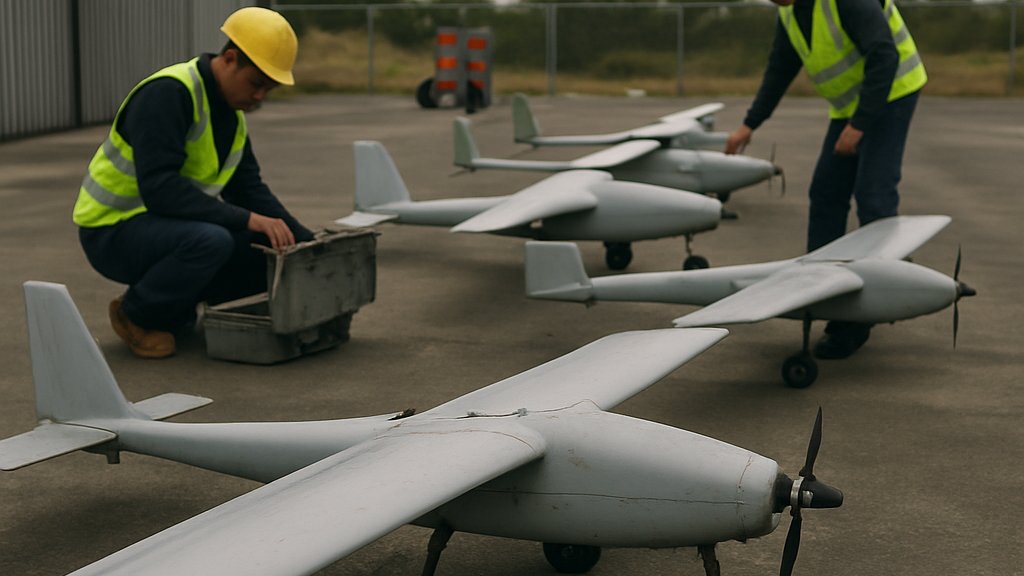
Legal filings show Cooley LLP advising Align, underscoring sophisticated deal structure uncommon for early defense startups. Investors claim the round closes at a post-money valuation near $450 million, though terms remain undisclosed. In contrast, comparable deals at Anduril and Shield AI required hardware bundles to reach similar figures. That differential underlines market appetite for pure software enabling diverse uncrewed fleets. These signals confirm deep confidence.
The oversubscribed Series A cements momentum for Autonomous Defense Systems startups. Subsequently, attention shifts toward technical execution and customer adoption.
Vision Language Action Model
Fury operates as a foundation VLA model linking vision inputs, textual commands, and physical control outputs. Therefore, operators can type plain language tasks, and heterogeneous robots execute coordinated maneuvers. CTO Collin Otis calls this “one-to-many autonomy” essential for scaling Autonomous Defense Systems beyond single platforms.
The model draws research lineage from DeepMind’s RT-2 and Stanford’s foundation model taxonomy. Importantly, Scout AI trains Fury on both simulated battle data and classified sensor feeds. Moreover, the orchestrator layer “Ox” translates high-level intent into fleet-wide command sequences. That abstraction reduces cognitive load for human mission commanders during high-tempo operations.
Experts like former DARPA PM Stuart Young argue VLA prototypes now meet field experimentation thresholds. However, robustness under electronic warfare conditions remains an open question. Key technical milestones ahead include larger context windows, secure edge deployment, and verified fail-safes. These advances could embed Autonomous Defense Systems deeper within routine military exercises.
Fury illustrates how multimodal AI is maturing. Consequently, stakeholders will watch validation metrics closely.
Orchestration Across Uncrewed Fleets
Coordinating dozens of drones, ground vehicles, and sensors demands seamless command-and-control. Ox addresses this gap by acting as a cloud-edge broker for diverse communication protocols. Furthermore, the platform supports coalition architectures, acknowledging multinational deployment realities.
The company provided reporters with a live scenario featuring three simultaneous strike objectives across simulated terrain. During the demo, uncrewed fleets responded to chat-based orders within five seconds.
We summarise current fleet metrics:
- Average response latency: 4.7 seconds under secure 5G links
- Supported vehicle types: 18 air, ground, and maritime platforms
- Concurrent agents per operator: 30 demonstrated during recent test
Moreover, Ox auto-generates deconfliction plans, preventing airspace or routing overlaps. Nevertheless, adversarial jamming could disrupt this automation unless hardened antennas are fielded. The architecture aligns with Pentagon strategies emphasizing distributed autonomy for small military tactical units. Uncrewed fleets therefore promise resilience when satellite links fail. These operational possibilities excite commanders.
However, real campaigns will impose harsher constraints. Ox shows command software giving Autonomous Defense Systems new operational coherence. Subsequently, integration standards will decide adoption speed.
Competitive Defense AI Landscape
The broader Autonomous Defense Systems market is heating rapidly. Anduril offers Lattice, a sensor fusion stack coupled with proprietary drones. Shield AI promotes Hivemind, which focuses on autonomy at the edge. In contrast, Scout AI positions itself purely as an intelligence layer for partners’ hardware.
Consequently, the firm avoids supply-chain costs and accelerates software updates. Analysts note this lean model enabled the outsized Series A valuation. Moreover, primes like Lockheed are investing in similar orchestrators, validating market demand. However, incumbents carry legacy contracts that slow iterative releases.
The startup may embed across allied military procurement programs if agility persists. Competitors will likely respond by publishing stricter performance benchmarks. Competitive pressure will mature standards quickly. Therefore, transparent metrics could become procurement prerequisites.
Ethical And Policy Debates
Funding enthusiasm contrasts sharply with escalating ethical scrutiny. Academics warn that powerful Autonomous Defense Systems may blur accountability for lethal decisions. Moreover, international humanitarian law lacks clear guidance on algorithmic targeting responsibilities.
Wired’s recent feature questioned Scout AI’s live strike demonstration transparency. Subsequently, regulators may demand independent verification before deployment approvals. Critics also highlight model brittleness under adversarial visual perturbations.
Nevertheless, supporters argue software governed by strong rules can reduce civilian harm compared with human fatigue. Military ethicists propose “human-on-the-loop” controls ensuring veto power over automated engagements. The debate extends to export controls, where allies fear proliferation yet desire interoperability.
Compliance frameworks could integrate certifications like the AI Robotics Specialist™ to standardize safety audits. That step would assure standardized safety audits across defense programs. Ethical safeguards must evolve in parallel with code bases. Consequently, policy decisions will influence investor sentiment.
Deployment Challenges Lie Ahead
Throwing money at infrastructure seldom eliminates engineering bottlenecks. Field testing requires contested environments, rare during peacetime training cycles. Furthermore, integration into classified networks triggers extensive accreditation paperwork. This process often delays capability releases by eighteen months.
Autonomous Defense Systems also demand enormous labeled edge data for continual learning. Consequently, the company will spend heavily on synthetic data generation to augment sparse combat footage. Additionally, comprehensive cybersecurity assessments must precede each software patch. Pentagon evaluators note only 12% of submitted autonomy algorithms pass the first review.
Therefore, timeline optimism may fade without continuous feedback loops. Uncrewed fleets also need secure logistics tails for spares and battery swaps. These obstacles temper near-term revenue projections. Technical debts will surface as prototypes mature. Nevertheless, disciplined engineering practices can mitigate many risks.
Conclusion And Future Outlook
The startup’s meteoric rise encapsulates how finance, compute, and geopolitics intersect today. Moreover, Autonomous Defense Systems promise faster decisions across contested domains. Nevertheless, technical, ethical, and regulatory hurdles remain formidable.
Investors will scrutinize contract conversions, while commanders demand verified reliability. Policy makers also weigh strategic stability against potential escalation. Professionals can deepen expertise via the AI Robotics Specialist™ certification.
Consequently, informed practitioners will shape responsible deployment paths. Engage now and lead the evolution of Autonomous Defense Systems.
Disclaimer: Some content may be AI-generated or assisted and is provided ‘as is’ for informational purposes only, without warranties of accuracy or completeness, and does not imply endorsement or affiliation.


