

AI CERTS
40 minutes ago
Hyundai RMAC Turns Physical AI Data Into Factory Gold
Moreover, government support and a $3 billion budget reinforce the ambition. Industry analysts already label RMAC a Data Goldmine for next-gen automation.
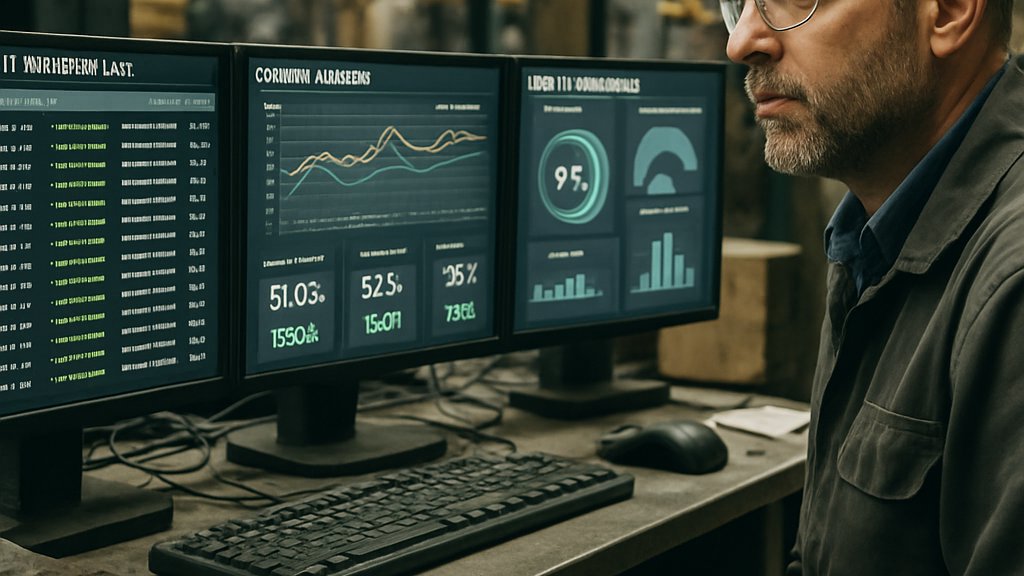
However, unions and regulators see risks in limitless capture. This article unpacks the data strategy, partnerships, risks and opportunities. Readers will discover why Physical AI Data could rewrite manufacturing economics within five years.
Factory Data Becomes Gold
Inside an SDF, cameras, force sensors and digital twins record every operation. Therefore, each weld and conveyor pause becomes labelled Physical AI Data for model retraining. Moreover, historians compare the shift to when ERP systems first digitised procurement. Consultants describe that repository as a Data Goldmine able to shorten deployment cycles.
These insights convert routine shifts into asset streams. Consequently, executives now value throughput and bytes equally. The data valuation story sets the foundation. Next, we examine how Robot Training will evolve at RMAC.
RMAC Powers Robot Training
RMAC will stage controlled tasks for humanoids before factory release. Instructors wearing motion-capture suits demonstrate lifts, turns and recoveries. Subsequently, Atlas imitates while cloud supervisors grade performance. Captured episodes flow back as Physical AI Data that informs nightly policy updates.
Experts frame this loop as intense Robot Training unrivalled by conventional cobot scripting. Dataset quality determines whether trained gestures become reliable on the crowded line.
- Human motion capture generates reference trajectories.
- Sim-to-real transfer tests safety margins virtually first.
- Edge GPUs apply corrections during live shifts.
Together, these steps accelerate skill acquisition. Meanwhile, corporate planners expect deployment to start in 2028. However, the loop depends on real-time connectivity, which the SDF aims to supply.
Software-Defined Factory Data Loop
The SDF concept treats code as the primary production asset. Moreover, workflows are versioned like software releases. Operational anomalies trigger patches that propagate over-the-air to every connected robot. Physical AI Data harvested by sensors guides each patch, closing the optimisation loop.
In contrast, legacy plants rely on monthly kaizen reviews. Consequently, Robotics engineers can debug malfunctions remotely. Edge gateways compress packets to guarantee sub-second feedback. Hyundai aims to reach 30,000 units once the loop stabilises.
These projections indicate massive scale aspirations. Subsequently, huge compute budgets become unavoidable. Investment partnerships reveal how management plans to answer that demand.
Investment And Partnership Scale
NVIDIA, Hyundai and the South Korean government have pledged roughly $3 billion for infrastructure. The package finances tens of thousands of GPUs for Physical AI Data processing. Additionally, Google DeepMind will supply Gemini-based cognition models. Boston Dynamics contributes hardware expertise and field test sites. Funding also supports open-source Robotics middleware pilots. Analysts forecast cumulative capital intensity hitting $10 billion by 2030.
- NVIDIA delivers simulation clusters and edge accelerators.
- DeepMind refines manipulation and language models.
- Boston Dynamics iterates mechanical reliability metrics.
Collectively, the alliance underwrites technical feasibility. Nevertheless, social feasibility remains contested. Labor concerns illustrate that tension.
Labor And Governance Risks
Hyundai’s labor union warns of employment shocks if humanoids displace assembly teams. Therefore, management must negotiate phased introduction and retraining guarantees. Data governance also sparks debate over worker privacy within perpetual monitoring regimes. Regulators question who owns derivative Physical AI Data generated from human expertise.
Meanwhile, responsible Robotics frameworks may soothe public fear. Power demands likewise raise environmental scrutiny for massive GPU farms. Critics fear opaque metrics could mask algorithmic injury liabilities.
These challenges highlight critical gaps. However, emerging mitigation strategies are surfacing. Certification programs form one such strategy.
Strategic Outlook For Industry
Professional upskilling will become vital as robots leverage Physical AI Data to assume repetitive tasks. Consequently, engineers can future-proof careers through specialized Robot Training credentials. Professionals can enhance their expertise with the AI+ Robotics™ certification.
Analysts note that effective data stewardship can transform factories into enduring Data Goldmine assets. Moreover, companies that master Physical AI Data pipelines may capture outsized margins. Robot Training programs will thus extend beyond code to cover ethics and hybrid workflows. Meanwhile, a global Robotics talent shortage could slow adoption.
Skills, trust and power costs will decide adoption speed. Subsequently, market leaders may emerge quickly. The stage is set for decisive moves by 2028.
In summary, RMAC positions the factory as both workshop and dataset. Partnerships supply compute, hardware and automation expertise, while unions negotiate social contracts. Physical AI Data will fuel continual improvement, creating a compounding advantage for early movers. Nevertheless, governance, power and privacy must evolve in parallel. Professionals who upgrade skills through trusted certifications will ride this transformation safely. Explore the featured certification today and secure your place in the data-driven future.
Disclaimer: Some content may be AI-generated or assisted and is provided ‘as is’ for informational purposes only, without warranties of accuracy or completeness, and does not imply endorsement or affiliation.


