

AI CERTS
1 hour ago
SAP’s Logistics Robotics Deployment Sets New Warehouse Benchmark
Market analysts frame the move as a tipping point for Warehouse Robotics adoption across Europe. As an Embodied AI milestone, the rollout fuses perception, language, and action in one loop. However, executives still demand proof of uptime, flexibility, and payback. This article unpacks the technology stack, performance claims, and remaining hurdles. Additionally, professionals can deepen strategic skills through the AI Supply Chain Strategist™ certification. Read on for actionable insights and data-backed guidance.
Global Market Momentum Grows
The worldwide Warehouse Robotics market hit roughly USD 7 billion in 2025, according to multiple research houses. Moreover, analysts forecast high-teens compound growth over the next decade. Fortune Business Insights expects USD 25 billion by 2034, reflecting surging fulfillment volumes and labor scarcity.
- E-commerce peaks demand for faster same-day shipping.
- Labor turnover pushes companies toward automation adoption.
- Vision-Language-Action models now generalize packing actions better.
Consequently, enterprises initiate strategic pilots earlier in project cycles. The current Logistics Robotics Deployment provides a rare, public benchmark. Such trends confirm buyer urgency. However, execution details decide ROI; we now inspect SAP’s rollout specifics.
Inside SAP Rollout Details
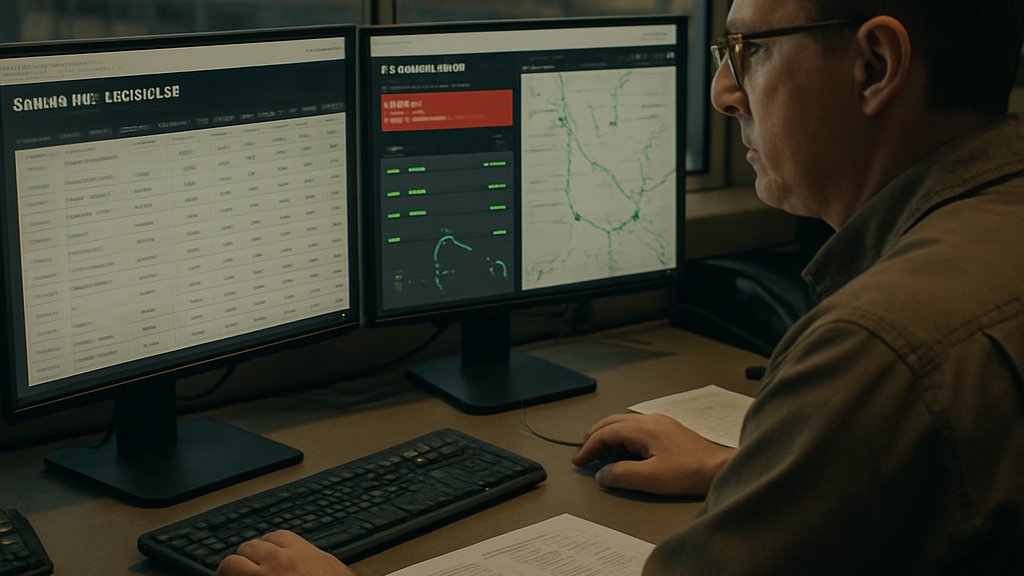
SAP announced the live go-live on 11 May 2026 at its St. Leon-Rot logistics hub. The Logistics Robotics Deployment covers box folding, packing, and internal shipping tasks across multiple aisles. Cyberwave supplies the autonomous fleet software that plans paths and balances loads. Meanwhile, SAP LGM exposes order states and inventory positions as real-time signals to robots. The warehouse leverages SAP’s Embodied AI service for semantic scene understanding.
Joule agents translate high-level business intents, like wave releases, into actionable robot commands. Additionally, SAP Business Technology Platform routes telemetry back into analytics dashboards. Dr. Łukasz Ostrowski said this agentic fabric links digital twin data to physical execution.
Early pilots showed up to 25 percent productivity gains and 50 percent less unplanned downtime. Nevertheless, SAP has not yet released shift-level throughput figures for the current installation. These measurement gaps matter to cautious buyers. Overall, the rollout blends mature ERP hooks with fresh AI control. Consequently, understanding the technical stack becomes essential.
Core Tech Stack Architecture
At the sensory layer, robots use depth cameras, force sensors, and edge GPUs from NVIDIA. Vision-Language-Action models interpret images and verbal task prompts to yield action vectors. Moreover, Cyberwave continuously fine-tunes these policies with reinforcement learning based on task feedback. The framework pushes updates over the air to heterogeneous Warehouse Robotics units.
Above the control tier sits SAP LGM, which exposes APIs for pick waves, inventory updates, and carrier slots. Consequently, robots act on the same truth source as human workers. In contrast, many older projects relied on brittle, site-specific middleware.
Embodied AI principles guide the layered design. Joule agents provide declarative goals such as “pack order 456 before truck arrival”. Subsequently, the agent decomposes that goal into route, grip, and verification steps for each bot. This layered stack underpins the Logistics Robotics Deployment and encourages vendor-agnostic scaling. The architecture shows clear integration discipline. Next, we examine tangible operational benefits.
Key Benefits For Operations
Robots now handle box folding, a task responsible for repetitive-strain injuries among packers. Therefore, early worker feedback cites reduced fatigue and greater focus on exception handling. Tim Kuebler, SAP’s warehouse head, called the shift “decisive for resilience”.
Productivity improved by up to 25 percent in pilot metrics published last year. Additionally, the Logistics Robotics Deployment saw downtime fall by half when predictive analytics flagged component wear. Consequently, fulfilment planners gained extra buffer before outbound cut-off times.
Financially, reduced overtime and error penalties drive an attractive, 18-month payback window. These advantages reinforce the business case. However, technical and organizational challenges persist. We explore them in the next section.
Challenges Remain Significant Today
Sim-to-real transfer still hampers generalization across oddly shaped boxes and dynamic pallets. That limitation surfaces even inside the Logistics Robotics Deployment despite advanced training data. In contrast, humans adapt within seconds to such variability. Moreover, safety validation requires weeks of sensor calibration and risk assessments for every new aisle.
Cybersecurity also emerges, because robots share the same corporate network as financial systems. Therefore, zero-trust architectures and patch cadence become non-negotiable. Labor groups question long-term role changes despite current ergonomics wins.
These pain points could delay broader rollouts if not addressed systematically. Consequently, outside perspectives add valuable context.
Analyst And Worker Views
Industry analysts argue that integration maturity, not robot intelligence, forecasts ROI. ITPro’s recent feature stressed embedding autonomy into overall throughput KPIs. Meanwhile, warehouse employees interviewed at Hannover Messe welcomed relief from monotony but requested upskilling programs. The ongoing Logistics Robotics Deployment therefore acts as a living lab for social acceptance studies.
Consequently, SAP has begun offering micro-learning modules on robot supervision. Furthermore, partners like Accenture provide digital twin simulators for manager training. Experts recommend pairing deployments with certifications to build interdisciplinary talent pipelines.
These insights reinforce the human dimension of the Logistics Robotics Deployment. Next, we consolidate strategic recommendations for leaders.
Strategic Deployment Takeaways Ahead
Executives considering similar projects can extract four immediate lessons.
- Start with clear baseline metrics before pilot kickoff.
- Align SAP LGM events and robot tasks through documented APIs.
- Invest in workforce reskilling during proof phases.
- Plan cybersecurity audits for every Logistics Robotics Deployment expansion.
Moreover, leaders should maintain vendor-agnostic orchestration to avoid lock-in. NEURA Robotics, ANYbotics, and others already integrate with Cyberwave’s stack, demonstrating optionality.
These recommendations distill technical, financial, and human insights. Consequently, they provide a roadmap for next-generation warehouse programs.
Conclusion
SAP’s first at-scale Logistics Robotics Deployment signals a maturing interplay between IT systems and physical work. Cyberwave’s orchestration, SAP LGM interfaces, and Embodied AI models jointly demonstrated measurable productivity and safety gains. However, generalization, governance, and workforce alignment still require disciplined planning. Market forecasts and analyst sentiment suggest rapid scaling for leaders who address those gaps early.
Consequently, mixed-fleet orchestration and zero-trust architecture should anchor roadmaps. Managers can validate designs through small sandboxes before regional replication. Additionally, the AI Supply Chain Strategist™ certification equips professionals to steer multidisciplinary teams across logistics transformation. Now is the time to benchmark, pilot, and scale.
Disclaimer: Some content may be AI-generated or assisted and is provided ‘as is’ for informational purposes only, without warranties of accuracy or completeness, and does not imply endorsement or affiliation.


