

AI CERTS
8 hours ago
Voxtral TTS Reshapes Enterprise Voice With Open-Weight Speed
Moreover, the release promises sub-100 millisecond latency, multilingual coverage, and zero-shot cloning. These characteristics attract architects building contact centers, virtual assistants, and compliance pipelines. Meanwhile, competitive vendors watch closely because Voxtral weights are freely downloadable. The following analysis examines technology, benchmarks, risks, and strategic implications for Enterprise Voice deployments.
Voxtral Release Overview Highlights
Voxtral debuted with two variants: Voxtral-4B-TTS-2603 and a smaller mini model. Both versions share an Open-weight distribution under Creative Commons BY-NC 4.0. Mistral published BF16 checkpoints on Hugging Face alongside detailed model cards. Press articles appeared March 26, 2026, followed by an arXiv paper the same day. Additionally, live demos and a paid API launched simultaneously for rapid experiments. Pierre Stock told TechCrunch the model could even run on a smartwatch. Therefore, product managers see newfound flexibility when planning Enterprise Voice roadmaps. In short, Voxtral arrived as a complete toolkit rather than a lab curiosity. Subsequently, attention shifted toward architecture details.
Hybrid Model Architecture Details
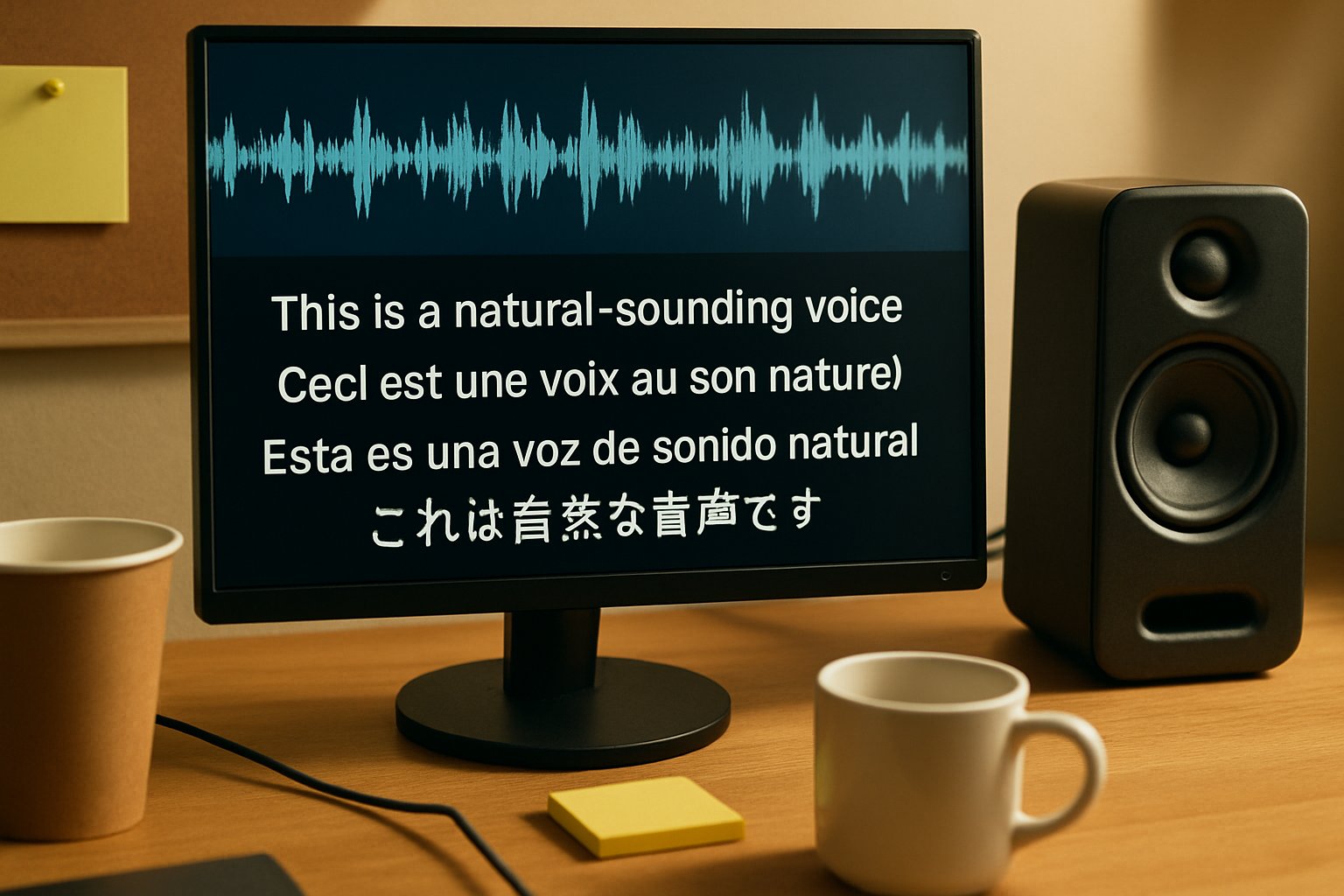
Under the hood, Voxtral combines semantic token autoregression with a flow-matching acoustic decoder. This hybrid stack separates linguistic planning from waveform generation, improving speed and stability. Moreover, the architecture enables zero-shot cloning from three-second reference clips. Researchers reported consistent speaker identity across nine supported languages. In contrast, older pipelines required minutes of fine-tuning data. Because Voxtral is Open-weight, teams may audit layers or customize training schedules. Hardware requirements stay modest: one 16GB GPU handles real-time synthesis in tests.
- Semantic tokenizer: predicts discrete linguistic units.
- Acoustic decoder: transforms tokens into 24kHz mel frames.
- Vocoder: lightweight flow converts mels to waveforms.
Collectively, these components deliver high fidelity while controlling compute usage. Consequently, performance metrics become the next evaluation focus.
Latency And Quality Metrics
Speed matters for conversational agents. Hugging Face benchmarks show 70 millisecond time-to-first-audio on an NVIDIA H200. Meanwhile, Mistral documentation cites 90 millisecond streaming latency on commodity setups. Real-time factor reached 0.103, meaning speech emerged almost ten times faster than playback. Furthermore, human evaluators preferred Voxtral over ElevenLabs Flash v2.5 in 68.4% of trials. The paper attributes gains to stronger prosody modeling across languages. Nevertheless, external reproduction remains limited, so cautious optimism is warranted. Key quantitative highlights appear below.
- Model size: 4.0B parameters.
- Languages: nine including Hindi and Dutch.
- Zero-shot reference: ~3 seconds audio.
- Hosted API cost: $0.016 per 1,000 characters.
These numbers appeal to Enterprise Voice planners seeking predictable user experience. Next, we examine reactions across the crowded voice market.
Competitive Market Reactions Analysis
The launch instantly triggered comparisons with ElevenLabs, OpenAI, and Google. Many analysts highlighted the Open-weight strategy as Voxtral's sharpest competitive edge. Moreover, community developers ported the model to MLX and vLLM within days. ElevenLabs responded by emphasizing its proprietary watermarking and larger voice catalog. In contrast, enterprise buyers welcome vendor choice and potential cost savings. Consequently, the broader audio interface ecosystem started integrating Voxtral endpoints.
Examples include call center middleware, dubbing suites, and accessibility readers. Industry commentators predict accelerated commoditization of high quality speech synthesis. Still, deployment economics influence real adoption decisions. Therefore, cost and operational factors warrant closer inspection.
Deployment And Cost Considerations
Running Voxtral locally demands one modern GPU with at least 16GB memory. Quantized community builds enable laptops, yet quality trade-offs exist. Furthermore, the Open-weight license restricts commercial use of supplied reference voices. Enterprises may negotiate direct licenses to unlock commercial latitude. Alternatively, the hosted API bills $16 per million characters, matching market norms. When workloads exceed 50 million characters monthly, self-hosting becomes financially attractive.
An internal audio interface layer can batch calls to maximize GPU throughput. Moreover, serverless orchestrators such as vLLM-Omni simplify autoscaling under bursty traffic. Professionals can deepen expertise through the AI Developer certification. These considerations frame the risk discussion that follows. Overall, Voxtral offers economical flexibility unmatched by proprietary rivals. Nevertheless, safety and licensing concerns remain pressing. Accordingly, we assess those factors next.
Safety Licensing And Risks
Open distribution introduces new misuse vectors. Deepfake calls, political impersonation, and social engineering rank among top threats. Therefore, governance teams must deploy detection, watermarking, and policy training. Mistral includes attribution tokens, yet enforcement shifts to implementers. Meanwhile, ElevenLabs positions proprietary gating as a safer approach. In contrast, some researchers argue transparency accelerates community defences. Additionally, the CC BY-NC license complicates revenue models based solely on Open-weight usage.
Legal teams should review jurisdictional constraints before embedding Voxtral in an audio interface serving consumers. Consequently, balanced governance emerges as a pillar of sustainable Enterprise Voice strategy. Robust safeguards protect brands and end users alike. With risks addressed, leaders can envision future advancements. The roadmap perspective concludes our analysis.
Future Enterprise Voice Roadmap
Market momentum suggests rapid iteration in TTS during 2026 and 2027. Subsequently, we expect larger Voxtral checkpoints with contextual emotion control. Moreover, tighter coupling between speech recognition and synthesis will enable full duplex agents. Audio interface standards like WebRTC will simplify end-to-end streaming deployments. Open ecosystems encourage plugin architectures that swap voices per locale automatically. Enterprise Voice initiatives will benefit from cloned brand personas speaking nine languages instantly.
Furthermore, real-time translation combined with speaker preservation remains an imminent milestone. Nevertheless, regulatory scrutiny over generative audio will intensify, shaping compliance checklists. Organizations prepared with skills, tooling, and certifications will navigate that complexity smoothly. Consequently, forward planning secures competitive Enterprise Voice differentiation.
Conclusion And Action Steps
Voxtral marks a decisive inflection for open speech technology. It delivers near-instant responses, multilingual reach, and competitive naturalness. Moreover, its open distribution empowers self-hosting while challenging entrenched vendors like ElevenLabs. Costs align with budget sensitive deployments, especially when traffic scales beyond hosted thresholds. Nevertheless, safety, licensing, and governance require equal attention. Teams that master these dimensions will unlock durable Enterprise Voice advantage. Therefore, decision makers should pilot Voxtral, benchmark latency, and validate compliance controls this quarter. Finally, pursue the AI Developer certification to deepen voice engineering mastery. Take action now and capture the Enterprise Voice opportunity ahead.


