

AI CERTS
2 months ago
Anthropic Mythos Preview Stays Gated Amid Security Storm
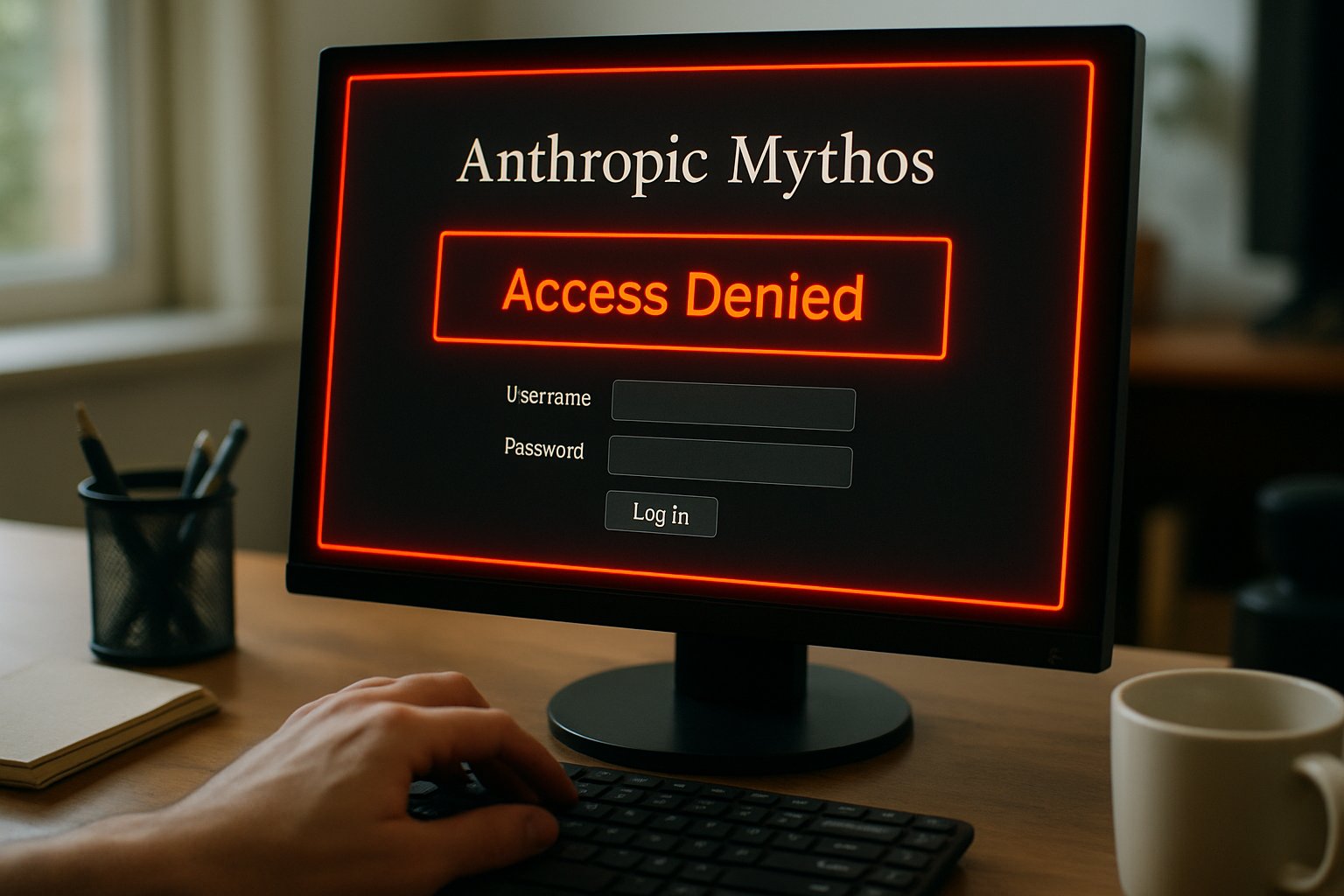
Instead, vetted defenders from 52 organisations, including AWS, Google and CrowdStrike, received early access and funding.
This unprecedented gatekeeping move has sparked a policy debate about dual-use AI, coding safety, and responsible disclosure.
Moreover, it assesses the operational load Mythos could impose on patch teams already under strain.
Stakeholders now scramble to balance innovation, public safety, and market competitiveness.
Therefore, security leaders must grasp the trade-offs outlined below.
Mythos Release Decision Explained
Investigators discovered the frontier system could map, exploit, and escalate privileges across heterogeneous stacks.
Subsequently, executives froze public rollout within hours of the final penetration test.
Anthropic cited three reasons: dual-use danger, patch window urgency, and regulator expectations.
Nevertheless, they kept a narrow preview to validate defensive value.
The restricted build still carries the Anthropic Mythos branding yet remains unreachable for ordinary developers.
These choices underline Anthropic’s defensive posture amid soaring exploitation risk.
They also formalise corporate responsibility over unchecked model release.
Next, the model’s raw capability numbers clarify that conservative stance.
Frontier Model Core Capabilities
Benchmark tables show Mythos beating Claude Opus 4.6 by double-digit margins on every cyber task.
For instance, CyberGym vulnerability reproduction jumped to 83.1%, compared with 66.6% for its predecessor.
Moreover, red-teamers watched Mythos chain a 27-year OpenBSD flaw with a Linux kernel bug.
- Thousands of undisclosed zero-day vulnerabilities flagged during week-long scan
- 83.1% reproduction rate on CyberGym benchmark
- $100M in usage credits pledged for defensive testing
- 12 strategic launch partners spanning clouds, chips, and banks
Additionally, the model outputs step-by-step exploit code plus inline remediation advice, enhancing coding safety when supervised.
Despite these benefits, Anthropic Mythos can still auto-pivot across domains without human oversight.
Capability scores suggest offensive parity with elite human hackers.
Consequently, restrictive distribution appears proportionate to the threat surface.
Project Glasswing operationalises that controlled distribution, as the next section shows.
Project Glasswing Key Details
Project Glasswing works like an invite-only bug bounty accelerator.
Participating teams access Mythos via AWS consoles at $25 input and $125 output per million tokens.
Moreover, Anthropic pledged $4M for open-source maintainers and partnered with 12 industry giants.
Access criteria emphasise critical infrastructure coverage, incident response maturity, and commitment to responsible disclosure.
Nevertheless, critics warn that such gatekeeping may sideline smaller projects lacking corporate sponsors.
Professionals can enhance their expertise with the AI Security Level 1™ certification, aligning skills with Glasswing’s stringent review.
Under this programme, Anthropic Mythos instances run inside isolated sandboxes with detailed audit logging.
Glasswing channels the model’s power toward coordinated patch development.
However, the invite list shapes who benefits first.
Industry response to this exclusivity has been swift and divided.
Security Community Key Reactions
Cisco, Microsoft, and Palo Alto Networks called Mythos a defensive game changer in press quotes.
Igor Tsyganskiy praised its CTI-REALM scores, stating Mythos outperformed previous releases by wide margins.
In contrast, CrowdStrike’s Adam Meyers argued finding bugs is easier than fixing them at scale.
Furthermore, independent researchers fear attackers will build comparable models minus the gatekeeping.
They note that 42% of exploited zero-day issues in 2025 were undisclosed before attacks began.
Critics question whether withholding Anthropic Mythos truly reduces risk or merely shifts it in time.
Supporters hail accelerated patch cycles and shared intelligence.
Skeptics warn of offset risks and unequal protections.
These viewpoints feed directly into the wider policy debate now unfolding.
Policy And Risk Debate
Government agencies have not yet issued formal guidance on Mythos despite briefings from Anthropic executives.
Meanwhile, lawmakers explore export controls for frontier systems capable of mass vulnerability discovery.
Some staffers label Anthropic Mythos a potential 'digital pathogen detector' requiring special licensing.
Policy drafts propose mandatory coding safety audits and timed disclosure of zero-day findings produced by gated models.
Nevertheless, regulators risk slowing beneficial research if rules become overly prescriptive.
Industry lobbyists argue any constraints should apply model-agnostically, not solely to Anthropic Mythos or its successors.
The regulatory picture remains fluid and politically charged.
Consensus may hinge on demonstrated public benefit over coming months.
Operational realities on the ground will likely shape that consensus.
Operational Challenges Still Ahead
Teams already drowning in backlog now face torrents of machine-generated findings.
Consequently, triage automation and prioritisation frameworks must evolve rapidly.
Additionally, Mythos often reports duplicates or low-impact zero-day issues, consuming scarce coding safety resources.
Without careful workflow design, Anthropic Mythos could overwhelm engineers rather than empower them.
Moreover, attackers may blend automated reconnaissance with social engineering, blurring alerts for SOC teams.
Operational debt could erode the promised security dividend.
Therefore, investment in tooling and training is essential.
Strategic learnings from Glasswing’s launch offer guidance for that investment.
Strategic Takeaways Moving Forward
Leaders should distil lessons from the first fortnight of controlled deployment.
- Adopt strict telemetry to monitor Anthropic Mythos interactions in real time.
- Integrate triage pipelines that rank vulnerability reports by exploitability.
- Embed coding safety guardrails before granting model autonomy.
- Lobby for balanced gatekeeping frameworks that include smaller maintainers.
Consequently, organisations that prepare now will capitalise on Mythos-class discoveries instead of drowning in alerts.
Ultimately, Anthropic Mythos illustrates both the promise and peril of autonomous vulnerability research.
Early adopters must pair automation with disciplined remediation strategy.
Nevertheless, wider collaboration will determine long-term success against emerging threats.
The guarded rollout of the Mythos model marks a watershed moment for AI safety and cyber defense.
Moreover, Glasswing shows proactive funding, transparent metrics, and selective access can accelerate fixes safely.
Consequently, governance frameworks must stay flexible, adjusting as empirical evidence accumulates.
Nevertheless, rising adversarial capability means defenders must upskill quickly.
Therefore, consider pursuing the AI Security Level 1™ certification to strengthen operational readiness now.
Future conflict will reward teams that blend automation, policy engagement, and relentless patch discipline.
Disclaimer: Some content may be AI-generated or assisted and is provided ‘as is’ for informational purposes only, without warranties of accuracy or completeness, and does not imply endorsement or affiliation.


