

AI CERTS
9 hours ago
AI Surge Drives Record Electricity Demand for U.S. Power Grid
Consequently, utilities, regulators, and hyperscalers face intertwined questions of timing, siting, and capital allocation. Moreover, corporate moves like Alphabet’s Intersect Power acquisition hint at a decisive shift toward vertical energy strategies. Investors also watch Nvidia’s roadmap, because actual silicon efficiency will heavily influence future grid trajectories. Nevertheless, uncertainty remains high, driven by evolving model architectures and disputed power density assumptions. This article unpacks the numbers, regional impacts, and strategic responses shaping tomorrow’s AI-driven grid.
AI Load Growth Forecast
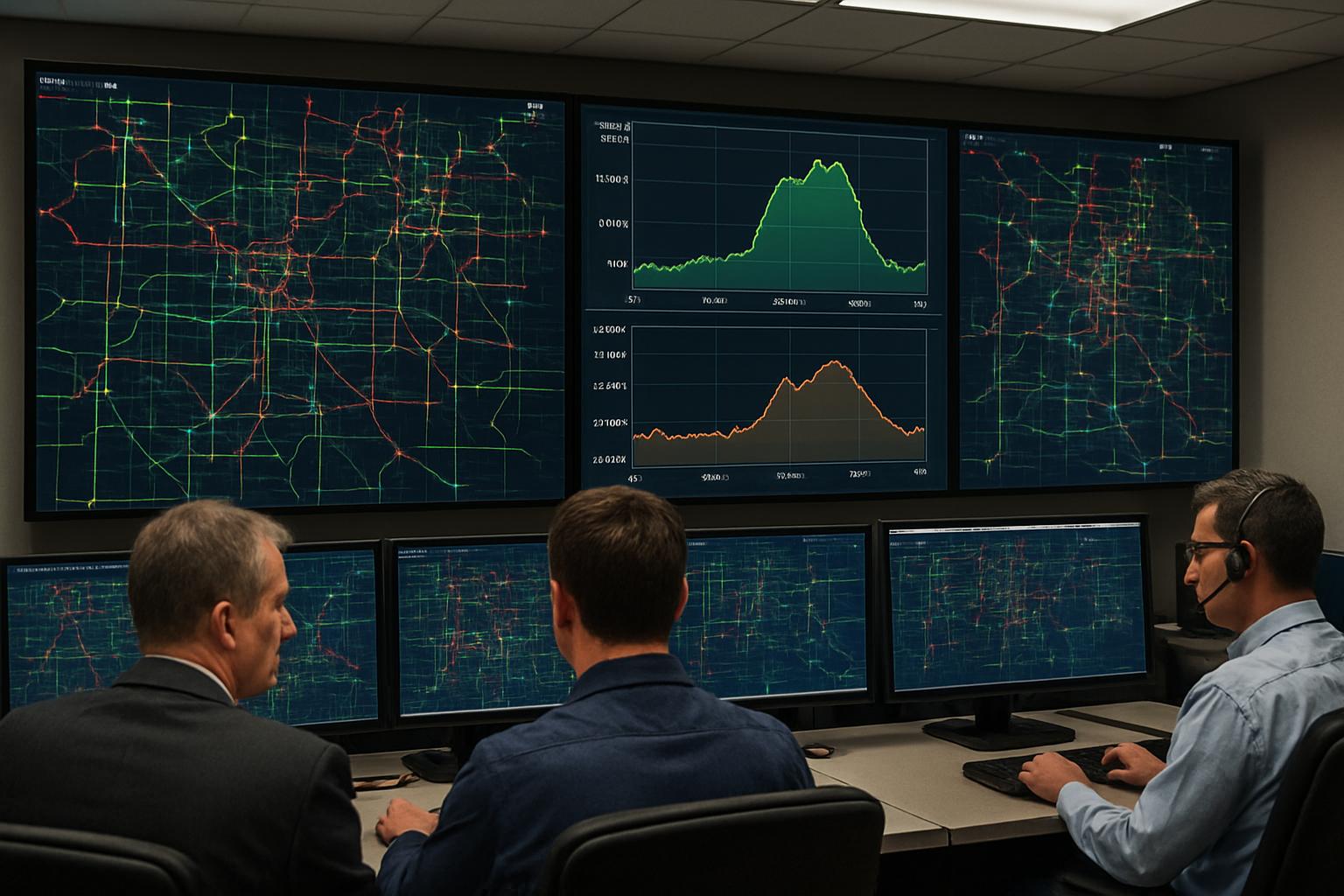
EPRI and Epoch AI place current U.S. AI load near 5 GW, equal to roughly five large nuclear reactors. Furthermore, their high-growth scenario projects 50 GW by 2030, a tenfold jump within four planning cycles. Such numbers would raise national Electricity Demand by about four percent on their own. Consequently, even moderate scenarios still dwarf traditional forecast error bands used by regional operators.
DOE analysts link the explosion to two intertwined forces. Firstly, model training complexity rises exponentially, pushing power density in server racks far above legacy norms. Secondly, inference scaling keeps clusters running 24/7 once models reach production. In contrast, earlier HPC spikes were episodic, allowing easier scheduling around system peaks.
Nvidia’s 2026 roadmap reinforces these projections, promising GPUs with double the throughput per watt but higher absolute draw per rack. Therefore, efficiency gains delay but do not eliminate the structural uplift in Electricity Demand. These forecasts underscore the scale of the coming challenge. However, regional analysis provides further granularity, as the next section reveals.
Regional 7.5GW Load Spotlight
The DOE reliability report isolates 7.5 GW of incremental peak load for the SERC region alone. Moreover, similar attributions appear for PJM, ERCOT, and Western zones, although magnitudes differ. SERC’s figure equals the average consumption of six million U.S. homes. Consequently, planners must schedule new transmission and generation long before server halls energize.
ERCOT data illustrates the timeline pressure. Meanwhile, its large-load queue ballooned to 233 GW of requests, yet only 9.85 GW sits approved to energize. In contrast, actual construction lags further, constrained by steel, labor, and permitting. Electricity Demand spikes risk reliability events if go-live dates leapfrog infrastructure. Therefore, regulators are scrutinizing load notification thresholds and cost-allocation frameworks. DOE modeling teams recommend earlier coordination between hyperscalers and regional transmission organizations.
Regional numbers translate abstract gigawatts into concrete planning problems. The following section examines physical constraints throttling project timelines.
Grid Bottlenecks Exposed Early
Transmission approval remains the longest pole in the tent for large data-center interconnections. Furthermore, interconnection studies can exceed five years, and upgrade costs often fall on the requester. ERCOT leaders warn that queue inflation masks true readiness, creating false comfort among developers. Consequently, private-wire strategies and colocated generation are gaining traction.
- Average study delay: 3-5 years, DOE data
- Queue requests: 233 GW vs 10 GW approved
- Substation upgrades: $5-10 million each
However, those solutions shift risk to corporate balance sheets and local permitting boards. High server power density also complicates site selection because substation footprints must scale vertically. Therefore, many projects now design 300 W per square inch cooling envelopes, according to Nvidia partner documentation. Such envelopes demand advanced liquid systems, increasing Electricity Demand per cubic foot. Nevertheless, cooling innovation can unlock modest efficiency gains. Yet even perfect heat rejection cannot erase the fundamental wattage growth curve.
Bottlenecks, therefore, are both procedural and physical. Next, we explore how market actors are responding aggressively.
Market Players Responding Aggressively
Alphabet’s $4.75 billion purchase of Intersect Power epitomizes the vertical integration wave. Moreover, the deal secures a multi-gigawatt pipeline of solar, storage, and gas peakers dedicated to AI workloads. Other hyperscalers pursue similar agreements with independent power producers. Consequently, off-balance-sheet power-purchase agreements now appear less attractive than direct ownership.
Nvidia collaborates with utility partners to deploy reference designs that bundle GPUs, on-site batteries, and micro-turbines. Meanwhile, Wall Street analysts predict additional mergers as transmission constraints persist.
- Alphabet-Intersect: 7 GW development rights
- Microsoft-Brookfield: 4 GW renewable joint venture
- Amazon behind-the-meter gas turbines in Virginia
Professionals can enhance their expertise with the AI Cloud Architect™ certification. Such credentials build fluency in capacity planning, power density modeling, and grid compliance. Therefore, talent that bridges compute and energy disciplines commands premium salaries. Electricity Demand management increasingly sits on executive dashboards, not just facility playbooks. Corporate action illustrates urgency beyond traditional utility timelines. Yet environmental considerations remain a potent counterweight, discussed next.
Balancing Environmental Concerns Amid
Community groups question whether private gas projects undermine net-zero pledges. However, hyperscalers argue that new plants enable early coal retirements by firming renewable output. DOE guidance encourages lifecycle carbon assessments before approvals. Moreover, EPRI studies highlight demand-response programs that modulate server loads during system stress.
Such flexibility can lower peak Electricity Demand by several percent in pilot trials. In contrast, excessively high power density can force constant cooling, reducing curtailment options. Consequently, design teams are testing warm-water loops and immersion cooling to widen operating envelopes. Nvidia’s latest HGX systems support coolant temperatures up to 50 °C, improving free-cooling hours. Nevertheless, siting battles will persist where water resources are scarce. Transparent communication around grid benefits can ease permitting friction.
Environmental trade-offs are complex but manageable with data. Scenario planning therefore becomes essential, as the next section explains.
Future Scenario Uncertainty Drivers
Forecast spread hinges on compute growth rates, model sizes, and efficiency gains. DOE scenarios assume moderate scaling, whereas EPRI’s high case continues exponential trends. Moreover, Nvidia’s architecture cadence affects chips per cluster and total rack counts. Power density assumptions differ by as much as 40 %, amplifying variance in site-level Electricity Demand.
Consequently, regulators request yearly updates from major cloud providers. In contrast, hyperscalers push for faster permitting under flexible load classifications. EPRI Chief Arshad Mansoor states that build-to-balance strategies merge new infrastructure with dispatchable demand. Therefore, policymakers must compare cost curves before locking long-term capacity plans. Nevertheless, incorporating scenario ranges into integrated resource plans reduces stranded asset risk. Dynamic planning sets the stage for actionable next steps.
Uncertainty need not paralyze investment. The conclusion outlines practical paths forward.
AI growth is reshaping Electricity Demand, regional planning, and corporate strategy at unprecedented speed. Consequently, grid operators must integrate AI-specific load curves into every reliability study. Meanwhile, hyperscalers accelerate vertical integration to bypass clogged queues and secure predictable Electricity Demand. Policy debates will intensify, yet data-driven scenario analysis can guide balanced investment. Furthermore, professionals equipped with cross-disciplinary skills will steer these high-stakes conversations. Explore the linked certification to position yourself at the intersection of cloud architecture and grid innovation.


