

AI CERTS
9 hours ago
NeuBird Falcon Sets Agentic Reliability Benchmark for SRE Teams
This article unpacks the metrics, architecture, and market stakes for reliability leaders evaluating autonomous ops.
Funding Round Fuels Launch
Xora Innovation led the oversubscribed raise, with Mayfield, StepStone, Prosperity7, and Microsoft’s M12 following. Moreover, the $19.3 million injection accelerates product hiring, partner integrations, and geographic expansion. Investors cited speed, accuracy, and low token usage as differentiators.
Phil Inagaki of Xora labeled Falcon “best-in-class” for enterprise AI operations. Consequently, expectations around Agentic Reliability now carry board-level urgency. Seasoned SRE leaders welcomed the cash infusion and signaled willingness to pilot the upgraded agent.
The fresh capital validates NeuBird’s momentum and fuels aggressive roadmap execution. However, funding alone cannot address systemic reliability gaps. Therefore, the industry survey offers critical context for the problem space.
Industry Survey Exposes Gaps
NeuBird polled 1,039 SRE and DevOps professionals in February 2026. The respondents reported spending roughly 40% of engineering hours on incident management tasks. Moreover, 83% needed four or more tools during Incident triage situations. Consequently, 44% admitted an outage linked to an ignored alert.
Interestingly, a leadership-practitioner divide emerged around AI adoption. While 74% of executives claimed AI usage, only 39% of frontline engineers agreed. This disconnect complicates investment decisions and slows Agentic Reliability initiatives. Without Agentic Reliability, teams reported escalating burnout and growing customer SLA breaches.
These findings underscore persistent operational drag. Subsequently, understanding how Falcon works becomes vital.
Inside The Falcon Engine
Falcon builds on NeuBird’s 2024 general availability platform yet introduces a faster reasoning core. According to VentureBeat, Falcon runs three times faster than its Hawkeye predecessor. Furthermore, internal tests show 92% confidence scores across varied telemetry sets.
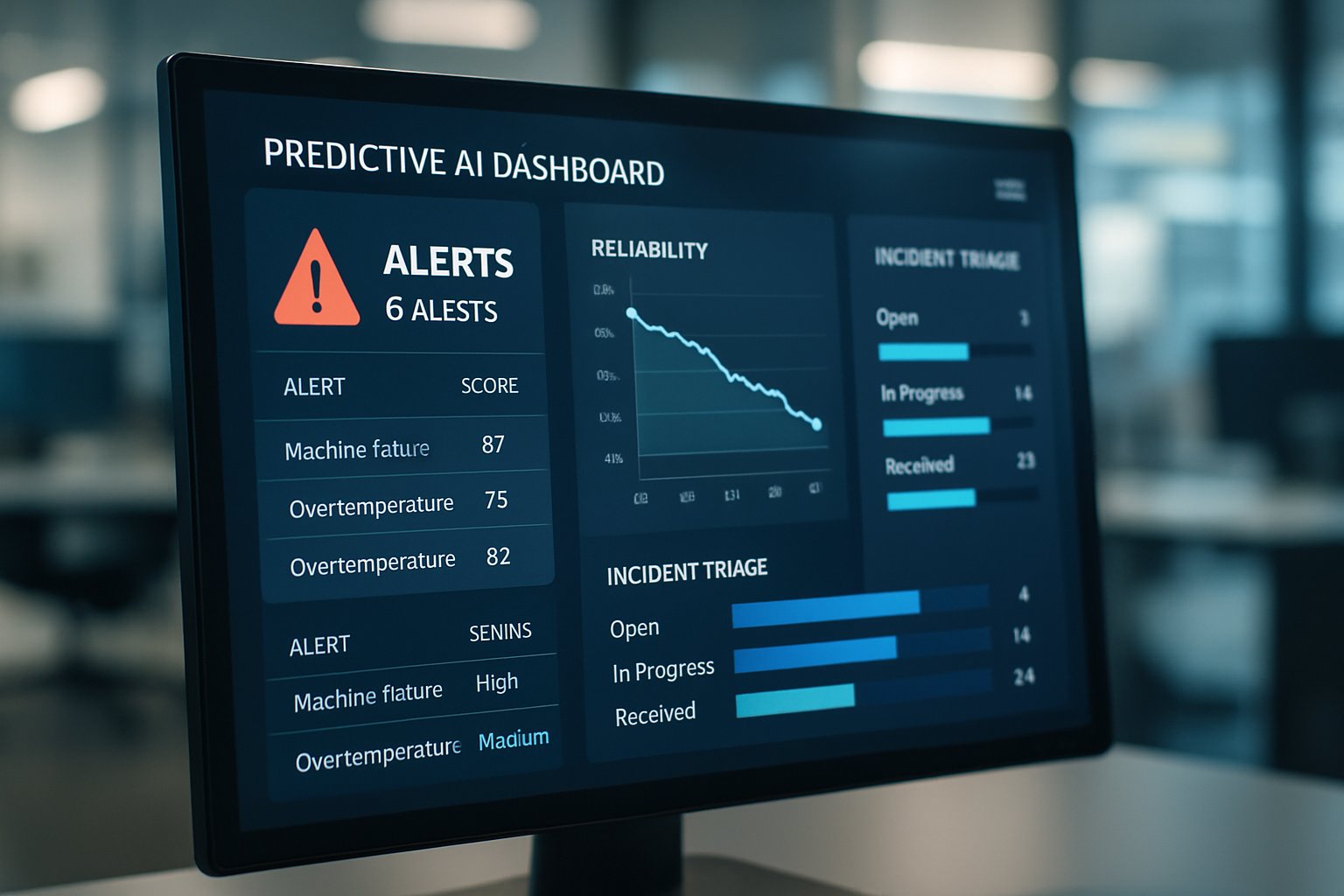
The agent maintains strong prediction accuracy over 72-hour horizons, improving nearer to real-time. Such foresight shifts teams from firefighting to strategic Incident triage planning. Consequently, Agentic Reliability moves from vision to measurable practice.
Upgraded heuristics feed an ensemble model that refines every prediction cycle using recent anomaly patterns. NeuBird isolates large language models from raw production data through “context engineering.” In contrast, many rivals expose logs directly and raise privacy concerns. Therefore, enterprises gain an additional trust layer without sacrificing analytic depth.
- Three times faster than Hawkeye predecessor.
- 92% average confidence score across internal datasets.
- Up to 72-hour prediction window for critical events.
- Customer MTTR reduction reaching 90% in production.
Falcon’s architecture blends speed and governance for modern stacks. Nevertheless, skills coverage remains a parallel question addressed next.
FalconClaw Skills Hub Explained
FalconClaw debuts as an enterprise skills repository that extends the agent’s playbook library. Moreover, the hub supports OpenClaw compatibility, enabling community sharing with validation gates. Organizations can import a “disk-cleanup” skill today and trust versioning controls tomorrow.
Equipped skills let Falcon handle root-cause analysis, on-call handoffs, and automated remediation. Professionals seeking deeper understanding can enhance their expertise with the AI Engineer™ certification. Consequently, organizations align talent growth with Agentic Reliability roadmaps.
The curated hub promises standardized automation across teams. However, market competition shapes adoption dynamics.
Competitive Market Landscape
Vendors like Datadog, Dynatrace, BigPanda, and PagerDuty also pitch predictive incident solutions. Nevertheless, few rivals claim 90% MTTR reductions or million-alert resolutions.
Observability giants bundle dashboards, yet still rely on human-driven Incident triage. In contrast, NeuBird markets full-cycle autonomy anchored in Agentic Reliability. Market analysts estimate the AIOps segment could hit $14-33 billion by 2026. Many SRE teams evaluate solutions through the lens of on-call fatigue and audit readiness.
Competitive pressure will intensify feature races and pricing tactics. Consequently, risk analysis becomes essential.
Risks And Open Questions
Company-reported performance lacks independent validation at scale. Moreover, practitioners remain wary of false positives and overzealous remediation actions. Agentic Reliability therefore depends on transparent metrics and staged rollouts.
Security experts ask whether context engineering truly prevents data leakage. Meanwhile, integration complexity adds governance overhead and change control needs. Consequently, organizations should demand proofs of concept with clear prediction baselines.
These uncertainties urge caution and due diligence. Nevertheless, practical guidance can de-risk early pilots.
Roadmap For Pragmatic Practitioners
Start with a limited scope targeting noisy Incident triage flows. Additionally, establish measurable SRE goals around MTTR reduction and proactive prediction accuracy. Moreover, invite security review of context maps before enabling autonomous remediation.
- Define baseline reliability metrics and data sources.
- Enable read-only Falcon mode for shadow evaluation.
- Gradually escalate autonomous actions with approval gates.
- Review metrics weekly and recalibrate skills.
Gradual exposure allows teams to build confidence in Agentic Reliability safeguards. Subsequently, compare Falcon insights with existing dashboards to verify prediction lift. Engaging vendor success managers and peer references accelerates learning loops.
Structured pilots convert hype into defensible metrics. Consequently, leadership secures budget for wider rollout.
NeuBird’s Falcon arrives as one of the most ambitious bets on autonomous production operations. The engine’s performance metrics, skill ecosystem, and funding momentum collectively advance Agentic Reliability from theory to pragmatic practice. However, buyers must still validate claims, secure stakeholder trust, and align governance models. Nevertheless, disciplined pilots, transparent benchmarks, and certified talent will accelerate outcome realization. Therefore, leaders seeking competitive uptime should explore Falcon, review benchmarks, and pursue the AI Engineer™ certification to deepen skills.


