

AI CERTS
2 months ago
Glassdoor Rankings Shape AI Talent Strategy
Leaders monitoring retention should study the list closely. However, understanding the data behind each placement proves equally critical. This article unpacks Glassdoor’s methodology, highlights top performers, and maps practical moves for executives refining an AI Talent Strategy.
Glassdoor List In Context
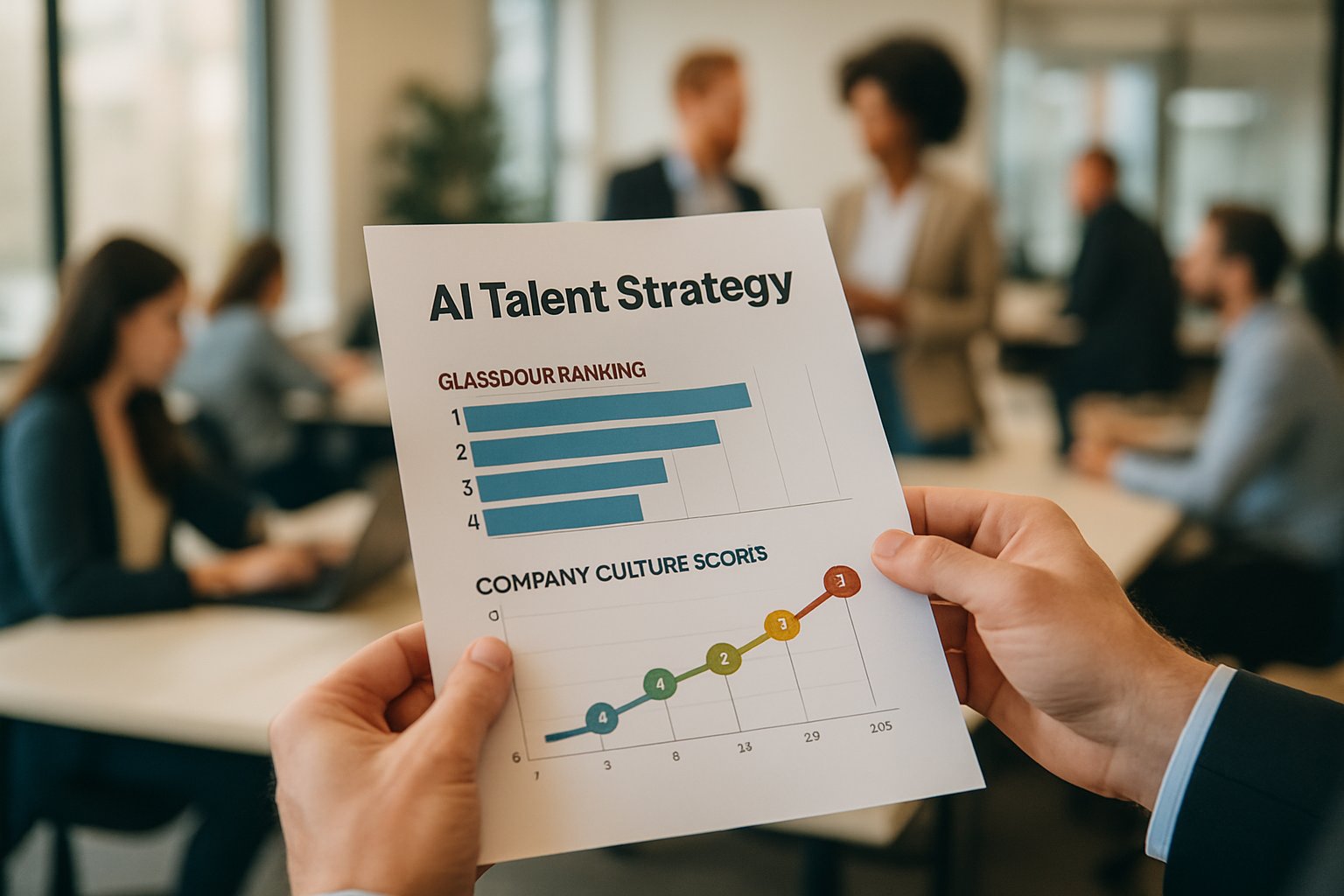
Glassdoor revealed the 25 best large Technology & AI employers on 21 January 2026. Reviews posted between 17 October 2024 and 16 October 2025 fueled the analysis. Furthermore, each organisation needed at least 1,000 staff and 75 ratings across nine attributes.
NVIDIA claimed first position, edging ServiceNow and EPAM Systems. Google and Motorola Solutions rounded out the top five. Consequently, observers gained a snapshot of environments where Culture and cutting-edge work intertwine.
Glassdoor attracts about 57 million monthly visitors, according to academic research. Therefore, inclusion delivers immense brand reach, especially within competitive Tech hiring markets. These facts underline why an AI Talent Strategy must align with public perception.
These context points show the list’s weight. Meanwhile, leaders need clarity on how rankings materialise.
Ranking Methodology Explained Clearly
The Employees’ Choice Awards rely solely on employee input. Additionally, Glassdoor’s algorithm balances quantity, quality, and consistency. Review Intelligence, the platform’s sentiment engine, grades tone and topic relevance.
Companies failing minimum average scores are excluded automatically. Moreover, integrity checks detect coordinated review patterns. Nevertheless, third-party studies warn of rising synthetic content, highlighting ongoing credibility battles.
- Eligibility window: 17 Oct 2024–16 Oct 2025
- Minimum reviews: 75 per attribute
- List size: Top 25 large employers
- Sentiment tool: Review Intelligence
- Anti-abuse focus: pattern detection
The methodology rewards steady excellence rather than short bursts of praise. Consequently, a durable AI Talent Strategy must nurture employee trust year-round. These mechanics set the stage for the standout organisations described next.
Top Five Company Highlights
NVIDIA’s first-place finish reflects staff pride in mission and leadership. Jensen Huang labelled AI “the next industrial revolution,” reinforcing purpose. ServiceNow followed, praised for internal mobility and transparent pay.
EPAM Systems impressed reviewers with global learning pathways and resilient remote Workplace infrastructure. Meanwhile, Google continued to score high on autonomy despite strategic shifts. Motorola Solutions surprised many analysts, yet employees lauded stability and decisive roadmap execution.
Collectively, these firms illustrate how strong Culture merges with cutting-edge Tech programs. Consequently, peer organisations benchmark against their practices when shaping an AI Talent Strategy.
These highlights reveal tangible advantages. However, success also hinges on communication of benefits to prospective hires.
Recruiting And Branding Impact
Placement on the list instantly sparks corporate publicity. For example, Cotality’s CEO called the honour validation of people-plus-AI investments. Additionally, recruiters weaponise the badge across career sites and outbound messages.
Academic evidence shows Glassdoor visibility influences application volume and quality. Therefore, a robust AI Talent Strategy should integrate review analytics into employer branding dashboards. Furthermore, marketing teams can spotlight strengths like flexible Workplace policies or inclusive Culture.
Professionals can enhance their expertise with the AI Learning & Development™ certification. Consequently, certified staff amplify organisational credibility with candidates who value continuous growth.
The branding effect drives applicant pipelines. Nevertheless, leaders must anticipate authenticity concerns discussed next.
Key Risks And Limitations
Originality.ai reported a 376% surge in AI-generated reviews between 2022 and 2024. In contrast, Glassdoor touts anti-abuse algorithms yet discloses limited metrics. Moreover, voluntary participation means some workforce segments stay silent, introducing sample bias.
Geographic shifts also reshape rankings; Bay Area representation dipped while New York presence climbed. Consequently, year-over-year changes may track hiring cycles rather than improved Culture.
Leaders should, therefore, triangulate Glassdoor data with internal surveys. Such triangulation guards an AI Talent Strategy against overreliance on external sentiment. These caveats underscore why forward planning remains vital.
Risks highlight hidden pitfalls. Subsequently, organisations can transform insight into proactive advantage.
Building Future Talent Advantage
Winning companies embed feedback loops into workforce programs. Additionally, they map learning paths to strategic capabilities like generative AI. Consequently, employees perceive clear progression, bolstering retention.
HR teams should combine sentiment dashboards, skills inventories, and competitive pay frameworks. Moreover, aligning manager incentives with engagement metrics sustains positive Workplace climates.
Actionable Next Steps Forward
1. Audit current review patterns quarterly and address recurring pain points.
2. Publicise professional development, including certifications like the linked AI Learning & Development™ option.
3. Establish cross-functional councils to refine AI Talent Strategy goals, metrics, and messaging.
These steps turn public insights into internal momentum. Therefore, enterprises strengthen positioning before next year’s list.
Building advantage demands consistency. Nevertheless, targeted actions today shape tomorrow’s standing.
Conclusion And Outlook
Glassdoor’s Technology & AI ranking spotlights employers excelling at innovation, Culture, and transparent Workplace practices. Moreover, the methodology rewards consistent employee endorsement, making it a credible signal for candidates.
However, authenticity challenges and sample biases require vigilant data stewardship. Consequently, leaders must pair external sentiment with robust internal analytics while refining their AI Talent Strategy.
Forward-looking organisations will act now, integrating learning pathways, fair policies, and open communication. Explore certifications and embrace continuous improvement to earn a coveted spot on next year’s list.
Disclaimer: Some content may be AI-generated or assisted and is provided ‘as is’ for informational purposes only, without warranties of accuracy or completeness, and does not imply endorsement or affiliation.


