

AI CERTS
1 hour ago
Australian news reform faces fierce tech backlash
Australian News Reform Timeline
Consultation opened on 28 April and closes on 18 May. The Albanese government wants legislation introduced by 2 July. If enacted, the levy could start in 2027. Meanwhile, Treasury modelling suggests annual revenue of AUD 200-250 million. Furthermore, historical transfers under the earlier code sat in the same range. The fresh Australian news reform thus aims to restore lost funding streams for digital news providers. Platforms that secure qualifying deals avoid the charge through generous deductions. However, non-compliant services would face the full 2.25% impost.
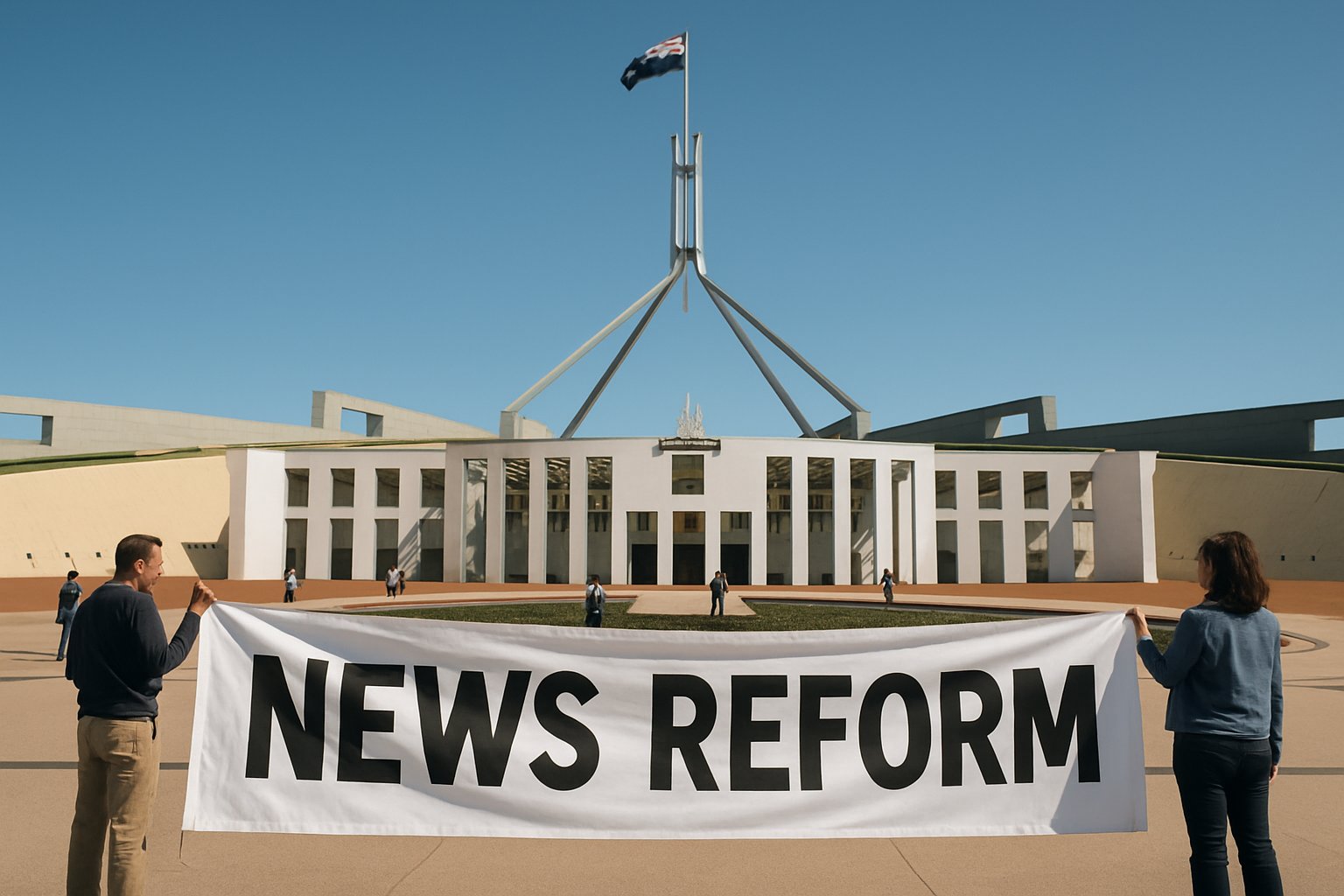
Key timetable milestones summarised below.
- 28 Apr 2026: Exposure draft released
- 18 May 2026: Consultation window closes
- 2 Jul 2026: Target bill introduction
- 2027: Earliest possible start date
These dates drive urgent lobbying. Subsequently, interested parties are preparing detailed submissions.
Core Charge Mechanics Overview
The draft scheme sets a 2.25% incentive rate on Australian revenue. Eligible expenditure on publisher deals attracts a 150% deduction. Additionally, a 170% rate applies to agreements with small outlets. The framework limits deductions from single, outsized contracts. In contrast, unpaid amounts trigger direct remittance of the levy to government. Covered entities include services exceeding AUD 250 million local turnover and user thresholds. Google, Meta, and TikTok sit squarely within scope.
Treasury also canvasses alternative charge bases. One option targets only advertising receipts. Another considers prior-year earnings to smooth volatility. Nevertheless, officials stress that Australian news reform must stay administratively simple while capturing substantial revenues. These mechanics underline the bill’s core message. It should be cheaper to bargain voluntarily than pay the levy.
Platform Pushback Reactions Detailed
Industry reaction arrived within hours. A Meta spokesperson labelled the proposal a digital services tax, repeating earlier Meta rejection of similar rules abroad. Google echoed the criticism and argued it already supports digital news through existing deals. Furthermore, platform lobbyists claim the draft scheme misreads market dynamics. They warn of potential service changes, including news removal, if the levy passes unchanged.
However, Australian publishers welcomed the bill. ABC, News Corp, Nine, and Guardian Australia issued a joint statement supporting quick passage. Consequently, the reform debate now pits global tech giants against domestic media alliances. Observers recall Canada’s 2023 standoff, where news links briefly vanished from Facebook. That precedent fuels concern that aggressive responses could return during the Australian news reform battle.
Publisher Support Arguments Summarised
Publishers argue the policy re-balances bargaining power. Moreover, they highlight that quality journalism underpins civic life but struggles in the platform era. Advocates say the levy merely internalises value extracted by large networks. Allan Fels from the Public Interest Journalism Initiative calls the bill overdue. Additionally, regional outlets hope the 170% deduction uplift will direct more funds their way.
Supporters also stress broader economic effects. Stronger newsrooms create skilled jobs, safeguard information integrity, and improve advertiser trust. Therefore, proponents frame Australian news reform as public-interest infrastructure, not industry protectionism. Nevertheless, they acknowledge implementation details around distribution remain open. The Infrastructure Department’s parallel consultation must resolve these fairness questions before final votes.
Key Implementation Risks Ahead
Several hurdles could derail the timetable. Defining “social media” and “search” precisely remains critical. Ambiguous language may allow platforms to restructure and escape coverage. Meanwhile, verifying eligible expenditure poses auditing challenges. Confidential deals complicate transparency, yet oversight bodies require robust data. Moreover, international trade tensions loom large. The United States has previously opposed unilateral tech levies. Consequently, diplomatic pressure may intensify as the bill advances.
Legal threats also shadow the process. Meta rejection statements hint at possible litigation. Companies could argue the levy amounts to discriminatory taxation. Additionally, they might threaten service withdrawal to sway lawmakers, mirroring past tactics. Therefore, risk mitigation will demand careful legislative drafting and stakeholder engagement.
Global Implications Forecast Ahead
Observers outside Australia watch closely. European regulators exploring similar incentives may treat the measure as a template. Conversely, platforms fear a proliferation of copycat charges. Furthermore, investors evaluate whether cumulative levies could dent profit margins materially. The Albanese government insists the reform is tailored to local conditions. However, ripple effects on global digital news ecosystems appear inevitable.
International publishers also express interest. If the draft scheme proves effective, they may lobby their own governments. In contrast, tech giants could escalate cross-border advocacy to block further adoption. Consequently, Australian news reform might become a pivotal case study within global media policy debates.
Next Steps For Stakeholders
Stakeholder submissions close on 18 May. Companies must quantify compliance costs and propose viable alternatives. Publishers should detail distribution models that ensure equitable funding. Meanwhile, legislators will weigh feedback against political timelines. Treasury officials plan further modelling before a final bill appears. Additionally, industry professionals can deepen policy expertise through the AI Executive Essentials™ certification.
Practical preparation includes recordkeeping upgrades, scenario testing, and communication plans. Consequently, readiness will influence negotiation leverage if the levy becomes law.
These preparatory actions foreshadow intense bargaining. However, transparent dialogue could still refine the reform for broad acceptance.
Section Takeaways
The article outlined the draft scheme’s timeline, mechanics, and stakeholder positions. Moreover, it flagged implementation risks and international stakes. Therefore, engaged professionals should monitor consultation outcomes closely.
Consequently, decisions made in Canberra during the next two months may reshape digital news funding worldwide.
Conclusion
Australian news reform proposes a decisive answer to waning journalism revenue. Platforms can strike deals or pay a levy, while publishers anticipate renewed support for digital news. However, Meta rejection and wider tech resistance signal a turbulent road ahead. Moreover, diplomatic, legal, and operational risks must be managed carefully. Ultimately, the final legislation will test how far governments can push global tech for public benefit. Industry leaders should stay informed and contribute constructively. Additionally, they can future-proof careers by pursuing advanced credentials like the AI Executive Essentials™ certification.
Disclaimer: Some content may be AI-generated or assisted and is provided ‘as is’ for informational purposes only, without warranties of accuracy or completeness, and does not imply endorsement or affiliation.


