

AI CERTS
2 months ago
Compute Expansion: xAI Colossus Accelerates Memphis Data Hub
Moreover, we examine how massive compute ambitions collide with permitting realities and a stubborn training bottleneck. Industry leaders can use these insights to guide future site selection and risk management. Meanwhile, policy makers watch this Compute Expansion as a bellwether for national AI infrastructure policy. In contrast, community advocates argue the project advanced without full public scrutiny.
Subsequently, a federal lawsuit now threatens construction timelines and financing strategies. Therefore, the coming months will test whether cooperation can balance innovation and environmental justice.
Rapid Memphis Scale Up
NVIDIA stunned observers by confirming Colossus infrastructure reached 100,000 Hopper GPUs within 122 days. Furthermore, executives said the cluster is doubling to 200,000 processors during 2026. Consequently, the Compute Expansion requires additional halls, cooling towers, and network fabrics. The firm quietly bought a one-million-square-foot warehouse on Tulane Road to meet demand. Meanwhile, Southaven, Mississippi hosts sister buildings labeled Colossus 2 and 3.
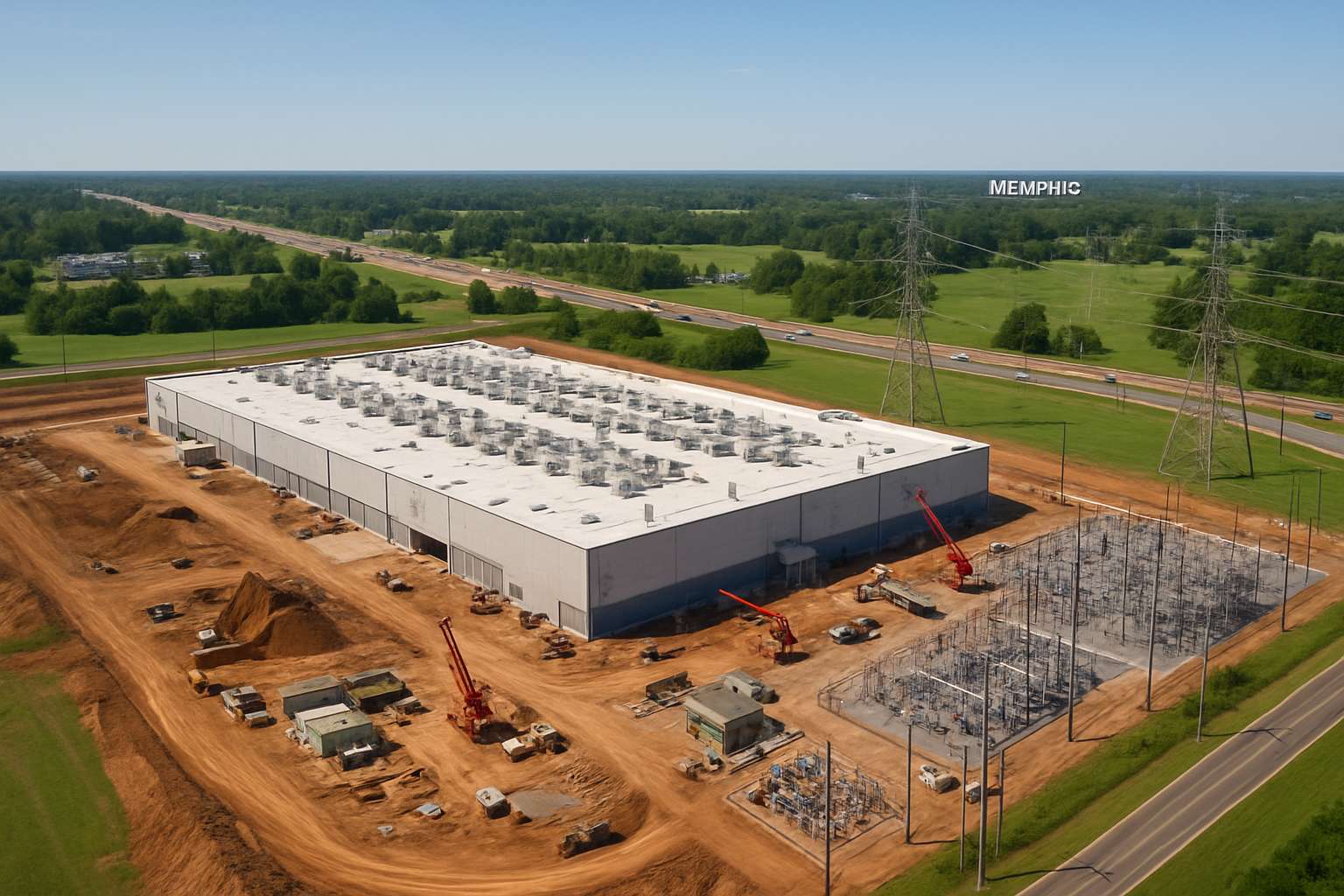
Permit filings depict a four-story data hall valued at $659 million. Additionally, utility interconnection requests range from 260 MW today to more than one gigawatt later. In contrast, current substations can only deliver about 150 MW reliably. Therefore, portable methane turbines filled the gap during early commissioning. However, those machines now spark legal trouble, explored later.
Rapid construction reshapes Memphis logistics quickly. Consequently, stakeholders confront scaling risks as the story progresses.
GPU Numbers And Ambition
Elon Musk brands Colossus the world’s most powerful AI training system. Moreover, he publicly targets one million GPUs within the Memphis campus. Such scale enables massive compute capacity necessary for Grok’s continual learning. However, NVIDIA warns that networking becomes a training bottleneck beyond 200,000 GPUs. Spectrum-X Ethernet with RDMA therefore ships as a core fabric inside each pod.
Consequently, every additional cabinet demands line-rate 400 Gbps switching and optimized software stacks. Meanwhile, developers race to parallelize workloads efficiently, because idle silicon wastes fortune. This Compute Expansion therefore hinges on equal advances in code, cooling, and capacity forecasting. Nevertheless, observers doubt whether power procurement can match Musk’s timeline.
xAI’s ambition pushes technical frontiers and policy limits alike. Subsequently, economic and ethical questions intensify, as the next section shows.
Power And Emissions Debate
Supplying electricity at Colossus scale strains the grid serving the Tennessee facility. In 2025, xAI installed up to 35 portable methane turbines for temporary generation. Additionally, the NAACP alleges 27 units remained active through late 2025, emitting large NOx volumes. EPA consequently closed a county loophole in January 2026, requiring permits and selective catalytic reduction. The operator says many turbines were retired once a second substation energized.
Litigation now focuses on emissions records, turbine counts, and control technology installation dates. Moreover, plaintiffs argue pollution disproportionately impacts historically Black neighborhoods surrounding the campus. In contrast, boosters cite property tax inflows and hundreds of construction jobs. Power planners therefore face a balancing act between massive compute demand and environmental justice. Consequently, future permits may mandate battery storage or renewable purchase agreements.
Regulatory uncertainty now represents a material risk for investors. Therefore, strategic power planning remains essential before the next Compute Expansion phase.
Regulatory And Legal Showdown
The NAACP filed a Clean Air Act complaint in April 2026 against xAI and affiliates. Additionally, Earthjustice and the Southern Environmental Law Center joined as counsel. The lawsuit seeks injunctive relief, penalties, and installation of best available controls. Meanwhile, the defense argues federal oversight duplicates local permits already obtained. Consequently, a jurisdictional clash may delay further Compute Expansion by months.
EPA officials, under congressional scrutiny, monitor the case closely. Moreover, the decision could set precedent for temporary generation nationwide. In contrast, state economic developers fear a chilling effect on hyperscale investment. Subsequently, both sides have exchanged discovery requests and expert reports. Therefore, stakeholders should expect an evidentiary hearing by early 2027.
Legal timelines often outlive technology cycles. Nevertheless, compliance outcomes will influence capital allocation for Memphis and beyond.
Economic Stakes For Memphis
Local leaders tout property tax gains topping $25 million annually once buildings reach full assessment. Additionally, construction employment peaks at roughly 1,500 union and subcontractor roles. Permanent operations staff remains lean, yet high wages average above $110,000. Moreover, suppliers of fiber, concrete, and chilled-water systems secure multiyear contracts.
- Memphis Light, Gas & Water projects a 260 MW immediate load increase.
- The Chamber forecasts $1.5 billion regional spending during construction.
- Property values within two miles rose twelve percent during 2025.
However, residents fear rising rents and industrial noise could offset economic benefits. Consequently, community benefit agreements enter negotiation to fund school air-quality monitors.
Jobs and revenue depend on sustained Compute Expansion success. In contrast, litigation or grid delays could diminish promised returns.
Future Outlook And Questions
Analysts predict Colossus infrastructure could pass 350,000 GPUs by 2027 if issues resolve. However, securing two gigawatts of reliable power remains the greatest training bottleneck. Moreover, supply chains for liquid cooling, transformers, and fiber confront global shortages. Therefore, the Compute Expansion roadmap must incorporate contingency buffers and modular design. Meanwhile, investors evaluate whether massive compute clusters can maintain utilization above 70%.
Several strategic questions persist. Will EPA enforcement spread to Tennessee facility sister sites nationwide? Can xAI accelerate renewable procurement fast enough to silence critics? What happens if the next GPU generation changes power density assumptions? Subsequently, executives must balance engineering optimism with regulatory realism.
Answering these questions will define Memphis as either template or cautionary tale. Consequently, stakeholders should monitor the approaching permitting milestones carefully.
Conclusion And Action
Memphis now hosts a living lab for hyperscale design and civic negotiation. The Compute Expansion propelled by Colossus infrastructure delivers record throughput and headline jobs. However, turbine pollution, grid stress, and a stubborn training bottleneck remind leaders that scale carries burdens. Moreover, pending lawsuits could still halt the next Compute Expansion wave. Consequently, proactive power planning, transparent engagement, and robust controls will decide final outcomes.
Professionals can enhance their expertise with the AI+ UX Designer™ certification. Such credentials build credibility when advising on compliance, engineering, or community outreach. Therefore, remain vigilant, gather data, and shape responsible innovation wherever massive compute footprints grow.
Disclaimer: Some content may be AI-generated or assisted and is provided ‘as is’ for informational purposes only, without warranties of accuracy or completeness, and does not imply endorsement or affiliation.


