

AI CERTS
1 hour ago
World ID Lands on Tinder: U.S. Rollout, Safety, and Scrutiny
Tinder Adds Humanness Badge
Tinder already offers Photo Verification and Face Check™. Now the company is layering World ID on top. When users link the credential, they gain a green badge and time-limited Boosts. Furthermore, Match Group cites earlier safety tools that cut bad-actor interactions by more than 50%. In contrast, romance scammers rely on bots and deepfakes to exploit lonely users. Tinder executives argue that stronger verification will shrink that threat surface.
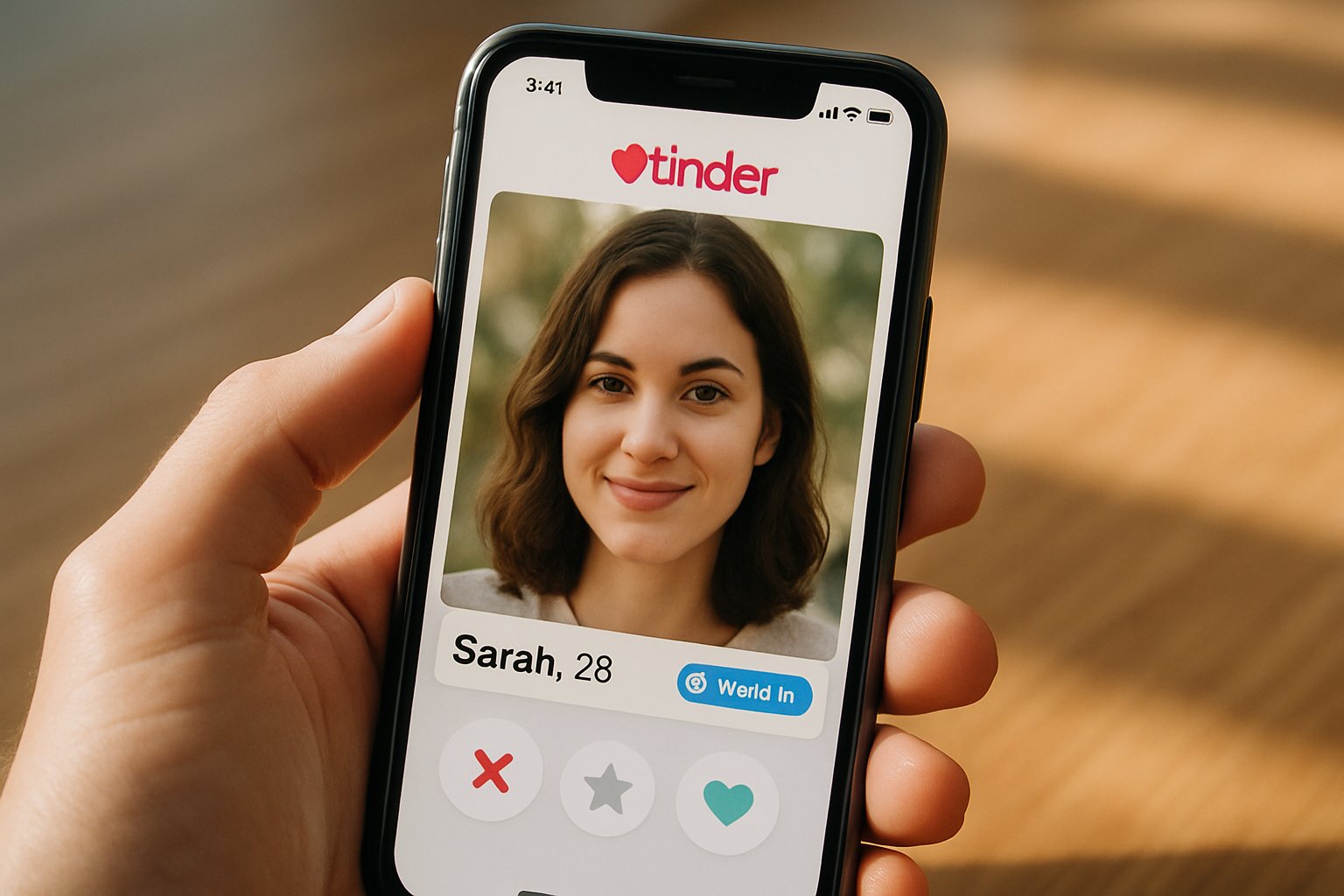
Summary: Tinder positions the badge as a trust booster and growth lever. Adoption metrics will reveal if users agree.
With the front-end feature covered, the next section examines the protocol driving it.
Inside World ID 4.0
World’s Lift Off update introduced an account-based model, key rotation, and an open SDK. Moreover, the standalone World App now stores credentials locally, preventing direct correlation across services. Company executives claim nearly 18 million verified humans and 450 million proof requests to date. Nevertheless, regulators want independent audits before blessing mass deployment.
The Three Verification Tiers
Orb iris scanning delivers the highest assurance by creating an encrypted IrisCode. A mid-tier NFC government-ID scan trades convenience for slightly lower certainty. Additionally, a selfie flow offers the fastest entry but weaker guarantees against Zoom bots. Developers choose which tier fits their threat model. Importantly, every flow ends with a zero-knowledge proof, so apps confirm uniqueness without storing raw data.
Summary: World ID 4.0 blends cryptography and hardware to assert humanness. However, the reliance on biometrics triggers fierce debate.
The following section explores those tradeoffs in depth.
Biometric Tradeoffs Under Scrutiny
Privacy experts argue that immutable biometrics raise catastrophic breach stakes. Edward Snowden labeled Orb iris scanning “a catalogue of eyeballs.” European regulators already suspended operations in Spain and Bavaria over GDPR concerns. Furthermore, critics fear function creep if law enforcement demands linkage between a World ID and real-world identities. World counters that split encryption, on-device hashing, and zero-knowledge protocols block such correlation. Nevertheless, external audits remain pending.
- Spanish AEPD forced data deletion orders in February 2026.
- Bavarian DPA paused Orb stations during a GDPR investigation.
- World promises public audit summaries later this year.
Summary: Technical safeguards exist, yet oversight bodies still question proportionality. Continued scrutiny seems inevitable.
Attention now shifts from privacy to economic and regulatory fallout.
Market And Regulatory Reactions
Trading desks reacted instantly to the Lift Off reveal. Token Price Whiplash Story: WLD fell double digits within hours, then partially recovered. Analysts linked volatility to uncertainty over partner adoption fees and compliance costs. Meanwhile, U.S. regulators have been quieter than their European peers but watch large-scale biometrics closely. Additionally, Match Group’s inclusion may pressure other platforms to follow, intensifying lobbying on Capitol Hill.
Token Price Whiplash Story
Speculators bet that higher proof volumes will raise protocol revenues. In contrast, privacy clampdowns could choke growth, hitting token demand. Therefore, investors monitor every new World ID integration, from DocuSign to Zoom bots defenses against real-time deepfakes.
Summary: Financial and policy signals remain mixed, underscoring uncertainty. Stakeholders now look at user-level impacts.
The next section offers concrete guidance for daters.
Practical Tips For Users
U.S. members will receive opt-in prompts once rollout begins. Subsequently, connecting their World ID requires downloading World App, completing one of the three verification tiers, and granting Tinder permission. Moreover, linking is reversible, giving users control if comfort levels change. Safety experts suggest combining Tinder verification with responsible in-person meeting practices. Additionally, users should remember that no badge eliminates all risk, especially from sophisticated deepfakes.
Professionals can enhance their expertise with the AI Prompt Engineer certification, gaining skills to audit AI-driven identity tools.
Summary: Adoption is voluntary and revocable, offering flexibility. Clear instructions reduce onboarding friction.
We now close with strategic takeaways.
Key Takeaways And Outlook
The new badge could strengthen dating safety while granting World a marquee showcase. Moreover, World’s pivot to account-based architecture aims to ease partner integration. Nevertheless, large-scale iris scanning and broader biometrics use sharpen regulatory focus. Match Group will publish metrics on reduced bot encounters, conversion rates, and any revenue lift from extra Boosts. Consequently, those numbers will inform whether additional brands embrace World ID. Meanwhile, developers combating Zoom bots and streaming deepfakes continue testing the protocol for corporate settings.
Summary: Success depends on user trust, audit transparency, and regulator comfort. Future rollouts across other Match apps could redefine online identity norms.
The story will evolve as audits publish and legislation matures.
Conclusion: World’s partnership with Tinder illustrates both promise and peril. Furthermore, it spotlights how AI-scale fraud forces platforms toward stronger proofs. However, the tension between security and privacy persists. Consequently, transparent audits and flexible user controls will decide mainstream acceptance of World ID and related Tinder verification. Readers seeking deeper insight into AI governance should explore specialized learning paths. Act now to stay ahead of the next identity paradigm shift.
Disclaimer: Some content may be AI-generated or assisted and is provided ‘as is’ for informational purposes only, without warranties of accuracy or completeness, and does not imply endorsement or affiliation.


