

AI CERTS
1 hour ago
AI Predicts Therapy Success as Mental Health Innovation Sparks Urgent Demand for Trusted AI Training
But it also sends a clear message to organizations worldwide: when AI begins shaping healthcare decisions, the need for qualified AI training becomes immediate and non-negotiable.
Generative AI Steps Into Predictive Mental Healthcare
According to the report, researchers are examining whether large language models and generative AI systems can analyze early therapy sessions, behavioral signals, or patient data to estimate future treatment success. In practical terms, this means AI may help identify whether a person is likely to benefit from a certain therapeutic path—or whether a different approach should be considered sooner rather than later.
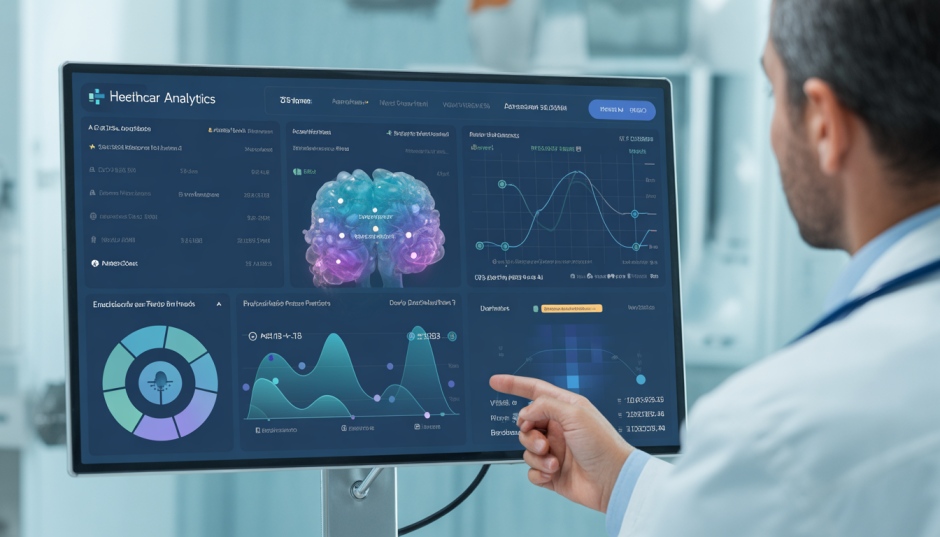
This could be a breakthrough for mental health systems often burdened by long wait times, limited specialists, and trial-and-error treatment journeys. If clinicians receive better predictive support early in the process, patients may access faster and more personalized care.
Why This Matters Beyond Healthcare
This development is about much more than therapy. It highlights the rapid rise of predictive AI—systems designed not just to respond, but to forecast outcomes, risks, and trajectories. The same type of AI thinking is already reshaping finance through fraud detection, retail through demand forecasting, HR through talent analytics, and manufacturing through predictive maintenance.
Now mental healthcare is joining that wave.
For businesses and institutions, this signals a larger truth: AI is moving from optional productivity tool to mission-critical decision engine. Leaders who fail to understand predictive AI, governance, bias controls, and ethical deployment risk falling behind.
The Hidden Risks Require Skilled Professionals
While the opportunity is promising, the Forbes report also notes that AI in mental health comes with serious concerns. Predicting human emotional outcomes is deeply complex. Poor-quality data, biased training models, overconfidence in AI outputs, or lack of human oversight could lead to harmful recommendations.
That is why AI success in healthcare—or any regulated sector—depends less on software alone and more on trained people.
Organizations need professionals who understand model evaluation, responsible AI frameworks, privacy laws, human-in-the-loop systems, and ethical decision-making. Without trained teams, even advanced AI tools can become risky liabilities.
The Rise of AI Healthcare Skills and Certifications
As healthcare organizations digitize operations and adopt intelligent systems, demand is rising for professionals who can bridge AI and real-world outcomes. Skills in machine learning, generative AI, data governance, explainable AI, healthcare analytics, and AI ethics are becoming increasingly valuable.
This is where industry-aligned certifications can make a measurable difference. Structured AI education helps professionals move beyond theory into applied capability—learning how to assess AI outputs, reduce bias, secure data, and deploy tools responsibly.
For healthcare executives, HR leaders, consultants, and technology teams, upskilling now can create a major competitive advantage as predictive AI expands across sectors.
How ATP Helps Businesses Scale AI Readiness
For companies seeking faster workforce transformation, the AI CERTs Authorized Training Partner (ATP) program offers a practical route to enterprise AI readiness. Through the ATP model, training providers, institutions, and business networks can deliver globally recognized AI certifications, structured learning pathways, and scalable workforce education aligned to market demand.
As industries like healthcare, finance, education, and customer service adopt AI at speed, ATP creates an ecosystem where organizations can train teams efficiently while building credibility in emerging AI domains.
That matters now more than ever—because AI adoption is accelerating faster than workforce capability.
The Bigger Picture for 2026
The story of AI predicting therapy success is symbolic of where the world is headed. AI is no longer assisting around the edges—it is entering the core of human decision-making. From diagnosis to hiring to strategy to customer behavior, predictive intelligence is becoming central to performance.
The winners in this new era will not simply be companies that buy AI tools. They will be organizations that train people to use AI wisely.
Conclusion
When generative AI starts helping forecast mental health treatment outcomes, it becomes clear that every industry must prepare for a future built on predictive intelligence. The technology is advancing quickly, but talent readiness remains the real bottleneck. Those who invest in AI training today will be best positioned to lead tomorrow.
FAQs
What is predictive AI?
Predictive AI uses historical and real-time data to estimate future outcomes, trends, or behaviors. Examples include demand forecasting, fraud alerts, and healthcare treatment predictions.
How can AI help mental healthcare?
AI may help clinicians analyze patterns, identify risks earlier, personalize treatment plans, and improve therapy pathways when used responsibly with human oversight.
Why is AI training important now?
Many organizations adopt AI tools without trained staff. AI training ensures teams understand implementation, ethics, data privacy, and business value creation.
What is the ATP program?
The Authorized Training Partner program by AI CERTs helps organizations and training providers deliver recognized AI certifications and workforce upskilling solutions.
Which professionals should learn AI now?
Executives, HR leaders, analysts, marketers, consultants, healthcare teams, and IT professionals can all benefit from practical AI education in 2026.
Disclaimer: Some content may be AI-generated or assisted and is provided ‘as is’ for informational purposes only, without warranties of accuracy or completeness, and does not imply endorsement or affiliation.


